What is in this guide
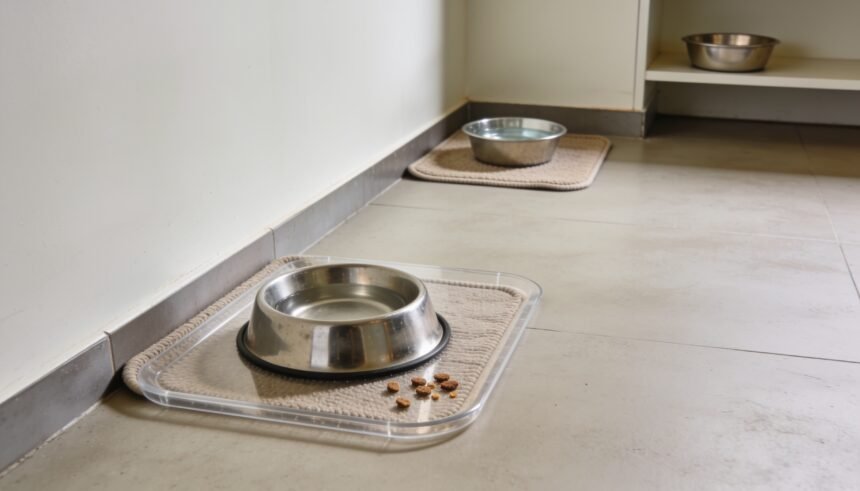
Set up a low mess pet feeding station with removable bowls on an easy-to-clean surface, leaving enough space to catch the spills your pet actually makes. Keep serving supplies off that surface and arrange the area so you can lift, wash and dry everything without moving furniture.
A mat alone does not finish the job. You also need somewhere to prepare the meal, a workable bowl-washing routine and access to the floor underneath. Start with what you own, then change the part of the setup that is making clean-up awkward.
1. Find out where the mess lands
Look at the feeding area after an ordinary meal before clearing it. Notice whether you are dealing with scattered biscuits, wet-food smears, drips around the water bowl or a bowl that has travelled across the floor.
Separate serving spills from eating spills. If the mess starts when you scoop food out of its bag, rearranging the pet’s bowl will not address that part. If food lands beyond the mat while your pet eats, the covered area may be in the wrong place or too small for the observed spill pattern.
Make a short note of where the mess ends up. There is no useful universal mat measurement here: a small cat food dish and a large dog’s drinking bowl need different arrangements. Use the actual bowls and the marks around them as your starting point.
2. Choose a place you can reach from every side that matters
Put the bowls somewhere you can lift them out without reaching beneath shelving or dragging a storage unit aside. Open nearby cupboard doors and the dishwasher, then walk your usual route through the room. Check that the mat will not sit across a doorway or curl into a walking path.
Leave enough room for the pet to approach the bowl without squeezing between household objects. A narrow gap may fit the dish while leaving little space to stand beside it and wipe a spill.
For room planning, fitting a feeding station into a small kitchen covers the space problem in more detail. Here, favour a position where you can see the mess and clear it easily. A hidden nook is a poor housekeeping choice if you cannot reach its back edge.
3. Pick a removable surface you will actually clean
Compare the clean-up jobs before choosing a surface. These are practical trade-offs, not tested performance rankings:
- Bare washable floor: nothing extra to wash, but each spill lands directly on the floor. Check the flooring’s care instructions before deciding it can serve this purpose.
- Flat washable mat: easy to lift, provided its size and flexibility suit your available washing space. Inspect the underside as well as the visible surface.
- Shallow removable tray: an option when you want an edge around the spill area. Check that the bowls sit securely and the pet can reach them without stepping over an awkward rim.
Avoid choosing by appearance alone. Can you carry the surface to its washing place? Can you reach into any grooves? Where will it dry? CDC guidance says to follow an item’s cleaning instructions, so confirm those before putting a mat, tray or bowl in a machine.
If you already have a suitable surface, try it first. Layers of towels, mats and trays create more pieces to lift and dry. Keep only the pieces that have a clear job.
4. Arrange food and water for the animal using them
Leave clear space around each bowl rather than covering the whole surface with food containers and utensils. Watch whether the bowl slides, whether spills land beyond the edge and whether the pet can use it comfortably. Adjust one part of the arrangement at a time so you can see what changes.
For cats, RSPCA Australia recommends putting food separately from water bowls and toilet areas. That means your tidy feeding setup may need more than one small washable spot. Do not combine everything on a single tray just to make the room look organised. The guide to placing cat food away from the litter tray explains that layout constraint.
For a dog, assess the food and drinking areas separately too: the water spill pattern may call for a different surface or position. Keep drinking water accessible while you clear the feeding area. This layout exercise does not require a change to the pet’s food or portions.
5. Give serving supplies their own place
Keep the food bag, scoop and spare bowls in a nearby cupboard or other suitable storage spot, rather than on the spill surface. Leave the feeding area for the bowls in use so you can clear it in one straightforward sequence.
Choose a serving place where you can set the bowl down before opening food packaging. Carry the filled bowl to the feeding spot instead of balancing it while reaching into a bag on the floor. If another person handles the next meal, make the location of the scoop and clean bowls obvious.
Food storage needs its own checks. Use the guide to storing pet food for that task rather than treating a decorative container beside the bowl as the whole storage plan.
6. Build the reset around bowl washing
CDC’s published cleaning schedule recommends washing bowls after every wet-food use and daily for dry food and water. Use that schedule as the bowl-washing baseline, then clear visible spills when they happen. For the washing method, follow the routine for cleaning pet bowls and toys.
For the surrounding area, use this simple household sequence:
- Lift the bowls and gather loose food from the surface.
- Remove the mat or tray and check the floor beneath it, including its back edge.
- Clean visible residue using the relevant item and floor care instructions.
- Dry the floor and surface before putting the station back together.
- Return clean bowls and check that the surface lies flat.
This reset is an editorial housekeeping routine, not a disinfecting protocol or a promise to prevent illness. A spare clean bowl can make it easier to keep water available while the used bowl is being washed.
At the next meal, check one thing: does the spill stay within the area you can easily clear? If it does not, adjust the bowl position or removable surface first. That gives you a specific problem to solve before adding more equipment.
How we checked this: Checked on 9 October 2026 against CDC pet-supplies cleaning guidance and RSPCA Australia’s home-setup advice for cats. The surface comparison and reset sequence are editorial applications. No feeding equipment was tested.
The one-page family week
One printable page that holds the whole week: meals, school, activities and who is doing the pickup. Free, and we send one useful email a week.
One email a week. No spam, unsubscribe in a click.