What is in this guide
Keep pet odour under control by checking waste, food spills, resting spots and damp gear before adding fragrance or another cleaning product. In a small home, make the routine fit your drying space: clear today’s mess first, then wash only what you can properly dry and put back.
Use the checks below as a route through the home, skipping areas you do not have. The daily section is for waste and visible mess. The laundry and follow-up sections are jobs to schedule when the relevant item needs attention, rather than instructions to deep-clean everything every day.
1. Find the place that needs attention
- Check the litter or toilet area, feeding spot and favourite sleeping place separately.
- Look for visible waste, food residue, wet fabric or an old accident mark.
- Lift removable mats and throws to inspect underneath.
- Note the strongest-smelling location before starting a whole-room clean.
Make the note specific: “towel behind the door” is a job you can finish; “the flat smells” is harder to act on. If two spots need work, list them separately so you can check each after cleaning.
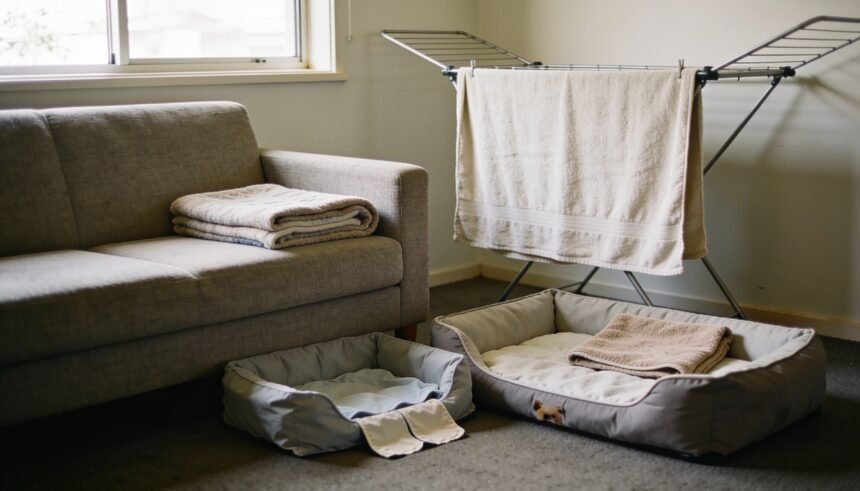
Avoid pulling every washable item into a pile immediately. In a unit with one drying rack, that can leave you with more wet bedding than you have room to hang. First decide which item needs cleaning most and where it will dry. Leave the remaining jobs on the list.
2. Clear waste and check its storage
- Scoop the cat’s litter tray each day.
- Remove any indoor toilet-pad waste or other visible pet waste.
- Take collected waste to the appropriate household disposal point.
- Check the collection container, scoop storage and surrounding floor for residue.
RSPCA Australia recommends removing faeces and urine from litter trays daily, with regular emptying and cleaning of the trays themselves. That gives the cat area a daily baseline; it does not mean the whole room needs washing each time. [S1]
If you use a small indoor waste container, include it in the check rather than assuming the closed lid completes the job. Empty it when needed and clean residue according to the container’s instructions. Keep spare bags where the person doing the task can find them.
Keep the tray accessible. RSPCA also recommends locating litter trays away from food and water. [S1] Do not move it into an awkward cupboard simply to hide the smell. For the layout and scattered-litter job, use keeping the litter tray area tidy in a small home.
3. Reset the feeding spot after spills
- Pick up loose food and clear visible smears.
- Lift the mat or tray and inspect its underside.
- Check the floor and the edge nearest the wall.
- Return clean feeding items to a dry, accessible surface.
Treat the bowl, mat and floor as separate items with their own care instructions. A clean-looking bowl does not tell you whether there is food beneath its mat. Equally, washing the floor while leaving the dirty tray in place leaves part of the job unfinished.
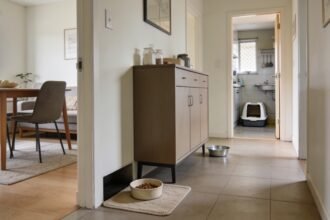
Keep this check small enough to do during the ordinary meal clean-up. If reaching the back edge requires moving a storage box every time, change the storage arrangement. The guide to setting up a low-mess feeding station covers that setup, including bowl washing, so you do not need to redesign it during each odour check.
4. Put bedding and damp gear in a workable queue
- Check the bed cover, favourite throw and walking towel individually.
- Read the care instructions before choosing what to wash.
- Reserve enough drying space for the selected load.
- Check removable covers and inserts separately before reassembling them.
- Hang used damp towels rather than dropping them into a closed gear basket.
Choose the item that needs attention, rather than automatically washing every pet textile together. A large bed insert may have different instructions from its cover, and a couch throw may need a separate cycle. Use washing pet bedding properly for the laundry method.
If you have a suitable spare cover or towel, put it into use while the first dries. If you do not, plan around the washing and drying instructions instead of starting a load just before the item is needed again. The point is to finish the laundry job, including drying, without losing all the pet’s usual resting options at once.
Give wet walking gear a visible place to hang. A hook near the door may be more workable than a neat closed basket for something that still needs to dry. Return it to storage once dry, and include the hook area in the next check.
5. Check the resting area before cleaning the whole floor
- Lift the throw or removable bedding from the favourite seat.
- Inspect cushion gaps and the accessible floor beside the bed.
- Remove loose hair using tools permitted by the surface instructions.
- Check underneath before returning clean textiles.
Keep hair removal and odour treatment as separate decisions. Hair on the couch gives you a visible cleaning task, but removing it does not establish that an old urine patch or dirty bed insert has been dealt with. Follow the pet hair checklist for carpets and couches when the dry-cleaning job needs more detail.
Work through the accessible area first. If the next task involves moving heavy furniture or washing a non-removable cushion, write that down as a separate job. It should not turn a short daily check into an unfinished room dismantling.
6. Give a lingering smell its own follow-up
- Recheck the identified spot after cleaning and drying.
- Record the surface, visible marks and cleaning products already used.
- Consult that surface’s care instructions before another treatment.
- Ask the manufacturer or a suitable cleaning professional if the permitted method is unclear.
For urine odour on carpet or upholstery, the Humane Society for Tacoma & Pierce County advises against steam cleaning. It also says to follow cleaner directions and test a proposed cleaner on a concealed fabric patch. [S2] Do not turn a persistent smell into repeated rounds of heat or different sprays without checking what the material allows.
In a rental, photograph persistent staining and record what you have done before seeking help with flooring or fixtures. Leave decisions about replacing fixed materials for a separate discussion. This checklist is for household upkeep, not diagnosing an animal’s smell or toileting behaviour.
Make the next check easy to share
Leave a short task note where the household will see it: waste done, feeding area done, towel drying, bed cover still to wash. That is more useful than a general instruction to keep the home fresh, especially when different people handle meals and cleaning.
Start today with the waste area and one resting spot. Finish those jobs, including disposal and drying, then choose the next item from what you actually find.
How we checked this: Checked on 9 October 2026 against RSPCA Australia’s litter-tray guidance and Humane Society for Tacoma & Pierce County cleaning advice. The task order and small-home laundry queue are editorial suggestions. No cleaning products or methods were tested.
The one-page family week
One printable page that holds the whole week: meals, school, activities and who is doing the pickup. Free, and we send one useful email a week.
One email a week. No spam, unsubscribe in a click.