What is in this guide
Dry pet food looks indestructible and is not. It contains fats, and fats go rancid. That process is invisible, has no obvious smell at first, and is the most likely reason a pet that ate happily for three weeks starts refusing the last of the bag.
The single most common storage mistake in Australian homes is tipping the bag into a plastic tub. Almost everything below follows from why that is wrong.
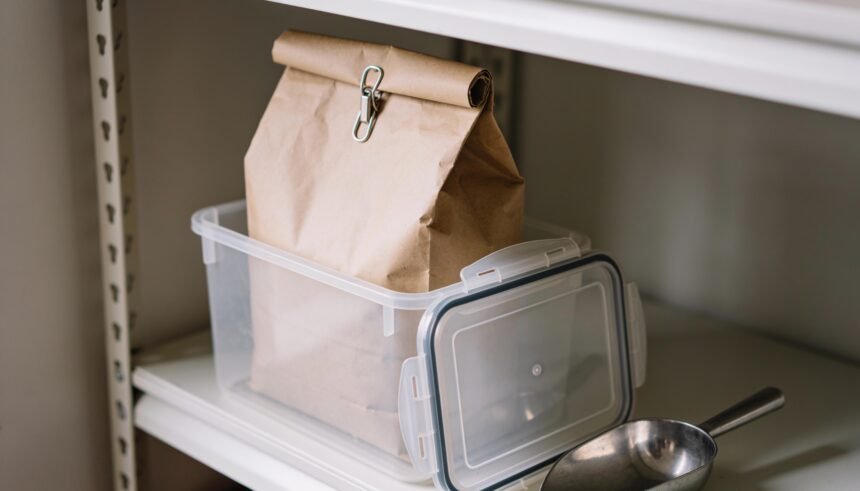
Keep the bag, put the bag in the container
The bag is not just packaging. Pet food bags are built as a barrier, usually multi-layer with a foil or coated liner, specifically to keep oxygen, light and moisture away from the fat in the food. A plain plastic tub does none of that.
There are two further problems with decanting.
Plastic absorbs fat. Oils from previous batches soak into the walls of a tub, go rancid there, and then taint every new lot you pour in. Washing does not remove it. This is why a tub that has held kibble for two years makes food that a fussy animal starts refusing.
You lose the information. The batch number, the best before date and the manufacturer contact details are all on the bag, and they are exactly what you need if there is ever a recall or a problem. A recall you cannot act on because the bag went in the bin is a genuinely bad position.
So: roll the top of the bag down, clip it, and put the whole bag inside an airtight container. You get the barrier layer, the airtight seal, the pest exclusion and the label. This is the answer and it costs nothing extra.
If you are going to decant anyway, use a food-grade container with a gasket seal, keep the label panel cut out and taped to it, and wash and thoroughly dry the container between bags.
Where it goes
- Cool, dark and dry. A pantry or a cupboard inside the house
- Not the garage. This is the common Australian error. A closed garage or a carport cupboard can sit well above the temperature the food was designed for through summer, and heat accelerates fat going rancid faster than anything else
- Not on a concrete floor, which draws moisture into the base of the bag
- Not next to the oven, the fridge motor or a sunny window
- Off the floor if you can, which also puts it out of reach of the animal it belongs to. A dog that gets into a full bag can make itself genuinely unwell, and that is a vet call rather than a wait-and-see
Once it is open
- Most dry food is best used within about four to six weeks of opening. Manufacturers vary, so the bag is the authority
- Buy a bag size you will actually finish in that window. The big bag is only cheaper if the last third gets eaten. For one small dog or one cat, the giant bag is frequently a false economy
- Do not top up. Finish one bag before opening the next rather than tipping new food on top of old, which leaves a layer at the bottom that never gets used and goes off
- Scoop, do not pour with hands. A dedicated scoop kept outside the bag stays cleaner
- Never put the scoop back in damp
Wet food
- Unopened cans and pouches keep to the date on them, stored cool
- Once opened, refrigerate and use within two to three days. Cover it, or transfer it to a lidded container, because uncovered pet food in the fridge taints everything else
- Do not leave wet food out. In an Australian summer, uneaten wet food in a bowl is a food safety problem within an hour or two, and it attracts flies and ants. Take up what is not eaten
Pantry moths, weevils and ants
Dry pet food is one of the most common sources of a pantry moth infestation in an Australian kitchen, and people rarely suspect it.
- An airtight container with a real gasket is the prevention. A snap lid is not airtight
- Check a new bag before it goes in the container. Infestations frequently arrive in the bag rather than starting at home
- If you find moths or weevils, the food goes out, the container is washed and dried completely, and the cupboard gets emptied and wiped. Half measures do not work with pantry moths
- Ants are solved by the container too, and by not leaving food in a bowl
If you are already dealing with pantry moths, the approach is the same one that works for human food, covered in pantry organisation.
What “off” looks like
Throw it out if you find:
- An oily or paint-like smell, which is what rancid fat smells like
- Clumping, dampness or any visible mould
- Insects, webbing or larvae
- A colour or texture noticeably different from the rest of the bag
And if your pet suddenly refuses food it has always eaten, check the bag before assuming fussiness. The two most common explanations are that the food has gone off and that something is wrong with the animal, and the second one is a vet question rather than a storage one. A sudden change in appetite, particularly with vomiting, lethargy or diarrhoea, is a reason to call a vet rather than to buy a different brand.
The practical setup
For most households:
- One airtight container with a gasket seal, large enough to hold the bag you buy
- The bag inside it, rolled and clipped
- Inside the house, in a cupboard, off the floor
- A scoop that lives outside the container
- A bag size matched to four to six weeks of feeding
- Wet food covered in the fridge, used within a couple of days
Where the bowls themselves go is a related and separate problem, covered in a feeding station for a small kitchen. And if the storage problem is really a space problem, the same thinking that makes a washable dog bed a good idea applies here: buy for the cleaning, not for the look.
The one-page family week
One printable page that holds the whole week: meals, school, activities and who is doing the pickup. Free, and we send one useful email a week.
One email a week. No spam, unsubscribe in a click.