What is in this guide
A slow cooker solves the worst hour of the family day by moving all the work to eight in the morning. The problem is that eight in the morning is also a difficult hour.
Prepping the night before is what makes the appliance actually get used. Here is what can safely be done ahead, what cannot, and the reason slow cooker food is sometimes disappointing.
What you can prep the night before
Chop all the vegetables, store them in a container in the fridge.
Measure the dry ingredients into a small container: spices, stock powder, flour for dusting.
Make the sauce or liquid component and refrigerate it separately.
Trim and portion the meat, refrigerated, in its own container.
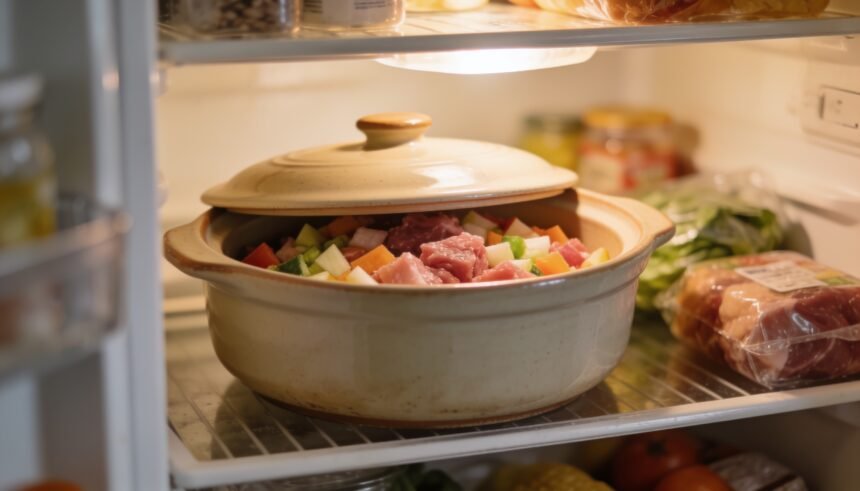
Fill the removable insert completely with everything except anything that needs browning, cover it, and refrigerate the whole insert overnight. In the morning it goes straight into the base.
That last one is the good version and it turns the morning job into about fifteen seconds.
What you should not do
Do not leave a filled insert out of the fridge overnight. The whole assembly must be refrigerated, and this matters more in Australian conditions than in most places this advice is written for.
Check your manual before refrigerating the insert, because a cold ceramic insert placed into a preheated base can crack. Most manufacturers advise against preheating the base or suggest allowing the insert to sit out briefly first, and the manual for your model is the authority.
Do not partially cook anything the night before and refrigerate it to finish the next day. Partially cooked food held and then slow cooked is exactly the scenario food safety guidance warns against.
Do not put frozen meat straight into a slow cooker. It takes too long to reach a safe temperature. Defrost in the fridge overnight, which is a night-before job in itself.
Follow Food Standards Australia New Zealand guidance on refrigeration, defrosting and reheating, and the appliance manual on everything specific to the machine.
Six meals that suit prep-ahead
Beef or lamb casserole. Cheap cut, onion, carrot, potato, stock, tinned tomatoes. The cheapest cuts are the best here, which is the reverse of how the price tags suggest it works.
Pulled pork or lamb shoulder. One large cheap cut, some liquid, some spice. Feeds a family for two meals and makes excellent wraps the next day.
Chicken curry. Thighs rather than breast, since breast dries out over a long cook. Curry paste, tinned tomatoes or coconut milk, vegetables.
Bolognese. Better after a long cook than a fast one, and it doubles easily. Adding lentils here is the cheapest way to stretch it, as covered in mince, chicken and lentils.
Soup. Legumes, stock, vegetables, whatever needs using. The most forgiving thing a slow cooker makes.
Chilli or a bean stew. Tinned legumes, mince or no mince, tinned tomatoes, spice.
The pattern: tough cuts, wet dishes, strong flavours, long times. That is what the appliance is for.
Why slow cooker food is sometimes disappointing
Three mistakes account for most of it.
1. Too much liquid. A slow cooker loses almost no moisture, so a recipe written for a stovetop or an oven will produce something watery. Reduce the liquid substantially, often by a third to a half. If it is too thin at the end, take the lid off for the last half hour.
2. Nothing was browned. Browning meat and onions before they go in adds the flavour that long slow cooking cannot create. It is ten minutes and it is the single biggest quality difference between a good slow cooker meal and a bland one. Do it the night before if that suits, then refrigerate.
3. Everything went in at once. Delicate vegetables, greens, dairy, herbs and seafood do not survive eight hours. Add them in the last half hour. This is why a slow cooker curry with the coconut milk in from the start tastes different to one where it goes in at the end.
A fourth, smaller one: lifting the lid. Every lift releases heat and adds cooking time. Leave it alone.
Making it a habit rather than an occasional thing
Pick one night a week and keep it. Wednesday is a common choice because it is often the hardest night, as in beating the 5pm what-is-for-dinner panic.
Attach the prep to something you already do, such as after dinner while the kitchen is already messy.
Put it in the week’s shape rather than deciding each time. A four-week rotating family dinner plan covers building the shape.
Double it. A slow cooker is usually large enough to make two meals, and the second goes in the freezer. Same effort, two dinners.
The Australian seasonal point
A slow cooker is a summer appliance here, not only a winter one.
An oven running for ninety minutes in February heats the whole house and then the air conditioning works against it. A slow cooker produces a hot meal with a fraction of the heat output.
It is also genuinely useful for the nights when nobody is home until after sport, because the meal is ready and holding rather than waiting to be started.
In winter it does the obvious job, which is cheap cuts, long cooking and food that suits the weather.
Running costs between an oven, a slow cooker and an air fryer are a separate question and are covered in running costs: air fryer versus oven versus slow cooker.
Practical points
Fill it between about half and two thirds. Under-filled dries out, over-filled may not reach temperature safely. The manual gives the range for your model.
Cool leftovers quickly and refrigerate promptly, which matters more in the heat.
Do not use the insert to cool a large quantity of food in the fridge, since a large hot ceramic mass cools slowly. Decant into shallow containers.
Next: beating the 5pm what-is-for-dinner panic covers the problem this solves, a four-week rotating family dinner plan covers fitting it into the week, and mince, chicken and lentils covers making it cheaper.
The one-page family week
One printable page that holds the whole week: meals, school, activities and who is doing the pickup. Free, and we send one useful email a week.
One email a week. No spam, unsubscribe in a click.