What is in this guide
To make a meal plan from what you have, list the food available for dinners, check its quantity and assign it to familiar meals before choosing anything new. Start with a few dinners, include the fridge and freezer, and put only the missing ingredients on your shopping list.
NSW Love Food Hate Waste recommends checking existing stock before writing a list that matches your meal plan. The practical question is what that stock can actually become. A cupboard containing rice, chickpeas and several sauces still needs a decision about dinner.
Step 1: Count what is available for dinner
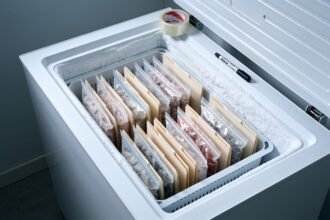
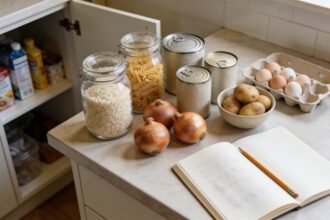
Use a sheet of paper or a shared phone note. Leave everything in its usual place and work through the pantry, fridge and freezer, recording ingredients you could use in the next few meals. There is no need to empty the cupboards or catalogue every spice.
Write useful quantities: two tins of chickpeas, three eggs, half a capsicum, or 300 g of dry pasta. If a packet feels nearly empty, check it before building dinner around it. Record the form as well as the ingredient: dried chickpeas and tinned chickpeas belong on different lines.
Set aside anything already needed for another purpose. Bread for school sandwiches and eggs promised for breakfast are not spare dinner ingredients. Ask anyone else who cooks whether they have plans for food that looks available.
For a first attempt, divide the note into three short sections:
- Build around: ingredients you would like to give a job this week.
- Support the meal: rice, pasta, tinned ingredients, seasonings and other things that could complete those dishes.
- Reserved: food committed to breakfasts, lunches or another person’s cooking.
If finding things is the obstacle, organising the pantry so the family can use it is a separate job. Finish a small dinner stocktake before starting a cupboard overhaul.
Step 2: Choose familiar meals that fit the stock
Pick one ingredient from the first section and name a meal you already know how to make with it. Then check the rest of that meal against your list.
For example, tinned chickpeas might suggest a familiar curry. Check whether you have the curry ingredients and something to serve alongside it. If that recipe needs several purchases, look for another meal in your usual repertoire that uses more of the food available.
Compare complete meals, including sauces and sides. A dish that uses one forgotten tin but requires six new ingredients may be a poor choice for this particular shop. Another dish that uses several existing ingredients and needs one addition could fit better.
You can use recipe searches when stuck, but narrow the question first. Search for a main ingredient and a meal style your household likes, then read the whole ingredient list before putting the dish on the plan. Having the headline ingredient does not mean you have everything else.
Keep household preferences in the decision. If a combined dish is unlikely to be eaten, consider a familiar meal with components served separately. There is no obligation to put every available vegetable into the same saucepan.
Step 3: Allocate each ingredient once
Beside each meal, write which ingredients it will use and deduct them from the available list. This matters when several dinner ideas depend on the same eggs, cheese or tin of tomatoes.
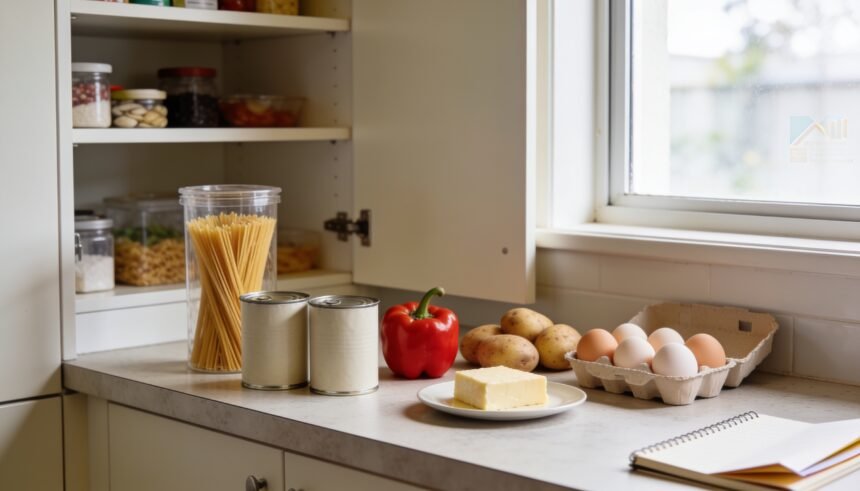
Here is an illustrative planning example. Assume the available stock includes 300 g dry pasta, two tins of tomatoes, one tin of lentils, six eggs, one capsicum, four potatoes and some cheese. Oil and the seasonings required by the household’s chosen recipes are also on hand. These quantities demonstrate allocation, not recommended portions or complete recipes.
| Proposed dinner | Stock assigned to it | What to check before accepting it |
|---|---|---|
| Tomato and lentil pasta | 300 g pasta, one tin tomatoes, one tin lentils | Does the familiar recipe make enough for everyone eating? |
| Capsicum omelette | Six eggs, one capsicum, part of the cheese | Is a side needed, and are its ingredients available? |
| Jacket potatoes with tomato topping | Four potatoes, the second tin of tomatoes, remaining cheese | Are the potatoes and topping sufficient for this household? |
After assigning the eggs to the omelette, they are no longer available for another dinner. If the cheese is too small a piece for both meals, choose which one gets it and adjust the other. Do this on paper before either dish reaches the kitchen bench.
Where quantities fall short, reduce the number of meals you are trying to cover or add the shortfall to the shopping list. A half packet is useful, but it is not automatically a family dinner.
Step 4: Give each meal a realistic slot
Start with three dinners if planning the whole week feels cumbersome. Match each to an evening when someone will have the time, equipment and willingness to cook it. An unfamiliar dish with several preparation stages may fit a quiet evening better than the gap between work and school sport.
Note preparation tasks beside the meal, using your recipe’s instructions. If the recipe requires preparation you cannot fit in, change the meal before shopping.
Leave room for plans to move. You might assign two dinners to specific evenings and keep the third as an option, rather than promising a different dish for every night. For the wider calendar, use the weekly family meal plan method; the stock list here supplies the starting ingredients.
When a dinner is cancelled, remove its ingredient allocation or move the whole meal together. Otherwise, the note can show food as committed to a meal nobody intends to cook.
Step 5: Shop for the gaps
Read each selected recipe and list anything missing, including small ingredients that are easy to assume are there. NSW Love Food Hate Waste also recommends writing down quantities and accounting for ingredients shared by recipes.
Combine the shortfalls before shopping. If two meals need onions, put the total on one line. Check breakfast, lunch and snack needs separately, then reconcile any shared ingredients so existing stock is deducted only once.
For a repeatable way to handle that arithmetic, turning the meal plan into a combined shopping list explains a spreadsheet approach. A handwritten list is enough for a few meals.
Keep replenishment separate from dinner gaps. Finishing a packet does not mean it needs replacing immediately. If an ingredient belongs in several meals you regularly cook, mark it for replenishment; if it was bought for a dish nobody wants again, leave it off. The guide to pantry and freezer staples can help with that broader stocking decision.
What if the cupboard has plenty of food but no obvious meals?
Choose the easiest useful combination and allow a small top-up shop. Cooking from existing stock does not have to mean buying nothing. You might have nearly everything for a familiar pasta dish but need one ingredient to finish it.
If you have only condiments and small remnants, acknowledge that dinner still needs shopping. Avoid forcing unrelated ingredients together just to empty their containers. Put one awkward ingredient on a later meal plan and leave the rest for another pass.
Before your next shop, choose one ingredient, assign it to a familiar dinner and write down exactly what is missing. That gives the stocktake a usable result even if you stop after one meal.
The one-page family week
One printable page that holds the whole week: meals, school, activities and who is doing the pickup. Free, and we send one useful email a week.
One email a week. No spam, unsubscribe in a click.