What is in this guide
A pantry is not a display. Its job is to produce a decent dinner on the night when nothing was planned, the fresh food is gone and everyone is tired. That is the night the takeaway gets ordered, and a functioning pantry is the thing that prevents it.
So the test for every item below is simple: what does it rescue? An item that does not rescue anything is storage, not a staple.
The pantry: things that make a meal
Pasta, two shapes. A long one and a short one. Dinner in eleven minutes with almost anything else on this list.
Rice. The base for the largest range of meals of anything in the cupboard, and it keeps for years.
Tinned tomatoes. The single most useful tin in an Australian pantry. Sauce, soup, curry base, braise. Buy them by the case.
Tinned legumes: chickpeas, cannellini, kidney beans, lentils. These are what turn a small amount of meat into a full meal, which is the biggest structural saving in a family food budget. Dried is cheaper and requires planning, so tinned is the version that actually gets used.
Tinned tuna or salmon. Protein with no defrosting and no cooking. The fastest route to a real meal on this list.
Stock, powder or liquid. Makes rice, soup and anything braised taste like it was planned.
Onions and garlic. Kept out of the fridge, they last for weeks and they are the base of almost everything.
Potatoes. Store dark and cool, away from the onions, which make them sprout faster.
Flour, baking powder, sugar. Pancakes, scones, a basic loaf, a crumble over whatever fruit is going soft.
Oil, vinegar, soy sauce. With these three and salt, most things become food.
Curry paste or a curry powder you like. The fastest way to make rice and a tin of chickpeas into a dinner people want to eat.
Peanut butter and honey or jam. Breakfast, lunch, and the meal for the child who will not eat what was cooked.
Long-life milk, two. For the morning the fresh one has gone off and nobody can face a shop before coffee.
Salt, pepper, and about six spices you actually use. Not twenty. Six.
The freezer: things that save an evening
Bread, sliced. Toast is a legitimate dinner component and frozen bread toasts straight from the freezer.
Frozen peas and corn. Vegetables that survive, cost little, take two minutes and are eaten by children who reject everything else.
Frozen spinach. Goes into anything wet without anyone noticing, and does not rot in the crisper the way the fresh version does.
Mince, in portioned packs. Freeze in meal-sized portions on the day you buy it rather than as one block, because a single frozen kilogram is not a Tuesday.
Whatever protein you use most, portioned the same way. Chicken thighs freeze and defrost better than breast and are cheaper.
Cooked rice, frozen flat in bags. Reheats in minutes and turns a fridge full of odds into fried rice.
A double batch of something. Bolognese, curry, soup, a casserole. Every time you cook one of these, make twice as much. This is the single highest value item in the freezer and it is free.
Frozen berries. Smoothies, porridge, a crumble.
Grated cheese. Freezes perfectly and prevents the block that grows a beard.
Ice, in summer. Obvious, and routinely forgotten in an Australian house in January.
What each one rescues
The point of the two lists is the combinations. These are the meals they make with nothing fresh at all.
Pasta plus tinned tomatoes plus frozen mince is dinner in twenty minutes.
Rice plus a tin of chickpeas plus curry paste plus frozen peas is dinner in fifteen.
Tinned tuna plus pasta plus frozen peas plus a little oil is dinner in twelve.
Frozen rice plus frozen peas and corn plus egg plus soy sauce is fried rice in ten.
Tinned legumes plus stock plus frozen spinach plus whatever is in the crisper is soup, and it is a good way to clear the fridge.
Bread plus grated cheese plus a tin of tomatoes is enough.
Six dinners with nothing bought. That is what a working pantry is.
The six most kitchens never use
Stating these plainly, because they appear on nearly every staples list and they mostly sit there.
Dried beans and lentils if you have never soaked them. Excellent and cheap and they require a decision the night before, which is exactly what a staple is meant to avoid. Buy tinned until the dried ones are genuinely part of your cooking.
Twenty spices. Most households use six. The other fourteen lose their flavour and get thrown out in three years.
Speciality flours bought for one recipe.
Tinned vegetables other than tomatoes and legumes. Rarely eaten by anyone.
Large bags of anything that is not already in weekly use. Bulk is only cheaper if it is consumed.
A second cooking oil for a technique you do not use.
Storing it in an Australian house
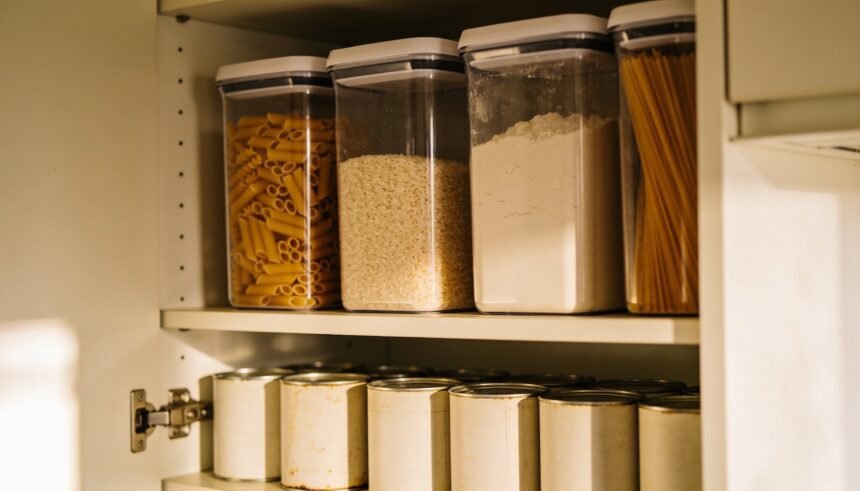
Pantry moths and weevils are the Australian pantry problem. They arrive inside packaged grains and flour and spread to everything. Two things control them: keep flour, rice, pasta and cereal in sealed containers rather than opened packets, and put flour and grains in the freezer for a few days after purchase before transferring them.
Heat degrades a pantry. A cupboard above or beside the oven is the worst storage in the kitchen. Oils go rancid and everything ages faster. Use the coolest cupboard for the things you keep longest.
Potatoes and onions separately, both in the dark, neither in the fridge.
Label the freezer or you will not know what it is. Masking tape and a marker. Unlabelled frozen containers are discovered in eighteen months and thrown out.
Freeze flat. Bags frozen flat stack, store in a fraction of the space and defrost in a fraction of the time.
Follow the storage and reheating guidance on the label, and for general food safety questions the Food Standards Australia New Zealand guidance is the Australian reference.
Building it without a $300 shop
Do not buy this list in one go. Add two or three items to each weekly shop until it exists, ideally when they are on special. The freezer half builds itself for nothing, because it is mostly portioning what you already buy and doubling what you already cook.
Next: feeding a family of four on a weekly grocery budget covers the shop itself, mince, chicken and lentils covers stretching protein, and keeping lunchboxes cold covers the other end of the food storage problem.
The one-page family week
One printable page that holds the whole week: meals, school, activities and who is doing the pickup. Free, and we send one useful email a week.
One email a week. No spam, unsubscribe in a click.