What is in this guide
NSW Food Authority testing found that lunchboxes containing a frozen drink or an ice brick had bacteria levels three times lower than lunchboxes left at ambient temperature. The same work found sandwiches in paper bags ran up to 12 degrees warmer than sandwiches in a lunchbox packed with a frozen drink.
So the answer is a frozen item inside an insulated box, every day, from about November through March. The rest is detail, and some of it saves you time rather than costing it.
Why the Australian timing makes this worse
Term one starts in late January, which is the hottest stretch of the Australian year. Food is packed at seven, eaten at eleven and again at one, and spends the intervening hours in a school bag on a hook in a corridor. NSW Food Authority survey work recorded maximum temperatures across Sydney and Parramatta ranging from 21 to 42 degrees, which is comfortably inside the range where bacteria multiply.
The bag itself is doing more work than most people realise, which is why one of the most useful habits costs nothing.
What to freeze
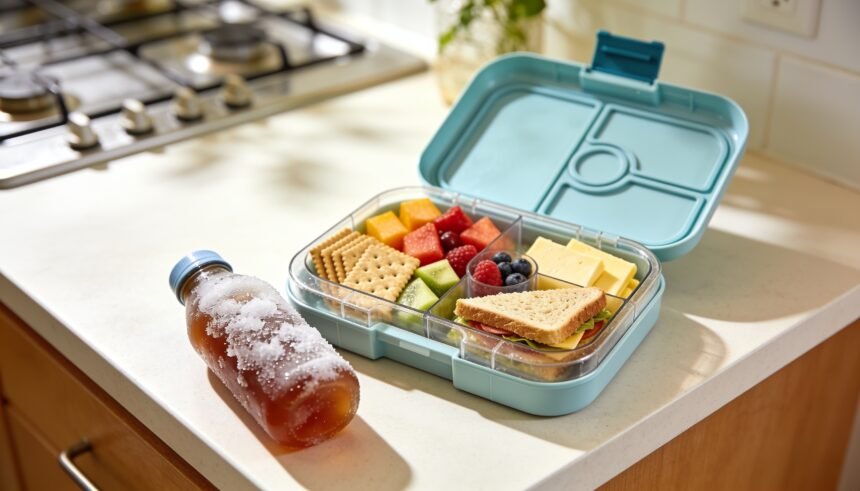
A drink bottle, filled about three-quarters and frozen overnight. This is the best option because it does two jobs: it keeps the food cold and it thaws into a cold drink by lunch. Leave the headspace or the bottle splits.
A commercial ice brick. Reliable, reusable, and worth having two so one is always frozen. Slimmer bricks sit better against the food than chunky ones.
A frozen yoghurt tube or juice box, if your school allows it. It doubles as part of the lunch and thaws to edible by recess.
Freeze it the night before, not the morning of. A part-frozen bottle does very little.
Where it goes
Put the frozen item next to the food that needs to stay cold, not floating in a corner. Cold sinks, so the standard advice is to sit the frozen item on top of or directly beside the meat, dairy and salad items.
The foods that need it: sandwiches with meat, chicken or egg, soft cheese, yoghurt, dips, cut fruit and anything with mayonnaise.
What needs no cooling at all
This is the part that saves you time, and most lunchbox advice skips it. Food authority guidance is clear that a number of common lunchbox items are safe without an ice pack:
- Whole fruit
- Whole vegetables, including carrot and cucumber sticks packed dry
- Hard cheese
- Bread, crackers and plain baked items
- Canned meat and fish in unopened portions
If the whole lunch is built from that list, one frozen item is plenty and you do not need to think about it further. Building two days a week around those foods deliberately is a reasonable summer strategy.
Keep the bag out of the sun
Food authority guidance is that a lunchbox kept inside the school bag stays cooler for longer, particularly when the bag is away from direct sunlight and other heat sources.
That makes it worth one sentence at drop-off: keep the bag on the hook or in the shade, not on the concrete. It sounds trivial and it is one of the highest-value things you can say, because the bag is an insulating layer that works all day for free.
An insulated lunch bag or a plain box
An insulated bag holds cold longer than a bare plastic box, and on a 38 degree day that difference is real. If you already own a hard lunchbox that your child likes, putting it inside an insulated cooler bag works as well as replacing it.
What matters more than the bag is whether it closes properly. An insulated bag left gaping in a school bag is just fabric.
The morning routine that makes it automatic
- Last thing at night: put the drink bottle in the freezer, three-quarters full. Put the spare ice brick in too.
- Morning: pack the cold items and lay the frozen bottle directly against them.
- Close it properly. Lid clicked, bag zipped.
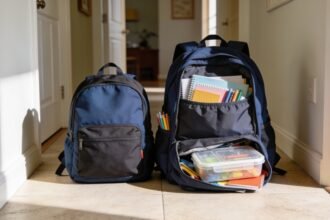
- Lunchbox inside the school bag, not clipped to the outside.
- At the end of the day, empty it and wash it. A lunchbox that spends the night closed with crumbs in it is the actual source of most lunchbox smells.
Hot days and the honest limit
There is a point at which no amount of ice makes a chicken sandwich a good idea. On days forecast over about 35 degrees, it is reasonable to shift the protein to something more stable: hard cheese, a tin of tuna eaten at school, a wrap with hummus rather than mayonnaise.
That is a judgement call rather than a rule, and it is the kind of thing worth deciding on the Sunday rather than at 7am when the forecast surprises you.
If food keeps coming home uneaten
Warm food is one of the reasons lunch comes home untouched, and it is worth ruling out before you conclude your child is being difficult. A warm yoghurt and a warm sandwich are genuinely unappealing. Getting the temperature right sometimes solves what looked like a fussiness problem.
Next: the back to school checklist covers the gear side of term one, and what actually goes in a prep bag is the version for the first year.
The one-page family week
One printable page that holds the whole week: meals, school, activities and who is doing the pickup. Free, and we send one useful email a week.
One email a week. No spam, unsubscribe in a click.