What is in this guide
There is no reliable single national figure, and anybody quoting one without a method is estimating. What does exist is useful.
Australian Institute of Family Studies estimates put education at around $61 a week among the largest expenditure categories for lower-income families with two school-aged children, sitting behind food at $77 and housing at $65 in a total of about $340 a week for the two children. Separately, 2026 research puts average spending at about $8,472 a year per child across all categories.
The more useful exercise is to build your own number from the six components, because your school, your year level and your state move it far more than any national average does.
The six components
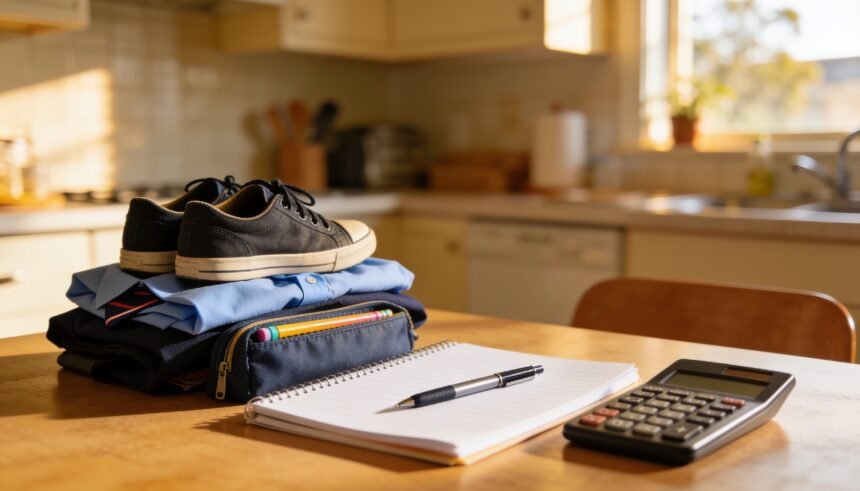
1. Uniform. Highly variable by school and sector. Government school uniforms are generally cheaper than Catholic or independent, and blazers and formal items are the expensive part. Almost always available second-hand.
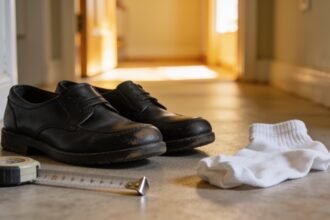
2. Shoes. Usually the single largest clothing item, and it recurs at least annually because feet grow.
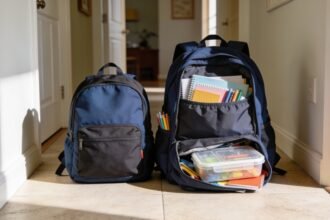
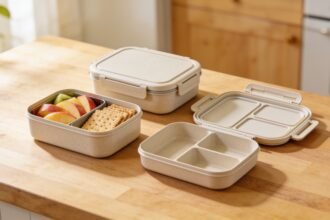
3. Bag and lunch gear. Backpack, lunch box, drink bottle. The backpack lasts a few years if bought properly; the lunch gear often does not.
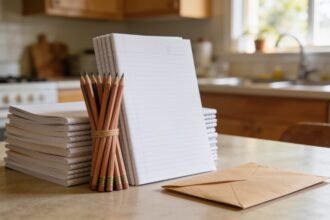
4. Stationery and book packs. Either a list you shop yourself or a pre-assembled pack. The pack is convenient and is almost always optional.
5. Fees, levies and contributions. Government schools request contributions and charge for some materials and optional activities. Catholic and independent schools charge fees directly. Terminology differs by state.
6. Devices. Where a school runs BYOD. Victoria requires at least one option at no more than $980 including GST where a Victorian school runs a program, and a Queensland state school example has offered hire at $250 a year.
Why January hurts more than the total suggests
All six land in the same four weeks, alongside Christmas having just happened and often a holiday. The annual amount is manageable. The January concentration is what causes the problem.
This is one of the few genuinely predictable expenses in a family year. It recurs, the timing is known, and the rough size is knowable by November.
Building your own number
Do this in November, not January.
- Last year’s actual spend. Check the bank statement for January rather than trying to remember. Most people underestimate by a wide margin
- Add the known fixed items: fees or contributions, book pack or levy if applicable
- Add what has been outgrown: shoes almost always, uniform usually, bag sometimes
- Add any year-level jump: year 7 is by a distance the most expensive year, with a new uniform, new bag, a device and subject levies together
- Subtract what you already own, after actually looking in the drawer
- Divide by the months until January and set that amount aside
Where the money actually goes back
Second-hand uniforms. Most Australian schools run a uniform shop or permit a swap group. Blazers and formal items are where this saves most.
Second-hand textbooks, where the edition matches. The largest single saving available in high school.
Decline the book pack if you already hold half the list. The convenience is worth paying for from a standing start and much less so otherwise.
Buy shoes outside January once you know the size. Buying in November avoids both the crush and the peak pricing.
Use a device you already own if it meets the school’s minimum specification. Nothing in a typical BYOD policy requires a new device.
Ask about support. State back-to-school assistance programs exist and change; schools also hold payment plans, hire schemes and hardship arrangements that are almost never printed on the list you receive. They are accessed only by families who ask.
What not to do
Do not put school costs on a high-interest arrangement before speaking to the school. Payment plans and loan devices frequently already exist at a fraction of the cost.
Do not buy against a guess. The most expensive January mistake is buying a device or a book pack that does not match what the school specified.
Do not assume the national average applies to you. Your school, sector, state and year level move the number far more than any average does.
Next: the real cost of a school device covers the largest single line, BYOD device rules covers what to ask before buying, book packs and stationery lists explained covers what is optional, and the year-by-year shopping list covers what each level needs.
The one-page family week
One printable page that holds the whole week: meals, school, activities and who is doing the pickup. Free, and we send one useful email a week.
One email a week. No spam, unsubscribe in a click.