What is in this guide
A grocery budget only means something once it is attached to an actual trolley. Here is one worked example: a list built to a $150 target for a household of four, and the five dinners it turns into. Treat the figure as a planning anchor to adapt against your own household’s prices and appetites, not a guaranteed total, since shelf prices move by store, region and week.
This is a dinner-focused list. It assumes breakfast, lunch and snacks are covered separately, and that the household already has basic oil, salt and a few dried herbs in the cupboard.
The list
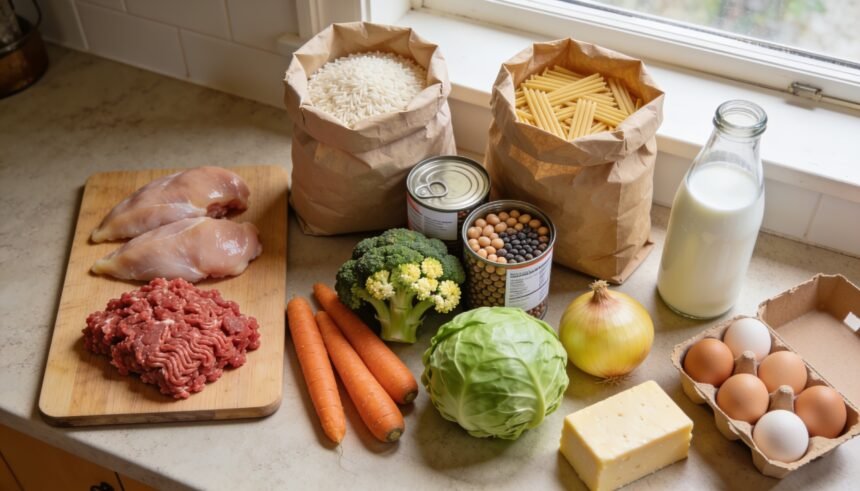
Protein: 1 kg chicken thigh fillets, 500 g beef mince, 400 g tin chickpeas, 400 g tin lentils, six eggs.
Carbohydrate base: 1 kg rice, 500 g pasta, four large potatoes, one loaf of bread.
Vegetables: one bag of carrots, one broccoli, one bag of frozen mixed vegetables, one onion, two tins of chopped tomatoes, one cabbage.
Dairy: 2 L milk, 250 g cheese, one tub of plain yoghurt.
Extras: one jar of curry paste or similar flavour base, stock cubes, a small bag of frozen peas.
That list is built to land near $150 at a typical major or discount supermarket when bought on home brand where the brand does not matter, which is most of it. The two places worth paying more are the chicken and the cheese, where the cheapest option is often noticeably worse. Mince, chicken and lentils: stretching protein covers the reasoning behind that trade-off in more depth.
Nothing on this list is single-use. The cabbage, carrots and frozen vegetables appear across several dinners rather than one each, and the chicken and mince are both portioned to stretch across two meals apiece.
Five dinners from this list
1. Chicken and vegetable curry. Half the chicken thigh, diced, cooked with the curry paste, one tin of chopped tomatoes, carrots and the frozen mixed vegetables. Serve over rice. The remaining rice from this cook covers lunch the next day.
2. Beef and lentil bolognese. Half the mince combined with the tin of lentils, onion, the second tin of tomatoes and a stock cube, served over pasta. Adding the lentils stretches 250 g of mince across four portions without anyone noticing the difference in the sauce.
3. Baked potato with chickpea and vegetable topping. Four baked potatoes topped with the tin of chickpeas warmed through with the remaining frozen peas and a little cheese grated over the top. A genuinely cheap dinner that uses almost nothing from the rest of the list.
4. Fried rice with egg and the remaining chicken. The second half of the chicken thigh, diced small, cooked with two or three eggs, the rest of the rice, shredded cabbage and any leftover frozen vegetables. This is the dinner that absorbs whatever is left over from earlier in the week, which is the point of putting it near the end.
5. Mince and vegetable soup. The remaining mince browned with the last of the carrots, cabbage and a stock cube, simmered with water and served with bread and butter. A low-effort dinner for the night the week catches up with everyone.
Two dinners use chicken, two use mince, one uses neither. Every vegetable on the list appears in at least two meals, which is deliberate: a single bag of carrots bought for one recipe and left to go soft in the crisper is money spent on waste rather than dinner. What food waste actually costs a household covers why that matters more than any single swap on this list.
What makes the total move
The two biggest variables are the chicken and the cheese, because they are the two items where price differs most between retailers and cuts. Buying a larger pack of thighs when the smaller pack is proportionally more expensive, and choosing a block over pre-grated cheese, both help without changing what anyone eats.
The one substitution worth knowing: swapping half the mince in dinner two for a second tin of lentils brings the total down further and is close to undetectable in a bolognese sauce. Feeding a family of four on a weekly grocery budget ranks this kind of swap against the other changes that actually move a bill, in order of size, for households wanting to go further than one week’s list.
Adjust it, don’t just copy it
A list built for one household’s appetites and one week’s shelf prices will not land on exactly $150 for every household. Hungrier eaters need larger protein portions and will spend more on the chicken and mince lines specifically, not on the vegetables or pantry items. Smaller households can usually run this same list across more than five dinners.
The method that makes any weekly figure repeatable is building the list from planned dinners first, then shopping to it, rather than shopping first and hoping a plan appears from what came home. How to meal plan for a family covers that process for building a list like this one from scratch, week to week, rather than copying a single worked example.
The one-page family week
One printable page that holds the whole week: meals, school, activities and who is doing the pickup. Free, and we send one useful email a week.
One email a week. No spam, unsubscribe in a click.