What is in this guide
Three different things usually arrive in the same envelope and they have different rules.
A stationery list is a list of items you buy yourself, anywhere you like. A book pack is a pre-assembled bundle of those items, usually sold through a supplier the school has arranged. A resource levy or contribution is a payment to the school covering materials it provides directly.
Knowing which is which tells you where you actually have a choice.
The stationery list
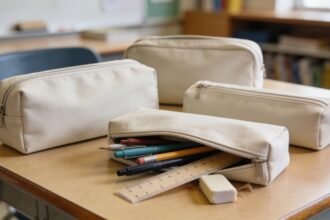
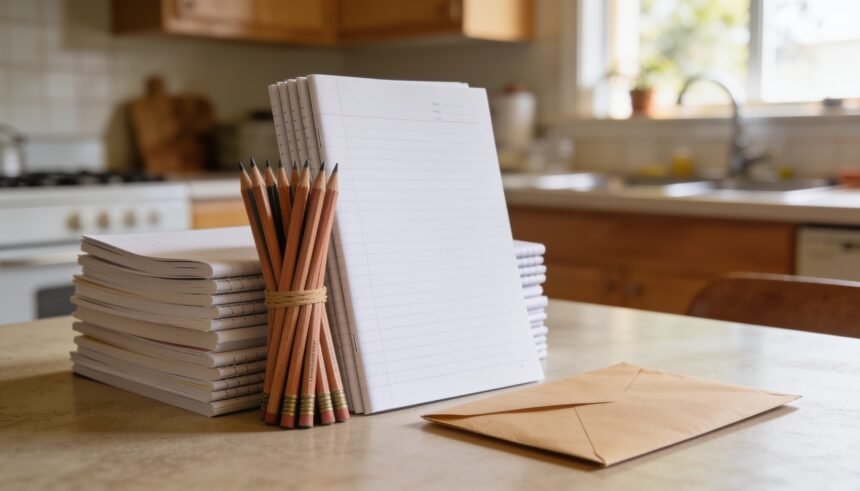
The school specifies items and you source them. Exercise books are often specified exactly, because teachers want consistent formats, and glue sticks and pencils are often specified by quantity.
You can buy these anywhere. Nothing requires you to use a particular retailer, and prices vary considerably between them. Where the school specifies a format precisely, match the format rather than the brand unless the brand is named.
Mark what you already own first. Most households already have half of a primary school stationery list in a drawer.
The book pack
A book pack is the same list, pre-assembled, sold as one item. The convenience is real: one transaction, delivered or collected, guaranteed to match the list.
The trade-off is that you are buying everything, including items you already have, and the per-item price is not always better than buying it yourself.
Book packs are almost always optional. Where a school offers one, you can usually decline and buy the items yourself. If it is not clear from the paperwork, ask directly rather than assuming.
The levy or contribution
This is a payment rather than a purchase, and it is where the real confusion sits.
Australian government schools cannot charge fees for instruction in the standard curriculum, but they do request contributions and can charge for some materials and optional activities. The terminology varies by state: voluntary contribution, resource levy, materials and services charge, subject levy.
Catholic and independent schools operate under different arrangements and charge fees directly.
What to establish for your own school: whether a given line is a compulsory charge or a requested contribution, what it covers, and what happens if you cannot pay it. The rules differ by state and sector, so check your own school and state education department rather than relying on a general description.
Questions worth asking
Send these in writing, early.
- Is the book pack optional, and can we supply the items ourselves?
- Which items on the list are specified exactly, and which are flexible?
- Is this line a compulsory charge or a voluntary contribution?
- What does the levy actually cover?
- Are payment plans available?
- Is there hardship support, and how do we access it?
- Can we buy second-hand for any of these items?
Schools answer these routinely. The parents who ask are usually the ones who end up paying less.
Where the savings actually are
Audit before you buy. The drawer usually holds a term’s worth of glue sticks.
Decline the pack if you have half the items. The convenience is worth paying for if you are starting from nothing and much less so if you are not.
Buy the flexible items cheaply and the specified items exactly. The school cares about the exercise book format, not the brand of your eraser.
Buy textbooks second-hand where the edition matches. High school textbooks are the single biggest saving available and most schools run or permit a second-hand market.
Ask about payment plans before the due date, not after.
If you cannot pay
Say so to the school, early and directly. Australian schools have arrangements for this, including payment plans, hardship provisions, second-hand options and state-based support programs that are almost never printed on the paperwork.
A child is not excluded from standard curriculum instruction in a government school over an unpaid voluntary contribution. If you are told otherwise, that is a conversation to have with the school and, if needed, your state education department.
Next: the year-by-year shopping list covers what each level needs, what back to school actually costs per child puts numbers on it, and stationery for high school subjects covers the year 7 jump.
The one-page family week
One printable page that holds the whole week: meals, school, activities and who is doing the pickup. Free, and we send one useful email a week.
One email a week. No spam, unsubscribe in a click.