What is in this guide
Most stain failures happen in the first minute, and almost always for the same reason: hot water.
Heat sets protein stains permanently. Blood, grass, milk, egg, sweat and most food go into the fabric for good if they meet hot water or a dryer before they are treated. A stain that would have come out with cold water and ten minutes becomes a permanent mark.
So the rules first, because they matter more than any product.
The five rules
1. Cold water, always, first. Rinse from the back of the fabric so the stain is pushed out rather than through.
2. Blot, do not rub. Rubbing spreads the stain and damages the fibres, particularly on synthetics.
3. Treat before washing, and check before drying. A washed stain that is still visible will set permanently in a dryer or on a hot line. Check every stain after the wash and before it dries, and re-treat if it is still there. This single habit rescues more garments than any product.
4. Fresh is easier. A stain treated the same day is a different proposition to one found a week later in the bottom of a bag.
5. Test somewhere hidden before applying anything to a coloured or delicate garment, particularly on a school jumper.
The eight stains a uniform actually gets
Grass
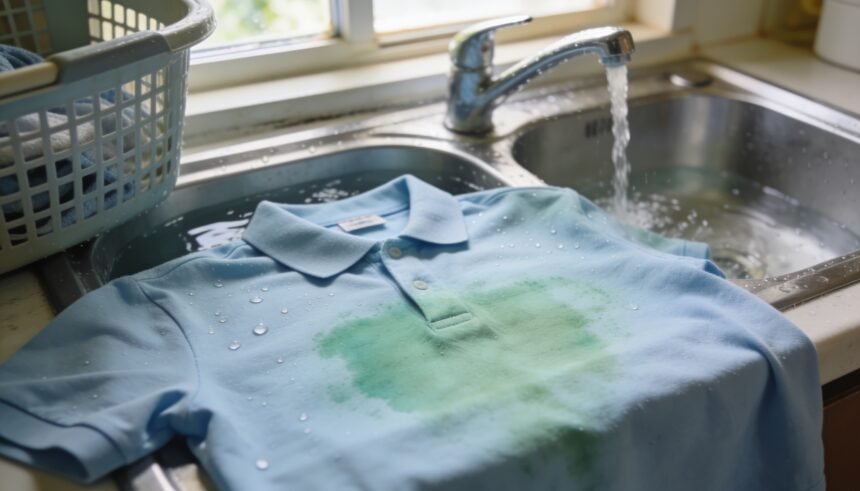
Cold rinse from the back. Then soak in cold water with a laundry detergent or an oxygen-based product, following the product’s instructions.
Never hot water first. Grass is a protein and chlorophyll combination and heat sets it.
Sunlight afterwards helps considerably on a white or pale garment.
Blood
Cold water immediately, from the back.
Salt in cold water is the old remedy and works reasonably on fresh blood.
Never hot water. This is the most heat-sensitive stain of all.
Dried blood needs a long cold soak before any washing.
Food and sauce
Scrape off the solids first, then cold rinse from the back.
Detergent worked into the stain and left for a few minutes before washing.
Oily food is two stains and needs the grease treatment below as well.
Grease and oil
The exception to the cold water rule. Grease responds to warm water and detergent.
Dish soap is designed to cut grease and works on fabric for the same reason.
Blot first with paper towel to lift what is sitting on the surface, and consider cornflour or talc on a fresh grease mark to absorb it before treating.
Ink and pen
Common on a uniform pocket and frequently a whole shirt lost.
Put an absorbent cloth underneath so the ink has somewhere to go.
Dab, do not rub, with rubbing alcohol or hand sanitiser, working from the outside inward.
Rinse cold and repeat. Do not wash until it has stopped transferring.
Mud and clay
Let it dry completely first, which is counterintuitive and correct. Wet mud smears into the fibres and dried mud brushes off.
Brush off the dry residue, then cold rinse and treat what is left.
Red clay is a genuinely difficult Australian stain in parts of the country and may not come out entirely from a pale fabric.
Sunscreen
An Australian-specific problem and one of the most annoying, because it appears on collars all summer and often shows as an orange or yellow mark on pale fabric.
Treat it as a grease stain, since the issue is the oils and, in some cases, a reaction with minerals in the water.
Do not let it sit for weeks, because it becomes very difficult.
Deodorant and sweat marks
Yellowing on the collar and underarms builds gradually.
A pre-soak with an oxygen-based laundry product following the product instructions is the usual approach.
Sunlight helps, as below.
The free Australian tool
Sunlight bleaches. It is genuinely effective on white and pale fabrics, it costs nothing, and it is more available here than almost anywhere.
Wash first, then dry the stained area in direct sun while still damp. The combination of damp fabric and UV is what does the work.
It will fade coloured fabric too, so dry coloured uniforms inside out or in the shade. This is why a school polo can end up two different shades.
It works on sunscreen, sweat yellowing, food and grass marks on pale fabric, and it is the first thing to try before buying anything.
Things that make it worse
The dryer, on anything still stained. The single most common way a rescuable stain becomes permanent.
Hot water on a protein stain.
Rubbing.
Mixing products. Never combine bleach with ammonia or with acidic cleaners, which produces dangerous gases. Use one product at a time, rinse between, and follow the label.
Chlorine bleach on wool, silk or many synthetics, which damages the fibre. Australian school jumpers are frequently wool or a wool blend.
Ignoring the care label, which is the authority on what the garment can take.
Managing it across a school week
Two of everything. The single most useful uniform decision there is, and it is cheaper than the emergency washing it prevents.
Treat stains the day they arrive, at the point the uniform comes off. A tray or bucket by the laundry for stained items works better than the general basket.
Wash uniforms separately from towels, which shed lint onto dark polo shirts.
Check pockets, particularly for pens and for anything that will melt.
Accept some losses. A uniform is work clothing for a child and some marks are permanent. A shirt kept for sport days is a better outcome than an hour spent on a mark nobody at school will notice.
Next: what to actually throw out, and what to keep covers when a garment is finished, a drop zone or mudroom in a small entry covers catching the uniform before it reaches the floor, and dog fur, floors and a clean house covers the other laundry problem in a pet household.
The one-page family week
One printable page that holds the whole week: meals, school, activities and who is doing the pickup. Free, and we send one useful email a week.
One email a week. No spam, unsubscribe in a click.