
What is in this guide
A multiplication grid to twelve looks like 144 facts to learn and is one of the more demoralising objects a nine year old encounters.
It is nowhere near 144.
Remove the ones they already know. Multiplying by one is nothing. By ten is a pattern they have. By two is doubling, which they can already do. By five they usually know from counting. By eleven up to nine is a repeated digit.
Then remove the duplicates. 7 x 8 and 8 x 7 are the same fact. That halves what remains.
What is left is a genuinely small set, and most of the difficulty concentrates in a handful of facts: the sevens, the eights, and the middle of the sixes. Showing a child the grid with everything they already know crossed off is the single most encouraging thing you can do, and it takes five minutes.
The order that works
Do not go 2, 3, 4, 5, 6 in sequence. Go by difficulty and by usefulness.
Start with 2, 10 and 5. Almost free, and they build confidence.
Then 4, which is doubling twice.
Then 3.
Then 9, which has the strongest patterns. The digits of every answer add to nine, and the finger method works and is not cheating.
Then 6.
Then 8, which is doubling three times.
Then 7, which is the genuinely hard one and where most children get stuck. By this point they already know 7 x 2, 7 x 3, 7 x 4, 7 x 5, 7 x 9 and 7 x 10 from the other tables, and the remaining unknowns are a very short list.
Then 11 and 12 if the school requires them.
One table at a time until it is solid. Moving on before a table is secure is what produces a child who knows some of everything and none of anything.
Five minutes a day
Short and daily beats long and weekly, by a wide margin, for anything being committed to memory.
Five minutes, same time. In the car, while dinner cooks, walking to school.
Verbal, not written. Writing slows it down and the goal is recall speed rather than working out.
Mix the order. A child who can recite a table in sequence but cannot answer 6 x 7 asked cold has learned a song, not the facts.
Track what is actually unknown. A short list of the specific facts they miss, practised deliberately, rather than practising the whole table again to get to the four they do not know.
Understanding versus recall
Both matter and they are different jobs.
Understanding is what multiplication means: groups of, arrays, repeated addition. A child who does not have this will not retain the facts and will not be able to reason when they forget one.
Recall is speed. Once the concept is there, the facts need to become automatic so that working memory is free for the actual problem.
If a child does not have the concept, drilling makes it worse, because they are memorising noise. The test: ask them to draw or explain what 4 x 3 means. If they cannot, go back to the concept with objects on a table before practising anything.
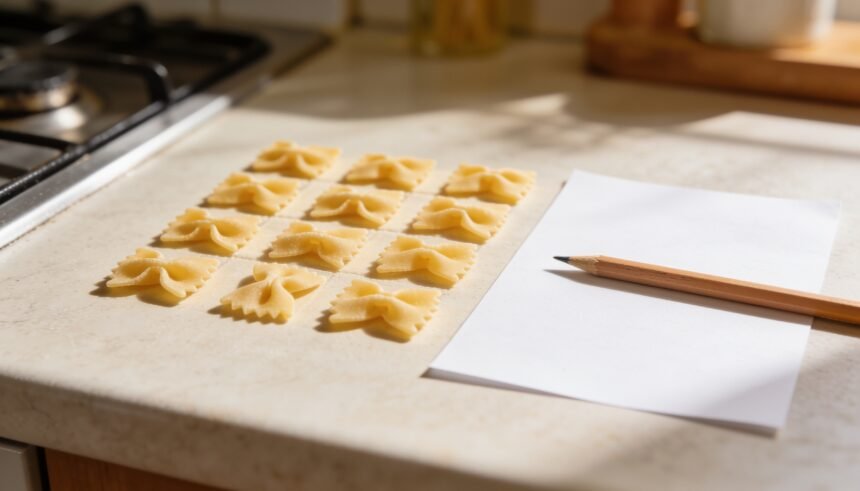
Arrays are the most useful representation: four rows of three counters, blocks or pasta pieces. It makes the duplicate fact obvious as well, because turning the array sideways gives 3 x 4.
What works for practice
Skip counting out loud, particularly with a rhythm.
Cards or a list, mixed order, a few at a time.
In the car, which is the single most used and most effective slot in Australian households.
Games: dice games, card games where two cards are turned over and multiplied, a family quiz where the adults also have to answer.
Songs and chants work well for some children and not at all for others.
Apps exist and some are good. No app is named here, because none has been assessed for this article and the school may already be using one. Ask the teacher what the school uses, since consistency with the classroom method matters more than the app.
Real situations: four packets of six, three rows of eight tiles, working out a total at the shops. This is where it becomes useful rather than a school task, and it is the same principle as the practical activities in free STEM activities using household items.
What does not work
Timed tests as the main method. They measure and they do not teach, and for an anxious child they actively interfere. Some schools use them and that is the school’s decision; at home they are rarely the right tool.
Long sessions. Twenty minutes of tables is counterproductive.
Practising the whole grid when only six facts are actually unknown.
Punishment, or linking it to privileges. It makes maths the thing that costs them something.
Teaching a method that conflicts with the school’s. This is the most common way a parent makes it harder, and it is the same trap as in homework battles: what to change first. Ask what they are being taught and use that.
When to ask for help
Talk to the teacher if: the facts are not sticking after sustained practice, the child is anxious about maths specifically, they have gone backwards, or you are unsure what the school expects at their year level.
Ask what the school’s expectation actually is, because it differs between schools and year levels and parents frequently worry about a timeline that does not exist.
Persistent difficulty with number that is out of step with everything else is worth raising rather than practising through indefinitely. Schools can arrange or refer for assessment.
This article does not diagnose anything, and difficulty with multiplication facts on its own is not an indicator of anything.
Next: homework battles: what to change first covers the wider afternoon, home readers: how to survive the nightly routine covers the other nightly task, and free STEM activities using household items covers making maths practical.
The one-page family week
One printable page that holds the whole week: meals, school, activities and who is doing the pickup. Free, and we send one useful email a week.
One email a week. No spam, unsubscribe in a click.