What is in this guide
- Format one: the bits box
- Format two: the wrap or the roll
- Format three: last night’s dinner, reorganised
- Format four: the baked thing
- Format five: the breakfast lunch
- The heat problem, which decides a lot of this
- Allergens, which are your school’s rule not ours
- Making it sustainable
- If it keeps coming home untouched
The reason sandwich fatigue sets in is that a sandwich is a recipe and you need a format.
A recipe gives you one lunch. A format gives you a shape you can fill with whatever is in the fridge, indefinitely, without thinking. Five formats is a term’s worth of variety.
Two constraints govern all of it in Australia. It has to survive several hours in a bag in a warm corridor, and it has to comply with whatever your school says about allergens.
Format one: the bits box
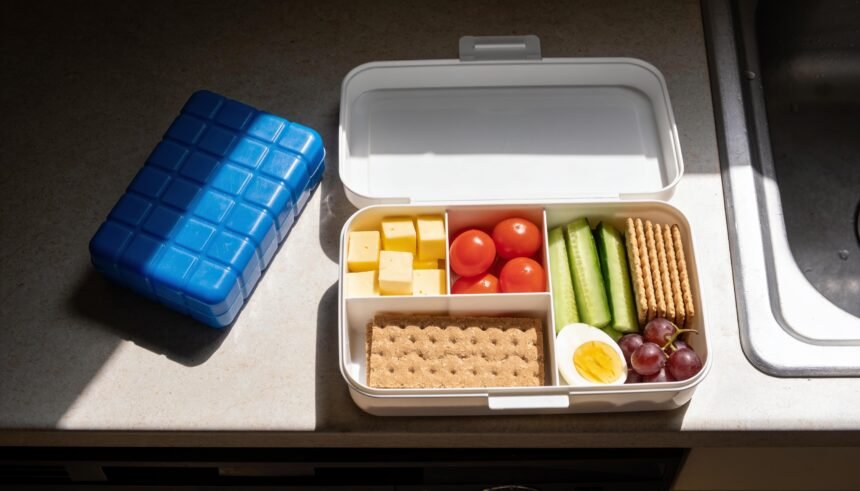
Nothing is assembled. Several small things, none of which is a meal, which together are.
Crackers or rice cakes, cheese cubes, cherry tomatoes, cucumber sticks, carrot, a boiled egg, sultanas, a few olives, some deli meat rolled up, a piece of fruit.
This is the most reliable format for a child who does not eat much at school, because nothing needs commitment. It also uses whatever the fridge has, which is the real point.
Format two: the wrap or the roll
Same fillings as a sandwich, different shape, and children treat it as a different food entirely.
Tortilla, flatbread, a roll, a pita pocket, or a lettuce cup for a child who will accept it. Roll it tightly, cut it in half so it does not unroll, and wrap it.
Wet fillings make it soggy. Put a barrier layer of cheese or lettuce between the bread and anything wet, or send the wet component separately.
Format three: last night’s dinner, reorganised
The most useful habit in this entire article is cooking slightly more at dinner with tomorrow in mind.
- Pasta or rice from last night, cold, with something through it
- A cold sausage sliced up
- Roast vegetables that have been in the fridge overnight
- Leftover chicken, shredded
- Anything curry-adjacent that a child will eat cold or at room temperature
Cold pasta with a bit of oil, some cheese and whatever vegetable was on the plate is a legitimate lunch and takes ninety seconds.
Format four: the baked thing
One cook-up on the weekend, portioned and frozen, pulled out in the morning.
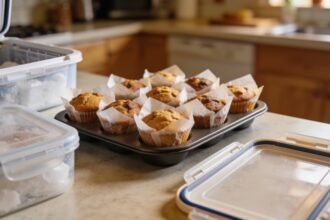
Mini frittatas or egg muffins, savoury muffins, scrolls, slice, pikelets, sausage rolls made at home. They go into the box frozen and are defrosted by lunch, which also helps keep the rest of the box cold.
Freezer-friendly muffins and slices covers the sweet end of this properly, and the same principle applies to the savoury end.
Format five: the breakfast lunch
Underrated and frequently the one that gets eaten.
Yoghurt with something through it, overnight oats, a boiled egg and toast fingers, pikelets, fruit and cheese. Children who are tired of lunch food will often eat breakfast food happily at midday.
The heat problem, which decides a lot of this
An Australian lunchbox is a food safety question from about October to March, and it is the constraint people ignore.
Food safety guidance is that perishable food should be kept out of the temperature range where bacteria multiply, which sits roughly between 5 and 60 degrees. A bag in a corridor in February is squarely inside it.
What actually works:
- A freezer brick, or a frozen drink bottle, which does the same job and gets drunk as it melts
- An insulated bag or box, which matters more than the lunchbox itself. Wet formats need a box that seals as well, and leakproof lunchboxes that are genuinely leakproof is where that gets decided
- Freeze the food. A frozen yoghurt tube or a frozen baked item is both the lunch and the ice pack
- Keep it out of the sun and out of the car
- Send less dairy and meat on the hottest days, and lean on the shelf-stable things: crackers, hummus in a sealed tub, fruit, nut-free bars
- Anything that comes home warm and uneaten goes in the bin, not back in the fridge
Keeping lunchboxes cold through an Australian summer covers this in detail and is worth reading once before summer.
Allergens, which are your school’s rule not ours
Most Australian primary schools have a policy on nuts, and some extend it to other allergens such as egg or sesame. The policies vary between schools and between year levels.
Read your school’s policy and follow it exactly. This article is not the authority on it and neither is another parent. Where a school asks for nut-free, that includes nut butters, nut-based bars and products with traces, and a spread that looks fine to you may not be.
If your own child has an allergy, the school will have a management plan process, and that is a conversation with the school and your doctor rather than a lunchbox question.
Making it sustainable
- Prep the components on Sunday, not the lunches. Cut vegetables, boil eggs, portion crackers, bake one thing
- Assemble the night before, and keep it in the fridge overnight
- Let them pack it from about seven or eight, choosing from what is available. It takes longer for two weeks and then it is gone from your list
- Rotate the formats rather than the recipes. Bits box Monday, wrap Tuesday, leftovers Wednesday, baked thing Thursday, breakfast lunch Friday
- Accept a floor. If one component is always the same and always eaten, leave it alone
The same Sunday session covers the afternoon as well, which is what after-school snacks that hold until dinner is built from.
If it keeps coming home untouched
That is a different problem from variety, and the usual causes are not culinary: not enough time to eat, wanting to play, a box they cannot open, or something social. Packing lunch for a child who will not eat at school works through it properly.
The one-page family week
One printable page that holds the whole week: meals, school, activities and who is doing the pickup. Free, and we send one useful email a week.
One email a week. No spam, unsubscribe in a click.