What is in this guide
The first thing to say is that slowing down is not simply age. Stiffness, reluctance to jump, difficulty on stairs and a changed gait are usually signs of pain, and pain in dogs is treatable.
Book a veterinary check before you rearrange the house. Dogs conceal discomfort extremely well, owners routinely attribute it to getting old, and arthritis and other conditions are managed far better when they are identified early. Everything below is about the environment, and none of it substitutes for that appointment.
With that done, here is what actually helps in an ordinary Australian house.
1. Fix the floors first
This is the single biggest problem and it is specific to how Australian houses are built. Tile, polished timber, vinyl and floating floors are everywhere here, and they are slippery for a dog with reduced strength or grip.
A dog that slips once becomes hesitant, a hesitant dog moves less, and moving less accelerates the loss of muscle that caused the problem.
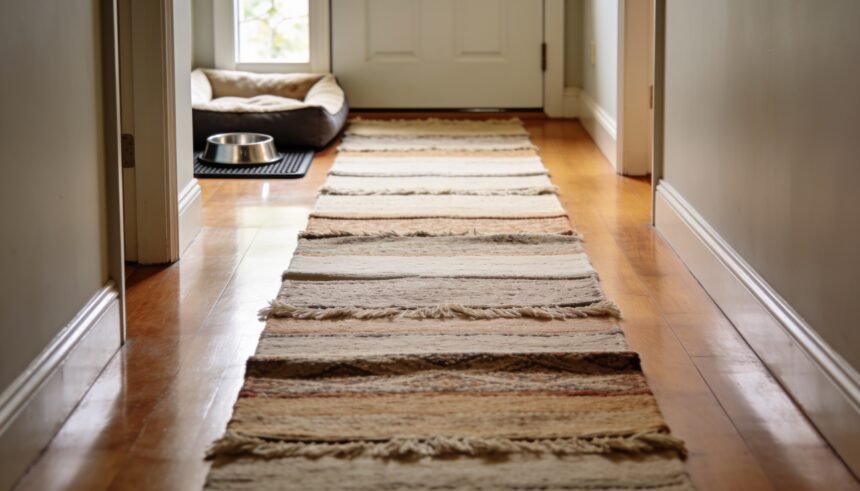
The fix is a path, not a rug. Lay runners, rugs, yoga mats, bath mats or carpet offcuts to create a continuous non-slip route between the places the dog actually goes: bed, water, door, favourite spot.
Gaps break the path. A dog will not cross a metre of tile to reach the next rug, and the whole point is that it never has to.
Non-slip backing or mat grippers, because a rug that slides is worse than no rug.
Check the outdoor surfaces too. Wet tiles, a slick verandah and painted concrete are all hazards.
2. Get the nails short
Long nails change how a dog stands and reduce grip on hard floors. This matters considerably more for an older dog, and it is free if you do it yourself as in nail trimming without the drama.
Check the pads and the fur between them. Overgrown fur between the pads acts like a sled on hard floors, and trimming it flush improves grip immediately. This is a genuinely underrated fix.
3. Remove the jumps
Every jump is a candidate for injury and for pain.
Ramps or steps to the bed, the sofa and the car, if the dog is allowed on them. A ramp is gentler on joints than steps.
Or stop the jumping entirely by moving the dog’s sleeping spot to floor level.
The car is the most dangerous jump and the one most often overlooked, because it is high and the landing is hard.
4. Rethink the bed
Older dogs need support and warmth, and a bed that is hard to get out of is a bed they will avoid.
Not too high, not too soft. A deeply soft bed is difficult to rise from. A supportive bed at low height is easier.
More than one, in the rooms the dog actually uses. An older dog should not have to walk to the laundry to lie down.
Away from draughts and off cold tile. Best dog beds in Australia by size and sleeping style covers the shapes, and note that an older dog’s preference often changes as joints stiffen.
5. Stairs
Assess honestly whether the dog should still be using them.
A gate at the top and the bottom removes the decision, and a dog that manages stairs going up may struggle coming down, which is the direction injuries happen.
A runner on the stairs if they are polished timber.
Carrying a large dog is a two-person job and a strain injury for you helps nobody.
6. Raise the bowls, maybe
Some older dogs are more comfortable eating from a raised bowl, particularly those with neck or shoulder discomfort. Whether this suits your dog is a veterinary question, because raised feeding is not appropriate for every dog and there are considerations that depend on the individual animal.
Non-slip mats under the bowls so they do not travel across the floor while the dog eats.
7. Water, everywhere
Multiple water bowls in the rooms the dog uses. An older dog that has to walk to the other end of the house may simply drink less, and hydration matters more with age.
Wide, stable, non-tip bowls.
8. Lighting and clear routes
Vision often declines gradually and unnoticed.
Night lights on the route to the door help a dog that no longer sees well in low light.
Do not rearrange the furniture. A dog with reduced vision navigates from memory, and moving things is genuinely disorienting.
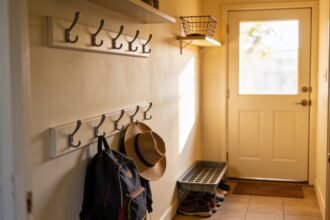
Keep the routes clear of bags, shoes and toys.
9. Toileting
More frequent access outside. Older dogs often need to go more often, and a dog that cannot get out will have accidents and will be distressed about it.
A dog door if practical, or simply more trips.
Never punish accidents. They are almost always a physical matter, and a change in toileting is a reason to see a vet, since it can indicate a treatable condition.
The Australian climate points
Heat is harder on older dogs. Reduced ability to regulate temperature, and often reduced mobility to move to a cooler spot. Cool tiles, shade, fans and water, and shift walks well away from the middle of the day.
Cold is also harder. Stiffness is worse in the cold, and an Australian house with no insulation and a concrete slab gets cold at night. A warm bed off the floor and away from draughts makes a real difference.
Both directions need the dog’s spot to be adjustable rather than fixed in one corner.
Signs that mean a vet, not a rug
Any of these warrant an appointment rather than an environmental change:
Reluctance to rise, stiffness after resting, limping, changed gait, difficulty on stairs that is new, reduced appetite, weight change, increased drinking or urinating, disorientation, changed sleep patterns, night-time restlessness, anxiety that is new, or changes in interaction with the family.
Cognitive changes in older dogs are a recognised veterinary matter and are worth raising rather than accepting.
Senior health checks are worth doing more often than annually for an older dog, and your vet will advise the right interval.
No supplement, medication, treatment or therapy is discussed in this article. Those are veterinary decisions.
Next: best dog beds in Australia by size and sleeping style covers the bed, how much exercise does my dog actually need covers adjusting activity, and dog body language covers reading discomfort a dog is hiding.
The one-page family week
One printable page that holds the whole week: meals, school, activities and who is doing the pickup. Free, and we send one useful email a week.
One email a week. No spam, unsubscribe in a click.