What is in this guide
The instinctive response to a smelly litter tray is to buy something that smells stronger. It is also the worst available option, because many cats dislike scented litter and deodorising additives, and a cat that avoids the tray creates a much larger smell problem somewhere else in the house.
The smell is a symptom. Here are the causes, in the order they usually explain it.
1. It is not being scooped often enough
The most common cause and the least interesting answer.
Scoop at least once a day, twice with multiple cats. Urine clumps and faeces both need removing, and a tray scooped every second day will smell regardless of what litter is in it.
Do a full change regularly. Empty completely, wash the tray, refill. How often depends on the litter and the number of cats, and the honest test is whether it smells after being scooped. If it does, the whole tray needs changing.
2. The tray itself has absorbed it
This is the cause almost nobody thinks of.
Plastic trays develop fine scratches from claws and scooping, and urine soaks into those scratches permanently. After a year or so, a tray can smell no matter how well it is cleaned, because the smell is in the plastic.
If the tray is more than about a year old and smells after a full clean, replace it. Trays are inexpensive and this resolves a problem people have been fighting for months.
Stainless steel trays do not absorb and are worth considering for this reason.
3. There are not enough trays
One tray per cat plus one spare, in different locations, is the widely used guideline.
Too few trays means each one is used more heavily than it can cope with between cleans. It also causes avoidance, covered in why is my cat not using the litter tray.
4. Not enough litter in the tray
Cats bury waste, and they can only bury it if there is enough depth to dig. A shallow layer means urine reaches the plastic directly and faeces sit exposed.
Fill it properly rather than topping up a thin layer, and expect to use more litter than seems necessary.
5. The wrong litter for the situation
Clumping litters generally make daily scooping more effective, because the urine comes out rather than soaking through.
Scented litter is for humans and is disliked by many cats. If you use one and your cat is avoiding the tray, that is a strong candidate for the cause.
Changing litter needs to be gradual, mixing the new into the old over a week or two, or you risk the cat rejecting it. Switching litter without a protest covers it.
6. The position is making it worse
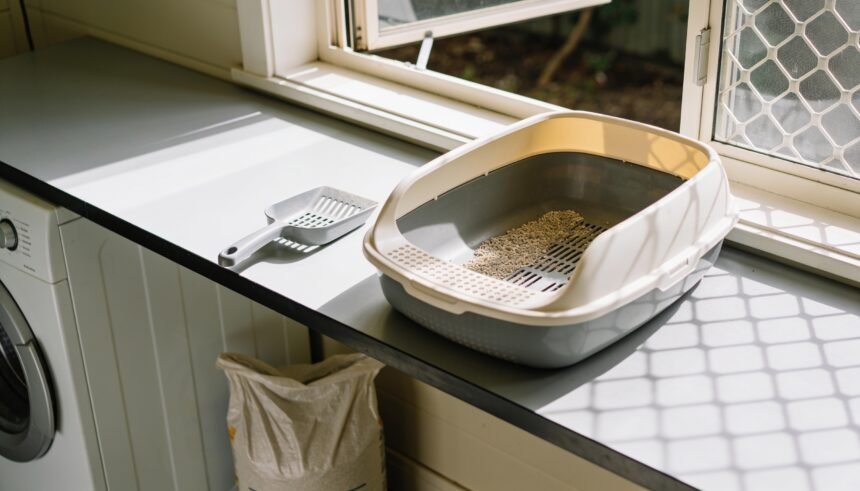
A tray in a small, unventilated room concentrates the smell. A laundry with the door shut, a cupboard, a bathroom with no window.
Ventilation is the fix, not an air freshener. An open window, an extraction fan, or a door left ajar.
Do not move it somewhere the cat will not use, which is the trap. Ventilation matters less than the cat being willing to go there, and the requirements for that are covered in why is my cat not using the litter tray.
Australian heat and humidity make all of this worse. A tray that is manageable in July can be unpleasant in February in the same spot, and summer usually needs more frequent scooping rather than a different product.
7. It is not the tray
A strong ammonia smell that persists after a full clean, or a noticeably changed smell, is worth a veterinary appointment.
Urinary tract problems, kidney disease and diabetes can all change the smell and volume of a cat’s urine, and a cat that is suddenly producing more or differently smelling urine is giving you information.
Straining to urinate, repeated unproductive visits to the tray, or crying in the tray is an emergency, particularly in a male cat. See a vet immediately.
Also check the house. A smell you assume is the tray may be urine elsewhere, from a cat that has been avoiding the tray for weeks.
Cleaning it properly
Warm water and a mild detergent is enough for a routine clean.
Rinse and dry completely before refilling, because damp litter clumps badly and smells faster.
Never use ammonia-based cleaners. Ammonia smells like urine to a cat and can signal that the spot is already a toilet.
Never mix cleaning products, and in particular never combine bleach with ammonia or with acidic cleaners, which produces dangerous gases.
For accidents outside the tray, use an enzyme cleaner, which breaks down the compounds rather than masking them. Ordinary cleaner leaves a scent trail the cat can still detect and return to.
Handling litter safely
Wash your hands after handling litter or the tray.
Cat faeces can carry toxoplasma. Australian health guidance recommends that pregnant people avoid handling cat litter where possible, and use gloves and wash hands thoroughly if it cannot be avoided. Anyone pregnant or immunocompromised should follow their own doctor’s advice rather than an article’s, and this is worth raising at a routine appointment.
Do not flush litter unless the product specifically states it is flushable and your local water authority permits it. Most Australian litters go in the bin.
What not to buy
Deodorising sprays and powders for the tray. They mask, they do not remove, and cats frequently object to them.
Heavily scented litter, for the same reason.
Air fresheners near the tray, which can deter use.
No product is recommended in this article, which is deliberate in a category where the obvious answer is to sell something. The fixes above are free or nearly free.
Next: why is my cat not using the litter tray covers avoidance, keeping a cat happy indoors covers the wider setup, and the new kitten checklist covers starting properly.
If you are considering an automatic tray to avoid the scooping, before you buy a self-cleaning litter box covers what you give up along with the job.
The one-page family week
One printable page that holds the whole week: meals, school, activities and who is doing the pickup. Free, and we send one useful email a week.
One email a week. No spam, unsubscribe in a click.