What is in this guide
They do work. A good automatic tray genuinely removes the daily scoop, and in a small apartment with two cats that is not a small thing.
There are three reasons to think carefully first, and only one of them is the price.
This is an editorial comparison of the category. No unit was bought, installed or used by us, and nothing here is veterinary advice.
The thing you actually give up
The litter tray is a health monitor. Scooping daily tells you how much a cat is urinating, whether there is blood, whether the volume has suddenly increased or stopped, and whether one cat in a multi-cat house has changed.
Those changes are among the earliest signs of several serious conditions in cats, and urinary blockage in a male cat is a genuine emergency measured in hours. The daily scoop is how most owners notice.
An automatic tray removes that observation and replaces it with either nothing, or with an app that counts visits.
What to do about it:
- If you buy one, choose a unit that logs visits per cat and actually read it
- Check the waste drawer yourself weekly, deliberately, rather than only emptying it
- Know the signs regardless: straining, repeated trips with nothing produced, crying in the tray, blood, or toileting outside the tray. Any of those is a vet call, and a male cat straining and producing nothing is an emergency
- In a multi-cat house, be honest that you are losing per-cat information unless the unit provides it
The cat has to agree
This is the failure people do not anticipate, and it is not rare.
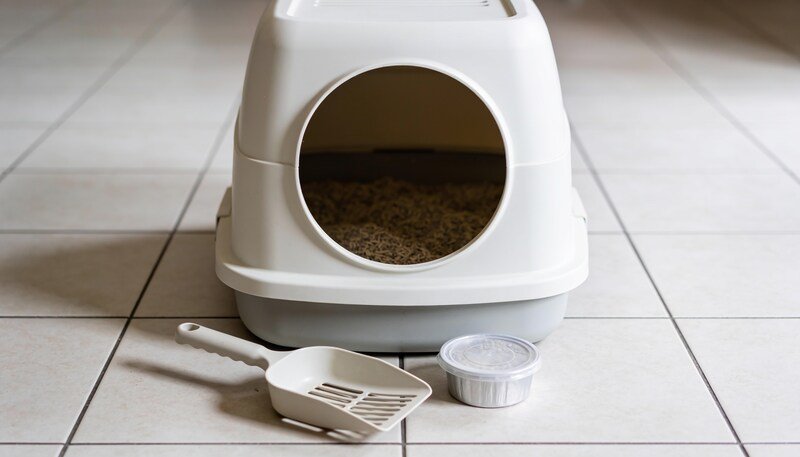
A self-cleaning tray is usually enclosed, it moves, and it makes a noise. Some cats accept it in a day. Some never do, and a cat that will not use a tray does not hold on politely; it finds a rug.
- A nervous or elderly cat is the most likely to refuse
- A kitten should not use one until it is reliably trained and big enough for the unit’s own safety sensors, and the manufacturer will state a minimum weight
- Keep the old tray alongside the new one for several weeks. Do not remove it the day the new one arrives
- If the cat refuses, that is information about the cat, not a training problem to push through
Why is my cat not using the litter tray works through refusal properly, and it is worth reading before spending the money rather than after.
The practical realities
Litter type is not optional. Most automatic trays require clumping clay litter of a particular type and will not work with crystal, paper, wood pellet or corn litters. If you currently use one of those, you are changing the litter as well as the tray, and the cat has an opinion about that too.
Ongoing costs. Some units use proprietary waste bags or liners. Price a year of them before buying, because that changes the comparison against a scoop and a bin liner considerably.
Power. It needs a power point near where the tray goes, which in a laundry or a bathroom may not exist. Running an extension lead to a wet area is not the answer.
Size and placement. These units are much larger than a tray, they need clearance to open, and the good placement rules still apply. Where to put the litter tray in a small home does not stop mattering because the tray is automatic.
Noise. It cycles, and in a one-bedroom apartment it cycles at 3am.
Cleaning. It is not self-cleaning. It is self-scooping. The unit still needs stripping and washing periodically, and that job is worse than washing a tray because there are more parts.
When it breaks. A mechanical tray that fails is a tray a cat cannot use. Keep the old one. Check the warranty term and whether parts are available in Australia rather than only from overseas.
Who it genuinely suits
- Two or more cats in a small home, where the scooping is relentless
- Anyone who travels for a few days at a time, with someone still checking in
- A household where the smell is the problem rather than the labour, because sealing waste quickly is what these do best
- Somebody with a physical reason that bending and scooping daily is difficult
Who should not bother
- One cat, and a tray in a ventilated spot. The scoop takes a minute
- A cat with any current or recent urinary or bowel issue, where you need the daily information most
- A nervous cat
- A household where nobody will read the app, because then it is a scoop you cannot see
- A rental where the power point does not exist near a sensible location
If you decide against one
The scooping problem is usually solvable more cheaply.
- Two trays for one cat, three for two cats. More trays means less concentration and a longer interval before it is unpleasant
- A deeper tray with more litter, because most odour complaints are actually too little litter
- A better placement, ventilated and not in a corner the cat feels trapped in
- A scoop that lives next to the tray, which is the difference between a daily habit and a weekly one
- A sealed bin beside the tray for waste
Litter tray smell: fixing it properly covers the odour question in full, and if the cat is indoors permanently under a council curfew, keeping a cat happy indoors is the wider picture.
Before you buy
- Decide how you will keep watching the cat’s output, and commit to it
- Check the required litter type against what your cat already uses
- Price a year of proprietary consumables
- Confirm there is a power point where the tray needs to go
- Check the minimum cat weight and the Australian warranty and parts position
- Keep the old tray for at least a month
The one-page family week
One printable page that holds the whole week: meals, school, activities and who is doing the pickup. Free, and we send one useful email a week.
One email a week. No spam, unsubscribe in a click.