What is in this guide
- 1. Find the full measurement set, not one number
- 2. Work out whether the number describes the product or the box
- 3. Measure your own space, item or pet first
- 4. Treat photos as context, not proof of scale
- 5. Check reviews for sizing comments, then verify them yourself
- 6. Confirm what happens if the measurement is wrong
- 7. Save the listing and your own numbers together
Read every listed measurement, not just the headline size, before you buy something you cannot hold first. Then measure your own space, body or pet and compare the two sets of numbers side by side, because a product photo on its own is not a scale reference.
1. Find the full measurement set, not one number
A listing title such as “large” or “family size” is a label, not a measurement. Scroll to the specifications section and look for height, width, depth, weight and capacity together. A single dimension on its own, such as width alone for a chair or diameter alone for a pot, is rarely enough to decide whether something will work in your home.
Where a range of sizes exists, check which one the price and photo actually refer to. Listings for furniture, appliances and pet enclosures often show one hero size in the image while offering several sizes in a dropdown.
2. Work out whether the number describes the product or the box
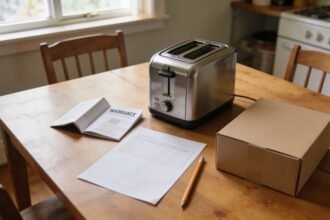
Read the specification labels carefully. “Product dimensions” and “packaged dimensions” are different figures, and a flat-packed item is usually smaller in the box than once assembled. If a listing gives only one set of numbers, treat it as unclear which one you are reading and look for the other before assuming either applies to the finished item in your home.
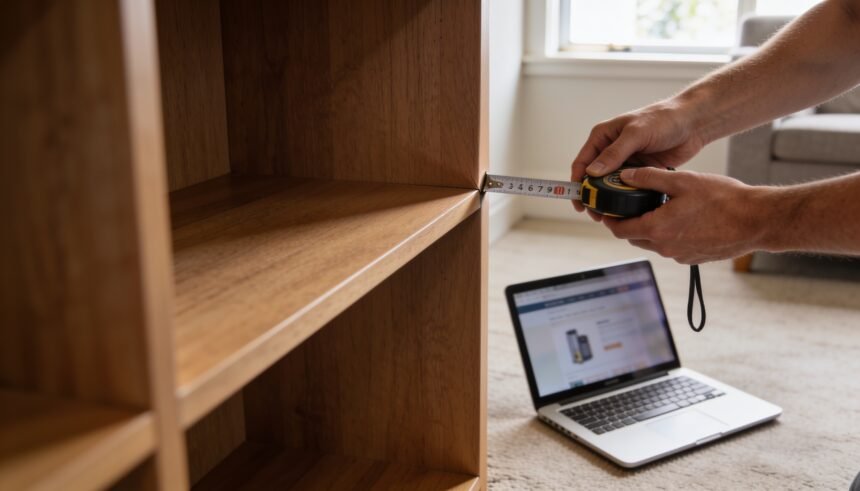
This matters most for anything that needs to pass through a doorway, hallway or lift once assembled. If you are furnishing a room, measuring the space itself before buying storage is the companion step to reading the product’s own numbers here.
3. Measure your own space, item or pet first
Measure before you shop, not after the box arrives. For furniture, measure the floor space, the doorway and any stairs or lift it needs to pass through. For an appliance, measure the benchtop, cupboard opening or gap it needs to sit in, including clearance for doors, vents and cords. For pet gear, measure the animal rather than relying on a weight range alone, since two animals of the same weight can have different lengths.
Write the numbers down before you start comparing listings. A measurement you are holding in your head is easy to misremember once several product pages start to look similar.
4. Treat photos as context, not proof of scale
A product photo shows shape, colour and setting. It does not reliably show size unless the listing includes a stated scale reference, such as a ruler or a named comparison object. Product Safety Australia’s guidance on shopping online notes that the pictures and information provided in a listing may be unclear or incomplete, so a photo that looks roomy or compact is not a substitute for the written measurements.
If a listing includes a photo with a person or common object for scale, check whether the caption states the comparison item’s own size. Without that detail, the image is useful for style, not for confirming fit.
5. Check reviews for sizing comments, then verify them yourself
Customer reviews can flag a size that reads differently in person than in the listing, but a review is one person’s experience with one unit, not a verified measurement. Use a sizing comment as a prompt to re-check the listed numbers yourself rather than as a replacement for them. If several reviews mention the same discrepancy, that is worth noting as a pattern to verify, not a fact to repeat as settled.
For a specific appliance category, a dedicated size guide can shortcut this step. Matching an air fryer to your household size is one example of checking capacity and footprint together before buying, rather than relying on litre figures alone.
6. Confirm what happens if the measurement is wrong
Before you buy, check the seller’s change-of-mind terms for anything size-related: whether an incorrect fit is covered, what condition the item must be in to return it, and who pays return postage on something bulky. The ACCC’s consumer-guarantees guidance states that any description a business gives, written or spoken, must be accurate, and a listed measurement is part of that description. If the delivered item does not match the stated dimensions, that is different from simply changing your mind, and the retailer’s standard change-of-mind exclusions may not apply.
Work through what to check in a returns policy before buying online alongside the measurements, so you know your options before the item arrives rather than after.
7. Save the listing and your own numbers together
Screenshot or save the product page, including the specifications section, before you buy. The ACCC’s buying-online guidance recommends keeping copies of documents such as item descriptions alongside your receipt. Keep your own measurements in the same place as your receipt and warranty details, so both sets of numbers are easy to find if you need to query a mismatch later.
Your next step: measure your own space, item or pet first, write the number down, then open the listing’s full specification section and compare every figure against it before adding anything to your cart.
How we checked this
Checked on 3 October 2026 against Product Safety Australia’s guidance on shopping online and the ACCC’s buying-online and consumer-guarantees guidance. The reading sequence and comparison steps are editorial method. No specific retailer’s listing, size chart or return outcome was tested or assessed.
The one-page family week
One printable page that holds the whole week: meals, school, activities and who is doing the pickup. Free, and we send one useful email a week.
One email a week. No spam, unsubscribe in a click.