What is in this guide
Start with a vet, not with a shorter walk.
Slowing down is usually pain rather than age. Stiffness, reluctance, lagging, difficulty with stairs or jumping, and a changed gait are signs worth assessing, and pain in dogs is treatable. Dogs conceal it extremely well and owners routinely attribute it to getting old, which delays help that would have made a real difference.
Get that appointment before you redesign the routine. Everything below assumes a vet has looked and has agreed on what the dog can do.
The shape that works
Not less exercise. Differently shaped exercise.
Shorter, more often. Three short outings beat one long one. The dog gets the same total or more, without the long sustained effort that causes soreness the next day.
Slower, and let them set it. An older dog walking at its own pace is exercising. An older dog being walked at a human pace is enduring.
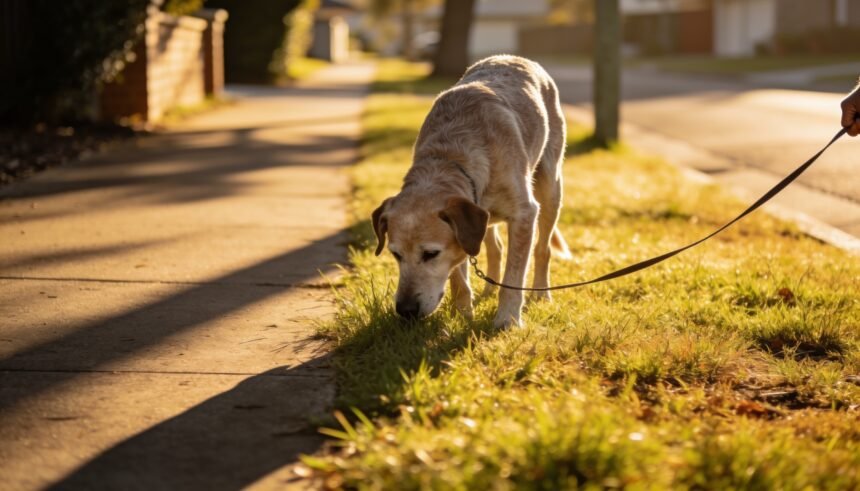
More sniffing, less distance. This is the central adjustment. A twenty minute sniffing walk covering two hundred metres is genuinely tiring mental work and puts almost no load on joints. For a dog that can no longer do distance, this is the single most valuable thing available, and the mechanism is the same one described in how much exercise does my dog actually need.
Soft surfaces where you can. Grass, dirt tracks and sand are easier than concrete.
Warm up. An older dog that has been lying down needs a few minutes of gentle movement before anything more. Starting a walk at pace from the front door is where soreness comes from.
Consistency over intensity. Regular gentle activity maintains muscle, and muscle supports joints. Stopping exercise entirely accelerates decline, which is why the answer is rarely rest.
What to substitute in
For a dog that genuinely cannot do much, the day still needs content.
Scent work. Food scattered in grass, hidden around a room, or a snuffle mat. Tiring, and it requires almost no movement.
Puzzle feeding, and the household items in cheap enrichment using things already in the house all work for a dog with limited mobility.
Short training sessions. Five minutes of gentle, familiar work is mentally satisfying and involves no strain.
Being taken along. A car trip, sitting outside somewhere new, a short outing that is mostly watching. New smells and a change of scene do a lot for a dog that cannot walk far.
Swimming, if your vet agrees it suits your dog. It is low impact and it is not appropriate for every dog, and whether it is right for yours is a veterinary question rather than a general recommendation.
The Australian conditions
Heat is harder on older dogs, who regulate temperature less well and may not move themselves to a cooler spot.
Early morning and late afternoon only, in summer, and on very hot days substitute indoor scent work for the walk entirely rather than pushing through.
Test the pavement with your hand. Asphalt and concrete hold heat long after the air has cooled and can burn paws.
Cold is also harder. Stiffness is worse in the cold, and an older dog benefits from a warm sleeping spot and a longer warm-up on winter mornings.
Water on every outing, and shade on the route.
What to watch during and after
During: lagging behind, stopping, wanting to turn back, panting more than usual, limping, reluctance to continue. Turn around when you see any of them, rather than finishing the planned route.
Afterwards, and this is the one people miss: the useful signal is the next morning. A dog that is noticeably stiffer or slower the day after a walk did too much, even if it seemed fine at the time. Adjust based on the following day, not the walk.
Keep it consistent day to day. A quiet week followed by a long weekend walk is the pattern that causes soreness.
Signs that mean a vet, not an adjustment
Any of these warrant an appointment rather than a shorter walk:
New or worsening limping, reluctance to rise, stiffness that lasts, a changed gait, difficulty with stairs that is new, panting at rest, coughing on exertion, collapse or weakness, sudden loss of interest in walks, or any rapid change.
Panting, coughing, weakness or collapse on exercise can indicate heart or respiratory problems and are not a fitness matter.
A sudden change in what a dog can manage is a veterinary matter, not something to walk through.
Weight is part of this. Extra weight on an older dog with sore joints makes everything harder, and weight management is a veterinary conversation rather than a guess.
No treatment, medication, supplement or therapy is discussed in this article. Those are veterinary decisions, and there are genuinely effective options, which is the reason the appointment matters.
Adjusting expectations
The goal changes. It stops being fitness and becomes maintaining mobility, muscle and interest for as long as possible.
A dog that has slowed down is not finished. Most older dogs with appropriate management have a long period of good life, and adjusting the routine early rather than late is what protects it.
The house matters as much as the walk. A dog that slips on hard floors is losing confidence and muscle every day at home, and making the house easier for an older dog covers the changes that do more than any walk adjustment.
Next: making the house easier for an older dog covers the home setup, how much exercise does my dog actually need covers why sniffing counts, and cheap enrichment using things already in the house covers filling the day.
The one-page family week
One printable page that holds the whole week: meals, school, activities and who is doing the pickup. Free, and we send one useful email a week.
One email a week. No spam, unsubscribe in a click.