What is in this guide
Set up one room, not the whole house. A kitten given the run of a home on day one hides somewhere you cannot reach and stays there.
Two administrative things to sort before collection: microchipping is mandatory across Australia, and many councils now require cats to be contained to the property or impose a curfew. Check your own council before you decide how your cat will live, because it may not be your decision.
Before collection day
- Book a vet check in the first few days
- Ask what they have been eating and buy the same food. Change it gradually rather than abruptly
- Confirm the vaccination and worming record, in writing
- Confirm the microchip number and transfer the registry details into your name
- Check your council’s cat containment and curfew rules
- Set up one room with everything in it before the kitten arrives
The gear
- Litter tray, plus litter. The general guidance is one tray per cat plus one spare, so two for a single kitten
- Litter scoop and a lidded bin for waste
- Bowls, shallow and wide. Many cats dislike their whiskers touching the sides. Keep water well away from food
- Food, the same as they have been eating
- Bed, though a cardboard box with a towel is often preferred and costs nothing
- Scratching post, tall enough for a full stretch and stable enough not to tip. Buy this before they arrive, not after the couch is damaged
- Carrier, hard or soft, that opens from the top as well as the front. Top-opening makes vet visits dramatically easier
- Toys, especially a wand toy for interactive play
- Breakaway collar with an ID tag. A safety-release collar that comes apart under load is the standard recommendation for cats, because a fixed collar can catch
- Enzyme cleaner for accidents
What you can skip
- A cat tree on day one. Establish what they like climbing first
- Multiple beds
- Automatic anything. A self-cleaning litter box before the kitten is reliably using a normal tray is a poor first purchase
- Expensive toys. Most kittens prefer a bottle cap and a paper bag
Set up the one room
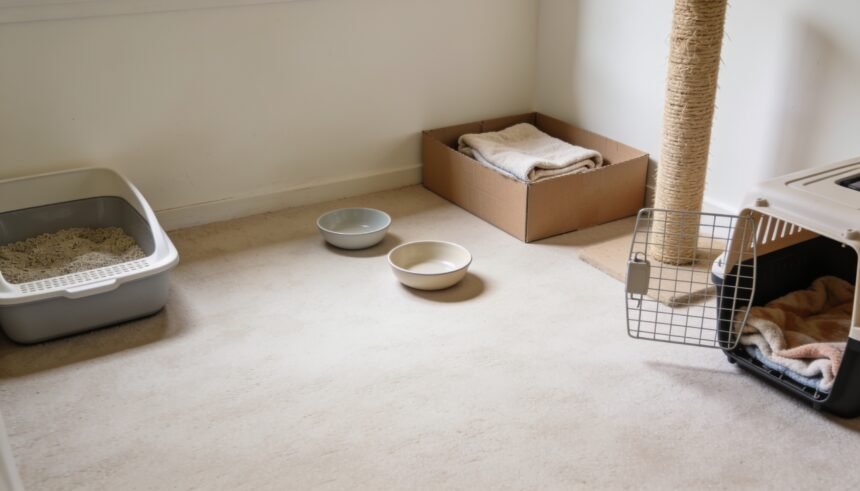
Pick a quiet room with a door. Put in the litter tray, food and water well apart from each other, a bed or box, the scratching post and a couple of toys.
Leave the carrier open in the room with a towel in it. A carrier that is a normal piece of furniture rather than a thing that only appears before vet visits saves years of struggle.
Keep the kitten in that room for the first few days. Expand to the rest of the house gradually once they are eating, using the tray reliably and coming out to greet you.
Litter training
Most kittens arrive already litter trained, because they learn it from their mother. If not, it is usually quick.
- Put the kitten in the tray after waking, after eating and after play
- Keep the tray away from food and water
- Scoop daily. Cats reject dirty trays and that is the most common cause of accidents
- Use unscented litter to start. Scented litter puts many cats off
- If a previously reliable kitten stops using the tray, that is a vet conversation rather than a behaviour one
Indoor, outdoor or contained
This is a real decision with real trade-offs and it is increasingly not entirely yours to make.
Many Australian councils now require cats to be contained to the owner’s property, some operate night curfews, and the rules differ considerably between council areas. Check yours.
Beyond compliance, containment protects native wildlife and protects the cat from cars, dogs, fights and disease. A contained cat needs more enrichment indoors to compensate: vertical space, window access, scratching surfaces and daily interactive play.
An outdoor enclosure or catio is the middle path and is popular in Australia for exactly this reason.
The first fortnight
- Expect hiding. Under the bed for two days is normal
- Sit in the room and ignore them. Curiosity beats coaxing every time
- Play twice a day with a wand toy. This is how a kitten learns that hands are not prey
- Introduce other pets slowly, through a closed door first, then with supervision
- Night activity is normal. A play session before bed helps more than anything else
What to ask the vet
- Vaccination schedule and next dates
- Worming and flea prevention, and the timing
- Desexing timing
- How much to feed and when to change to adult food
- Whether the microchip is correctly registered to you
Next: reading an Australian pet food label covers the food decision, and ID tags and what Australian law requires covers identification including the breakaway collar point.
The one-page family week
One printable page that holds the whole week: meals, school, activities and who is doing the pickup. Free, and we send one useful email a week.
One email a week. No spam, unsubscribe in a click.