What is in this guide
One bag, eight items, and one decision to make before you pack anything. The decision is whether the day suits a dog at all, because in an Australian summer the honest answer is often no, and that is a better outcome than a dog with burnt pads sitting in a hot car while you have lunch.
Make the go or no-go call first
The pavement test. Put the back of your hand on the footpath or road surface and hold it there for seven seconds. If you cannot, it is too hot for paws. Asphalt and concrete hold heat long after the air has started to cool, which is why late afternoon catches people out more often than midday.
The parked car rule. If any part of the day involves the dog waiting in a parked car, the day does not work. Not in shade, not with a window cracked. Parked cars reach dangerous temperatures rapidly in Australian conditions. Plan the outing so this never needs a judgement call, or leave the dog home.
Check the destination’s actual rules. Dog-friendly does not mean the same thing everywhere. Many national parks do not allow dogs at all, off-lead areas are council-specific, and beaches often have seasonal or time-of-day restrictions. A two-minute check on the council or park website saves a wasted drive.
If all three clear, pack.
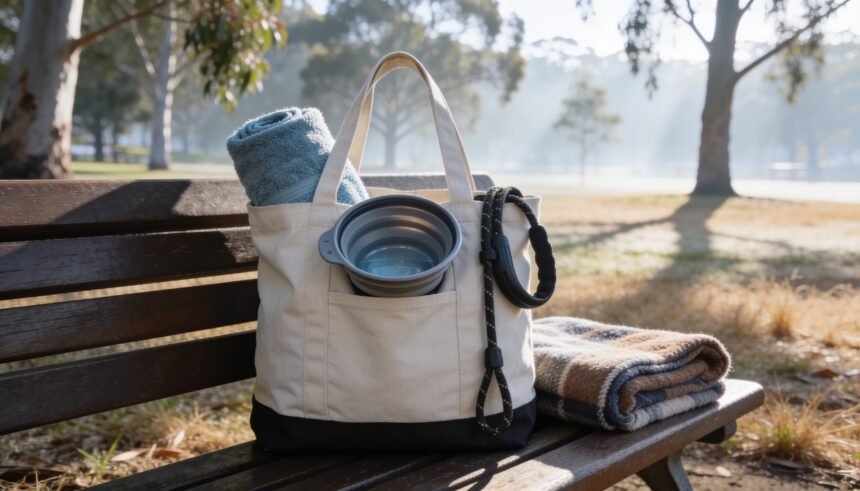
The eight things
- Lead. Plus a spare if you have one, because a clip failing on a day out is a genuinely bad afternoon.
- Water and a collapsible bowl. More than you think. A dog that has been walking in Australian heat will drink a surprising amount, and a shared bottle with a cupped hand does not work well.
- Poo bags. Double what you expect to need. Take them even to a place with a dispenser, because the dispenser is always empty.
- A towel. For mud, for water, for the car seat. The most useful single item on this list.
- High-value treats. Not the everyday ones. Recall in an unfamiliar place with other dogs around needs something better than kibble.
- A mat or blanket. Gives the dog a defined place to settle at a cafe or a picnic table, which makes them settle far faster than an open concrete floor.
- Sunscreen for pale noses and ear tips, if your dog has them. Pet-formulated only.
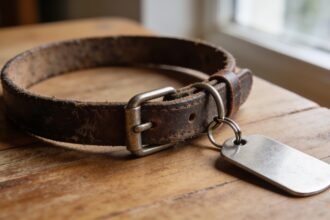
- The ID tag, checked before you leave. Not packed, worn. This is the one time it earns its keep.
The two people always forget
A second poo bag supply somewhere other than your pocket. In the car, in the bag, anywhere. Running out is the most common and most avoidable failure of any dog outing.
A towel. It is on the list above and it is still the thing left at home most often. Leave one permanently in the car boot and the problem disappears.
Timing beats gear
For most of the Australian year the single biggest improvement to a day out is going earlier.
Out by eight, home by eleven. The pavement is cool, the parks are quieter, there is shade that has not moved yet, and the dog is not managing heat on top of everything else. An afternoon outing in summer asks a lot more of the animal for the same amount of fun.
In winter and in the southern states, the middle of the day is genuinely the better window. The rule is not “go early”, it is “go when the ground is cool”.
At a dog-friendly cafe
Worth knowing before you arrive rather than working it out in front of an audience.
- Outdoor areas only, in almost all cases.
- Ask before you sit. Staff will tell you where dogs work best.
- Put the mat down and settle the dog on it before you order.
- Keep the lead short and under your chair or foot, not looped over a chair back.
- Water first, coffee second.
- If the dog is barking or unsettled after a few minutes, leave. Everyone would rather you did.
The tick check on the way home
If you have been anywhere bushy or coastal on the east coast, do a tick check that evening. Work systematically rather than patting randomly: ears, face, neck, under the collar, chest, front legs, then the rest. Paralysis tick prevention should already be current, and the check is a second layer rather than a substitute.
Next: the weekend away list is the longer version for two or three nights, road trips with a dog covers the drive, and ID tags and Australian law is the thirty-second check worth doing before any of it.
The one-page family week
One printable page that holds the whole week: meals, school, activities and who is doing the pickup. Free, and we send one useful email a week.
One email a week. No spam, unsubscribe in a click.