What is in this guide
There are three separate obligations here and most people merge them into one. Your dog must be microchipped. Your dog must be registered with your local council. And in most states your dog must wear visible identification when off your property. A microchip does not satisfy the third one, because a member of the public who finds your dog cannot read a microchip.
That is the part that catches people out. The chip is how a vet or a pound reunites you. The tag is how a neighbour does it in twenty minutes instead of two days.
The three obligations
Microchipping. Mandatory across Australia, with the specifics and the timing set by each state. It is a permanent record linked to a registry database, and it only works if the contact details on that registry are current. Moving house without updating the registry is the most common failure, and it is invisible until the day it matters.
Council registration. Separate again. This tells your local council the dog lives in their area, involves an annual or lifetime fee, and usually comes with a council tag. Every state has penalties for an unregistered dog and fines run into the hundreds of dollars. Registration requirements and concessions differ by council, including reduced fees for desexed dogs.
Visible identification. Most states require a dog in a public place to wear a collar with identification showing the owner’s contact details. This is the obligation the microchip does not cover.
Because the third one sits in state legislation and is enforced by councils, the exact wording differs. Check your own state and council rather than relying on a general summary, including this one.
What to put on the tag
The purpose of the tag is to get your dog home fast, from a stranger’s phone, possibly at night. Design it for that and nothing else.
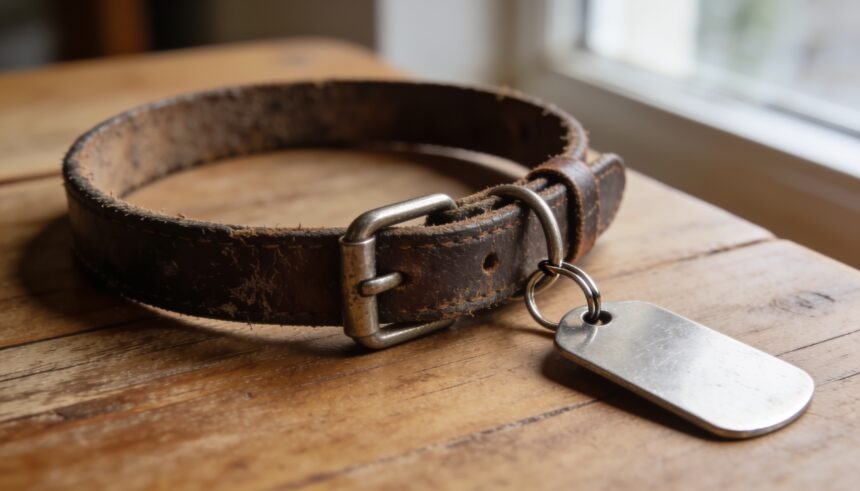
Put your mobile number first, and make it the biggest thing on the tag. This is the only piece of information that actually does the work. Someone standing in the rain holding a strange dog needs to read one number without turning the tag over.
A second number is worth more than anything else you could add. A partner, a parent, a neighbour. If the first phone is flat or in a pocket at work, the second one answers.
Your dog’s name is optional and mildly contentious. It helps a finder calm the dog. Some owners leave it off so a stranger cannot call the dog away confidently. Either position is defensible.
Your suburb, not your street address. It tells a finder how far the dog has travelled without publishing where you live.
“Microchipped” is worth engraving if you have room. It tells a finder there is a route beyond the tag, which makes them more likely to take the dog to a vet rather than rehoming it themselves.
What not to put on: your full address, your dog’s medical history, or anything that fills the tag with text at the expense of the phone number being legible.
Tag practicalities that actually matter
Check it can still be read. Engraved tags wear, especially soft aluminium ones on an active dog. Stainless steel and brass last considerably longer. Look at the tag properly twice a year rather than assuming.
Check the split ring. Tags are lost at the ring far more often than they fail themselves. A worn ring opens. A second ring, or a tag that attaches with a rivet or slides onto the collar webbing, removes the failure point.
Silent tags exist if the jingling drives you mad. Slide-on tags sit flat against the collar and do not swing.
Cats need a breakaway collar. A safety-release collar that comes apart under load is the standard recommendation for cats, because a fixed collar can catch. That trade-off is real: the collar and tag come off more often, and that is the point.
The moment the tag earns its keep
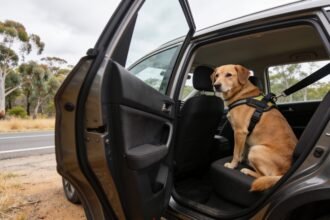
A dog is most likely to bolt somewhere unfamiliar. A rest stop on a long drive, a friend’s yard with a gate someone left open, the first week in a new house after a move, a thunderstorm, New Year’s Eve fireworks.
In every one of those, the dog is away from home and the finder is not a neighbour who recognises them. That is exactly the scenario the visible tag is for, and exactly when a three-year-old tag with a disconnected number fails.
Before any trip, do the thirty-second check: read the tag out loud, and ring the number from another phone.
A quick annual routine
Once a year, on a date you will remember, do all four:
- Read the tag. Can you make out the number at arm’s length?
- Ring the number on it.
- Log in to the microchip registry and confirm the details are current.
- Confirm the council registration is paid and the dog is still recorded at your address.
Ten minutes. It is the cheapest insurance in pet ownership.
Next: road trips with a dog is where a bad tag costs you most, and the weekend away packing list has the pre-trip check built in.
The one-page family week
One printable page that holds the whole week: meals, school, activities and who is doing the pickup. Free, and we send one useful email a week.
One email a week. No spam, unsubscribe in a click.