What is in this guide
Two jobs here and they are usually written about separately. One is removing what can hurt the animal. The other is designing a yard that survives the animal, because a dog that has nothing to do will make its own entertainment out of your garden beds.
Do the safety pass first, then design around how the dog actually uses the space.
The safety pass
Plants worth knowing about. A number of common Australian garden plants are toxic to dogs and cats. Among those most often flagged by veterinary and animal welfare sources: lilies, which are particularly dangerous to cats, sago palm or cycad, oleander, brunfelsia or yesterday-today-and-tomorrow, azalea and rhododendron, cyclamen, daffodil and other bulbs, and tomato and potato foliage.
This is not a complete list. If you are planting deliberately, check each species against a veterinary or RSPCA source rather than a general gardening article, including this one.
Mulch. Cocoa mulch is a genuine hazard and should not be used where dogs have access. Many dogs also eat pine bark and similar mulches, which can cause obstruction.
Compost. Decomposing compost is hazardous to dogs and needs an enclosed bin rather than an open heap.
Snail and slug bait, fertiliser and herbicide. Store locked away, follow the label for re-entry timing, and assume the dog will investigate anything new in the yard.
Snakes. Reduce the habitat rather than trying to manage the encounter: keep grass short, clear wood and rubbish piles, and keep rockeries away from where the dog spends time. A suspected bite is an immediate emergency vet situation.
Cane toads in Queensland, northern New South Wales and the Northern Territory. Dogs mouth them and the toxin is serious. Emptying water bowls overnight and lighting the yard less at night both reduce the encounters.
Ticks and fleas. Keep grass short and prevention current, particularly on the east coast.
If your pet eats something and you are unsure, ring your vet or an animal poisons line immediately rather than waiting for symptoms. That is the whole of the advice this article gives on treatment.
Design around the dog, not against it
Most garden destruction is a design problem rather than a behaviour problem.
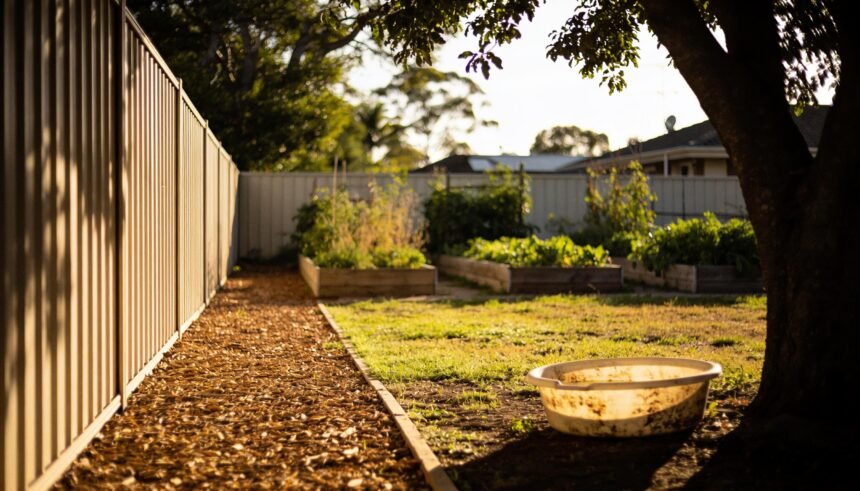
Give them a path. Dogs patrol fence lines. Fighting that produces a worn track through your planting. Putting a deliberate mulched or paved path where they already run keeps the rest of the garden intact.
Give them a lookout. Many dogs want a spot with a view of the gate. Providing one, with shade, reduces the patrolling considerably.
Give them a digging spot. A designated sand pit with something buried in it works far better than trying to stop digging altogether, particularly for breeds that were built for it.
Raised beds for anything you care about. The simplest solution to a dog in the vegetable patch is height.
Shade that does not move. A structure beats a tree for reliability, because tree shade is elsewhere by mid afternoon.
Water in the yard, refreshed daily, in a bowl heavy enough not to tip.
Surfaces that work
Lawn. Hard-wearing couch or kikuyu handles traffic better than fine-leaf varieties in most Australian climates. Expect urine patches regardless, and watering the spot immediately is the only thing that reliably helps.
Mulch. Large pine bark or straw, avoiding cocoa entirely. Fine mulch gets eaten and tracked inside.
Paving and decking. Both get very hot in an Australian summer. Use the seven second hand test before assuming the dog can cross it.
Synthetic turf. Easy to clean but gets extremely hot in direct sun, hot enough to burn paws. Shade it or avoid it in full sun positions.
Gravel. Uncomfortable for many dogs and hard to clean waste from.
Fencing and containment
- Check the fence line at dog height rather than yours. Gaps, loose palings and dig-outs are found from the ground
- Dig barriers along the fence line for diggers: buried mesh, a paver run or a concrete footing
- Gates that self-close, because the failure is always a gate someone left open
- Cat containment is increasingly a council requirement in Australia. Enclosures and catios are the standard answer and let a cat outside safely
A quick audit
Walk the yard at dog height and look for:
- Plants you cannot identify
- Gaps in the fence line and under gates
- Chemicals, bait or fertiliser within reach
- Standing water and anything stagnant
- Shade at 3pm, not just at 9am
- Sharp edges, loose palings and anything that could trap a leg
- Compost, rubbish and wood piles
Twenty minutes, and it catches nearly everything.
Next: getting the backyard ready for summer covers the seasonal jobs, and camping with a dog covers the same hazards away from home.
The one-page family week
One printable page that holds the whole week: meals, school, activities and who is doing the pickup. Free, and we send one useful email a week.
One email a week. No spam, unsubscribe in a click.