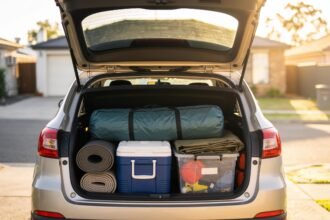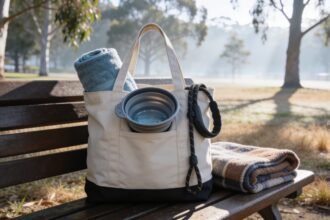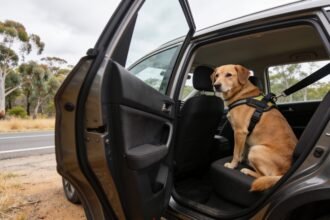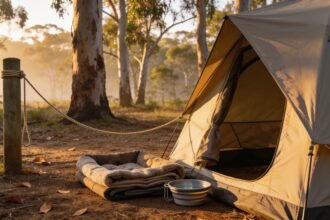
What is in this guide
Four things get forgotten on almost every first trip: the lead is in the car but the spare poo bags are not, nobody packed a towel, the food got measured by eye and ran short, and the accommodation turned out to have a rule nobody read. Everything else is recoverable at a servo.
This list is grouped by where each item is actually used, because a list organised by category is the reason things get left behind.
Before you leave the house
- Confirm the accommodation rules in writing. Not the listing photo of a dog on a deck. Ask three specific questions: can the dog be left alone in the property, is the dog allowed inside, and is the yard actually secure. Australian pet-friendly listings vary enormously on all three.
- Check the ID tag. Read the number. Ring it from another phone. A dog is more likely to bolt in an unfamiliar place than anywhere else.
- Confirm parasite prevention is current. If you are heading anywhere on the east coast, particularly bushland or coastal areas, paralysis tick prevention is not optional. Check the date the last treatment was given, not your memory of it.
- Photograph the dog. A current, clear photo on your phone. If the dog goes missing at the other end you will want it immediately and you will not want to be scrolling.
- Take the vet’s number and find the nearest emergency vet to where you are going. Two minutes now, potentially a very bad hour saved later.
In the car, within reach
- Lead, plus a spare lead
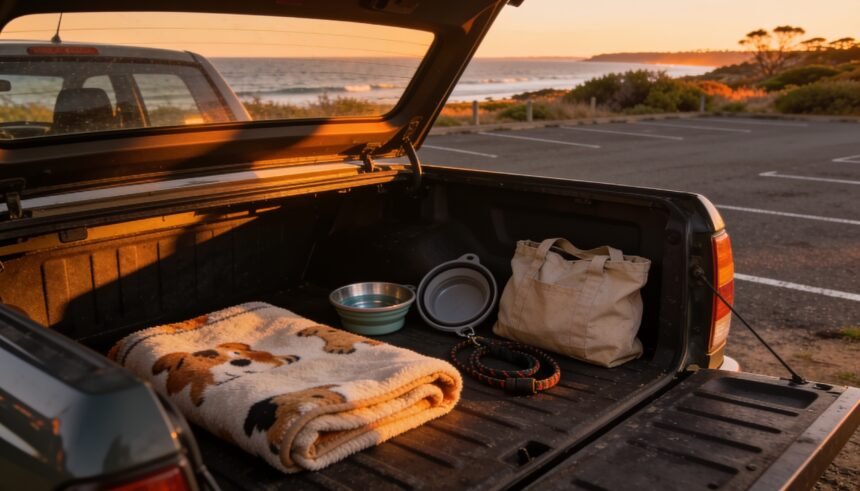
- Water and a travel bowl, accessible without stopping
- Poo bags, more than you think
- Old towel, for mud and for car sickness
- Paper towel and a plastic bag
- The car restraint: harness, crate or barrier, fitted before you load anything else
Food and feeding
- Pre-measured food in daily portions. This is the difference between “we have enough” and “we think we have enough”. Bag it by meal.
- A day extra. Trips get extended, and changing a dog’s food abruptly at the other end causes exactly the problem you do not want in someone else’s holiday house.
- Bowls. The accommodation will not have them, whatever it says.
- Treats, including the high-value ones for recall in an unfamiliar place
- Any medication, in its original packaging with the label
For the accommodation
- Their own bed or blanket from home. The single most useful item for settling a dog in a strange house. It smells right.
- Crate or pen if that is where they normally sleep
- A mat for the door, because the floors are not yours
- Enrichment: a chew, a stuffed toy, something that occupies them while you unpack
- Cleaning supplies: an enzyme spray and a roll of paper towel. Accidents happen in new places, and cleaning it properly is both courteous and the reason the listing stays pet-friendly for the next family
Out and about
- Poo bags again, in whatever you actually carry
- Collapsible bowl and water
- Sun and heat management: walks early and late, not the middle of the day
- A tick check routine if you are on the east coast. Do it every evening, working systematically rather than patting randomly
The heat rule, restated
The dog does not stay in the parked car. Not for a quick coffee, not in the shade, not with the windows down. Plan the weekend so that rule never needs testing: takeaway coffee, outdoor tables, and someone stays with the dog whenever the group goes somewhere the dog cannot.
This constrains the trip more than any packing decision. Decide it in advance and the weekend is fine. Decide it in the car park and someone ends up making a bad call.
What you can leave at home
A weekend does not need the whole cupboard.
- The full toy collection. Two items is plenty.
- A second bed. One is enough.
- Grooming gear, unless the dog genuinely needs daily brushing.
- Anything bought specifically for the trip that you have not used at home first. An unfamiliar harness or a new crate in a strange house is two new things at once.
First-trip advice
If this is the first time the dog has stayed anywhere other than home, keep the first night simple. Arrive with daylight left. Walk them around the property on lead before you let them off anywhere. Set up their bed in the room you will be sleeping in, even if that is not the long-term plan. Feed at the normal time.
Most dogs settle by the second night. The first one is usually the difficult one, and knowing that in advance makes it much easier to sit through.
Next: road trips with a dog covers the drive itself, the day out list is the short version for a single day, and ID tags and Australian law is the pre-trip check worth doing properly.
The one-page family week
One printable page that holds the whole week: meals, school, activities and who is doing the pickup. Free, and we send one useful email a week.
One email a week. No spam, unsubscribe in a click.