What is in this guide
Pack by category rather than by person. Packing by person is how the tent pegs end up in nobody’s bag and the sunscreen ends up in three.
If you forget everything else, these seven matter: shelter, sleeping mats, water, sun protection, a torch each, food that needs no cooking, and a first aid kit. Everything else can be improvised, bought or done without.
Shelter and sleeping
- Tent, with pegs, poles and guy ropes checked before leaving
- Groundsheet or footprint
- Mallet
- Sleeping mat for every person. This matters more than the bag
- Sleeping bags rated colder than the forecast
- Pillows from home
- Extra blanket each. Australian nights get colder than people expect
- Tarp or gazebo for shade, plus rope and extra pegs
Kitchen
- Stove and fuel, plus a spare canister
- Lighter and matches in a waterproof container
- Esky and ice, or ice bricks
- Water containers. Do not assume the campground has drinkable water
- Pot, pan, and a kettle or billy
- Plates, bowls, cups and cutlery
- Sharp knife and a chopping board
- Tongs and a serving spoon
- Tea towel, dish cloth, detergent and a wash tub
- Rubbish bags, and the expectation that you carry waste out
- Paper towel
- Foil and zip bags
Clothing, per person
- More warm layers than the forecast suggests
- A jumper and long pants for evening, even in summer
- Rain jacket
- Wide-brimmed hat
- Closed shoes plus thongs
- Spare socks, then more spare socks
- Swimmers, if there is water
- One full change more than you calculated
Sun, insects and first aid
- Sunscreen, and more than you think. Reapply far more often than feels necessary
- Insect repellent
- After-bite or antihistamine, within the limits of what you normally use
- First aid kit, including tweezers, bandages and blister care
- Any regular medication, in its original packaging
- Tick removal tweezers if you are on the east coast or in coastal bushland
Light
- Head torch for every person, including the children. This is the item children love most
- Camp light or lantern for the table
- Spare batteries
- A light at the tent entrance so nobody trips on the guy ropes at 2am
Kids specifically
- Their own torch
- A familiar toy or blanket
- A ball
- Cards or a simple game for the evening
- A bucket and a small spade
- Their own small bag, so they carry something and know where their things are
Admin and safety
- Booking confirmation, and a printed copy if reception is poor
- Cash, since some campgrounds and honesty boxes are cash only
- Fire restriction check for the area, done the day before as well as at booking
- A plan for no phone reception, including where the nearest medical help is
- A meeting point agreed with the children on arrival
What you can leave at home
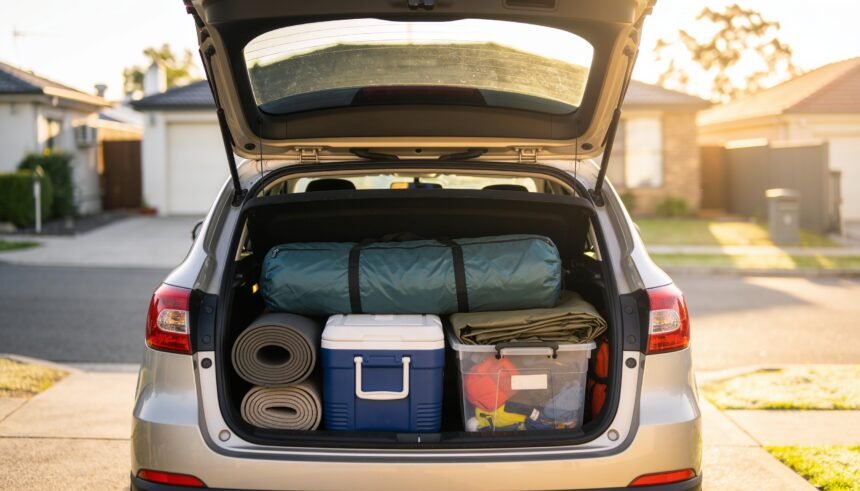
Most first-trip packing is too much, and an overloaded car makes the whole thing harder.
- Chairs for every person, if the site has a table
- A second cooking pot
- Camping-specific clothing. Ordinary clothes work
- A full pantry. Take the meals you planned, not the possibility of other meals
- Multiple games and toys. Two items is plenty
- A generator, for one or two nights
- Anything you bought for this trip and have never used at home
The night-before check
- Tent has all its poles and pegs. Count them
- Stove lights. Test it in the backyard
- Torches work and have batteries
- Esky is pre-chilled, which makes ice last far longer
- Water containers are full
- Fire restrictions confirmed for the dates
- First night’s meal is cooked and in the esky
The one habit that fixes most of it
Keep a plastic tub packed with the non-perishable camping gear: stove, torches, cutlery, first aid, tarp, pegs, rope. It lives in the shed between trips.
Packing then becomes clothes, food and bedding, which takes an hour rather than a day, and the tent pegs are never missing.
Next: camping with kids for the first time covers how to plan the trip itself, camping with a dog covers bringing the dog, and the weekend away packing list is the version for staying somewhere with a roof.
The one-page family week
One printable page that holds the whole week: meals, school, activities and who is doing the pickup. Free, and we send one useful email a week.
One email a week. No spam, unsubscribe in a click.