What is in this guide
If clean washing comes out smelling faintly sour, or the laundry smells when the machine has not run, the cause is almost always the same three things acting together.
- Washing cold, every time. Cold water is better for fabrics, power bills and most stains, and it is also much worse at removing body oils and detergent residue. That residue is what feeds the smell
- Too much detergent. More is not better. Excess detergent does not rinse away, it builds up in the drum, the seal and the hoses, and it is food for bacteria
- Shutting the door afterwards. A warm, wet, sealed drum is an ideal environment, and it is created deliberately every time somebody closes the door to make the laundry look tidy
Front loaders are worse for all three, because they hold water in the door seal and use less of it. If you have a front loader in a humid climate, expect to manage this actively rather than assuming it will be fine.
The clean-out
Do all of it once, then keep the routine below.
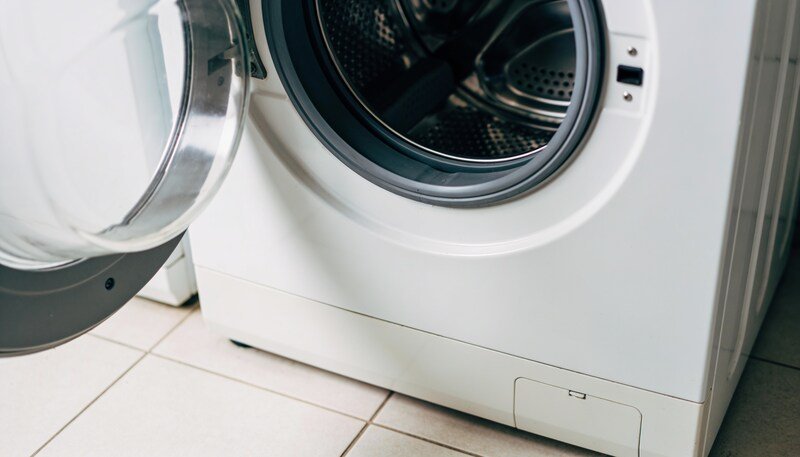
1. The seal, if you have a front loader. This is where the problem visibly lives. Pull the rubber door seal back gently and look into the fold. There is usually a pool of water, hair, lint and often black mould.
Wipe it out thoroughly with hot soapy water and a cloth, working right around. Get into the bottom of the fold where water sits. Dry it.
2. The detergent drawer. Pull it out completely, most release with a catch inside the recess. Soak it in hot water, scrub the corners and the underside of the lid where the softener siphons, and clean the cavity it sits in as well. This is frequently worse than the seal and almost nobody opens it.
3. The filter. Front loaders have a drain pump filter, usually behind a small panel at the bottom front. Put a towel and a shallow tray down first, because a surprising amount of water comes out. Unscrew, clear the coins, hair clips and lint, rinse, replace and make sure it is screwed back in firmly.
Check your manual for the interval. Every few months is typical.
4. A hot maintenance wash. Empty machine, hottest cycle, with either a cup of white vinegar or a dedicated washing machine cleaner. Do not use both, and do not mix cleaning products, particularly anything chlorine-based with anything acidic. Ventilate the room.
5. Run it again on a short cycle with nothing in it to rinse out whatever has come loose.
6. Check the hoses if the smell persists. A drain hose that dips and holds water, or is pushed too far into the standpipe, can trap water and smell. That is a plumbing arrangement rather than a cleaning problem.
The routine that stops it returning
- Leave the door and the detergent drawer open between washes. This one change fixes most cases on its own
- Wipe the seal after the last wash of the day, ten seconds with a dry cloth
- Run one hot wash a week. Towels, sheets or whites at 60 degrees. The machine needs a hot cycle even if your clothes do not
- Measure the detergent. Use the line on the cap, not the whole cap, and reduce it if you have soft water. Most households use noticeably more than the dose on the pack
- Take the washing out promptly. A wet load sitting overnight is the other half of the problem, and it makes the clothes smell as well as the machine
- A maintenance wash monthly, or as the manual specifies
Front loader or top loader
Front loaders have a door seal, use less water, and are more prone to all of this. The seal and the filter are the two maintenance points.
Top loaders rarely smell from a seal but can build up under the agitator and in the outer drum, and they have a lint filter that needs clearing. The same hot maintenance wash applies.
If the clothes smell rather than the machine
Slightly different problem, with a few common causes:
- Overloading, so nothing moves and nothing rinses
- Too much detergent, again
- Washing left wet for hours
- Drying too slowly indoors, which in a wet season is its own battle and is covered in drying washing through an Australian wet season
- Fabric softener build-up, particularly on towels, which also makes them less absorbent
A stripping wash on towels, meaning a hot wash with no detergent and no softener, will often reset them. And if what you are actually chasing is a stain rather than a smell, school uniform stains covers that by type.
When it is not a cleaning job
- A machine that will not drain, or drains slowly
- Water on the floor
- A smell of sewage rather than a musty or sour smell, which usually indicates a plumbing issue rather than the machine
- Anything requiring the machine to be moved, opened up or unplumbed
Those are a plumber or an appliance technician, and a machine in an Australian laundry is both plumbed and on a wet-area circuit, which is not a place to improvise. This article stops at the filter and the seal deliberately.
The short version
Leave the door open. Use less detergent. Run one hot wash a week. Wipe the seal. Clear the filter every few months. Take the washing out.
That is most of it, and it costs nothing.
The one-page family week
One printable page that holds the whole week: meals, school, activities and who is doing the pickup. Free, and we send one useful email a week.
One email a week. No spam, unsubscribe in a click.