What is in this guide
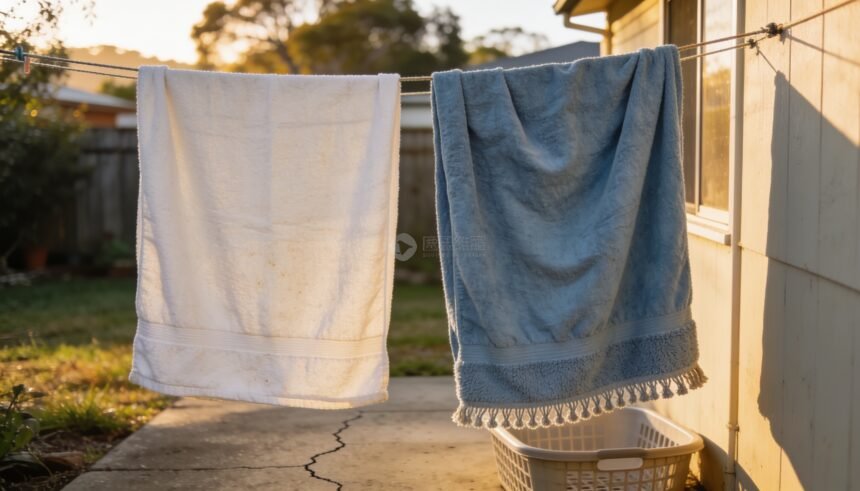
Cotton towels can go stiff on the line because the fibres adhere as they dry naturally; a crunchy feel does not automatically mean the wash failed. Start with a correctly measured wash without fabric softener, then compare drying methods if the care label allows it. [S1, S2, S3]
The useful question is whether the towel becomes stiff only after hanging, or feels harsh however you dry it. That distinction gives you a place to start without replacing every towel or adding another bottle to the laundry shelf.
Why does a clean towel dry stiff?
Research by Kao and Hokkaido University supports a mechanism in which water bound to cotton surfaces helps neighbouring fibres adhere, producing stiffness after natural drying. This is water associated with the fibre surface, rather than the wetness you feel in an unfinished load. The finding explains why a clean cotton towel can dry with a rigid feel. It does not identify the cause of every rough towel in a household. [S1]
Keep the explanation separate from the diagnosis. If yours is cotton and only becomes board-like after hanging, drying deserves attention. If it is a different fibre or has special care requirements, start with its own manufacturer’s instructions rather than assuming all towel fabrics behave alike.
Check which problem you actually have
Choose a towel you know well and note when the texture changes. Use these observations to select the next check, rather than treating them as proof of a cause.
| What you notice | What to try or check next |
|---|---|
| Stiff on the line but comfortable after label-approved tumble drying | Compare drying methods before changing detergent |
| Harsh after either drying method | Review dosing, softener use and the towel’s care instructions |
| Visible powder or a coating as well as stiffness | Check washing instructions and ask about water hardness |
| Stiffness comes with a persistent unpleasant smell | Investigate the odour separately |
| Only one towel is affected | Compare its label and condition with the others |
For the smell problem, follow the wash-and-dry checks for musty towels. A softer feel would not answer why a towel smells again after use.
Reset the wash before adding anything
Read the detergent directions and measure the dose for the load and water conditions they specify. The American Cleaning Institute says both too much and too little detergent can leave washing less clean. Avoid automatically doubling the dose for thick towels or halving it because they feel rough. [S3]
Check the load against your machine’s instructions for the selected programme. Leave room for items to move rather than wedging another bath sheet into the drum. Follow the towel’s wash label, including any restrictions on heat or treatment. [S3]
Leave fabric softener out of this troubleshooting load. Sheridan warns that it can create waxy build-up and reduce towel softness and absorbency. Skip ironing terry towels too: its guidance says ironing damages the loops. [S2]
Write down the detergent amount and cycle you used. That small note gives you a reference for the next wash. If different adults share the job, add it to your laundry day checklist so the comparison does not depend on remembering who poured what.
Try a simple line-drying adjustment
If you have no dryer, try gently shaking each towel before hanging it and again when it is dry. Hold it securely and avoid pulling hard on borders or loose threads. Treat this as a no-cost handling trial, with no promise of a particular result.
Hang each towel separately in the drying space available to you. Once dry, compare the feel before and after shaking and folding. Keep the rest of the wash routine steady for this attempt; changing the detergent, cycle and handling together makes the result harder to interpret.
There is no need to organise the household around visiting the line repeatedly. Try the adjustment when you hang and collect the load, then decide whether the difference is useful enough to keep doing it. A line-dried towel may still feel firmer than you prefer.
Do not put it away damp in pursuit of softness. Store laundry only when fully dry. [S3] If the real difficulty is getting thick towels dry in a flat or during rain, use the guide to drying washing through wet weather before worrying about the finish.
Compare a dryer finish if you already have one
Where the towel label permits tumble drying, compare two similar towels from the same wash. Leave one line-dried and give the other a label-compatible dryer finish. Compare them when both are dry and cool enough to handle normally.
Sheridan recommends brief tumble drying in small loads on a low-to-medium setting for a fluffier feel. Follow your own towel label and appliance instructions for the actual setting and duration. [S2] Do not borrow a fixed timing from another household or assume hotter is better.
This comparison asks whether a dryer finish makes enough difference for you to use it again. It cannot establish which microscopic mechanism caused the original stiffness. You may decide to use the dryer for bath towels while continuing to line-dry other washing, or accept a firmer finish to avoid another laundry step.
What if the towels stay harsh?
Ask your local water supplier about hardness if washing adjustments have not helped. Hard-water minerals can react with soap to leave deposits that stiffen fabrics. That is a possible contributor, not a diagnosis you can make from texture alone. Use confirmed water information alongside the detergent directions. [S3]
If one towel stays uncomfortable while comparable towels are fine, take its care details to the manufacturer before trying further treatments. Note whether it is the whole towel, a decorative border or one worn patch that bothers you. That is more useful information than simply reporting that it is old.
For the next load, make one manageable comparison: record the wash, keep two similar towels together through it, then vary only the drying or handling. Keep whichever result suits your household, and stop repeating an adjustment that makes no useful difference.
How we checked this
Checked on 11 October 2026 against cotton-fibre research reported by Kao, Sheridan’s towel-care guidance and the American Cleaning Institute’s laundry advice. [S1, S2, S3] The comparison sequence and shaking trial are editorial suggestions. No towels, appliances or laundry treatments were tested by Dovelyne.
The one-page family week
One printable page that holds the whole week: meals, school, activities and who is doing the pickup. Free, and we send one useful email a week.
One email a week. No spam, unsubscribe in a click.