What is in this guide
The same school year is called prep in Queensland and Victoria, kindergarten in New South Wales and the ACT, reception in South Australia and pre-primary in Western Australia. The bag is the same everywhere, and the thing that matters is not what is in it but whether your child can open it without help.
A teacher with twenty-five five-year-olds cannot open twenty-five lunch boxes. Whatever you buy, your child has to manage it alone.
The one test to do before buying
In the shop, hand it to your child and ask them to open it and close it. The lunch box, the drink bottle, the bag zip, the pencil case.
If they cannot do it in a calm shop with you watching, they will not do it at a noisy lunch table with fifteen minutes to eat. This single test prevents most of the first-term frustration in this category and costs nothing.
What goes in the bag
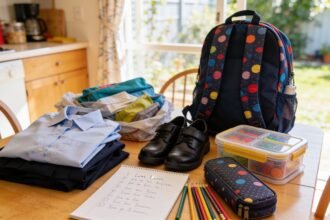
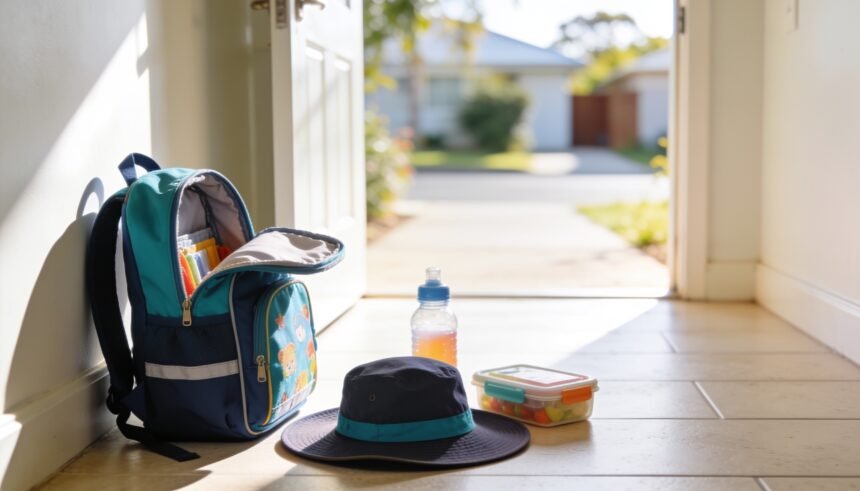
- Lunch box, opened and closed by your child unaided
- Drink bottle, one-handed lid, full at the start of the day
- Hat, wide-brimmed. Most Australian primary schools run a no hat, no play policy
- Spare underwear and a change of clothes in a sealed bag. Accidents happen in term one and it is completely normal
- Library bag, usually on a set day
- Reading folder once home readers start, which is often a few weeks in
- Jumper, even in a Queensland summer, because classrooms are air conditioned
That is it. Prep bags are lighter than parents expect.
What stays at home
- Stationery, in most cases. Prep supplies are usually pooled and the school will ask if they want something
- Toys and comfort items, unless the school has said otherwise
- Money, unless there is a specific reason
- Anything precious. Things get lost, and in prep this is certain rather than likely
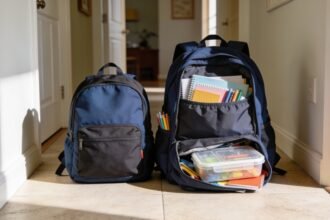
- A large backpack. A bag bigger than the child is harder to manage and does not hold more of what they need
Label everything, including the things you think are obvious
Hats, jumpers, lunch boxes, bottles, bottle lids, shoes, bag. Twenty-five children with similar gear means unlabelled items are gone within a fortnight.
Write the name where a five-year-old can see it, not just where an adult can. A child who can find their own hat is a child not standing in the sun.
The practical skills worth practising
None of these need to be perfect by day one. Practising them in the holidays makes the first weeks easier.
- Opening and closing the lunch box and bottle
- Putting on and taking off the jumper
- Managing shoes, which is why so many prep families choose velcro
- Going to the toilet independently, including managing clothing
- Recognising their own name on a label
- Carrying the bag from the car to the gate
The first week is a lot
Most children are exhausted by Wednesday of week one. Full days of school after a life of shorter days is a genuine adjustment, and tiredness shows up as tears at 4pm rather than at school.
What helps: an early dinner, an early bedtime, a quiet afternoon, and low expectations of conversation about what happened. “What did you do today” reliably produces “nothing”. Asking something specific like who they sat next to works better.
Lunch box reality
Pack less than you think. A prep child eating in fifteen minutes while watching everything else in the playground will not get through an adult-sized lunch.
Send food they can definitely open and definitely like for the first fortnight. This is not the moment to introduce something new. Food coming home uneaten is normal in term one and usually resolves.
Next: the back to school checklist covers the four-week run-up, the year-by-year list covers what comes next, and keeping lunchboxes cold matters from the first week of a January term.
The one-page family week
One printable page that holds the whole week: meals, school, activities and who is doing the pickup. Free, and we send one useful email a week.
One email a week. No spam, unsubscribe in a click.