What is in this guide
- Why does the smell build up by the end of term?
- Is the empty bag still the thing that smells?
- Match what you find to the next step
- Clean the affected area without guessing the wash method
- Wait until the pockets and padding are dry
- What if it still smells after cleaning?
- Give the next term a simple unpacking routine
A school bag that smells after a term is worth checking for trapped food, old spills, damp pockets and sweaty straps before washing the whole thing. Empty every compartment, separate the contents, clean the affected area according to the bag’s care instructions, and let it dry completely before judging whether the smell has gone.
Why does the smell build up by the end of term?
A backpack carries much more than books. JanSport’s school-bag care guidance describes crumbs, dirt and stains accumulating with use. REI also notes that sweat salts and skin oils can enter shoulder straps. Deuter points out that a pack may absorb sweat or get wet in rain and needs airing afterwards.
For a school bag, those are useful places to start looking: the lunch compartment, bottle pocket, base and padded back. A term-end clean is an opportunity to find what has remained inside between school days. It does not mean every bag needs soaking, or that an unpleasant smell means the fabric is worn out.
Start with the general school-bag cleaning guide if you already know the source and only need the permitted cleaning steps. If the source is unclear, work through the checks below first.
Is the empty bag still the thing that smells?
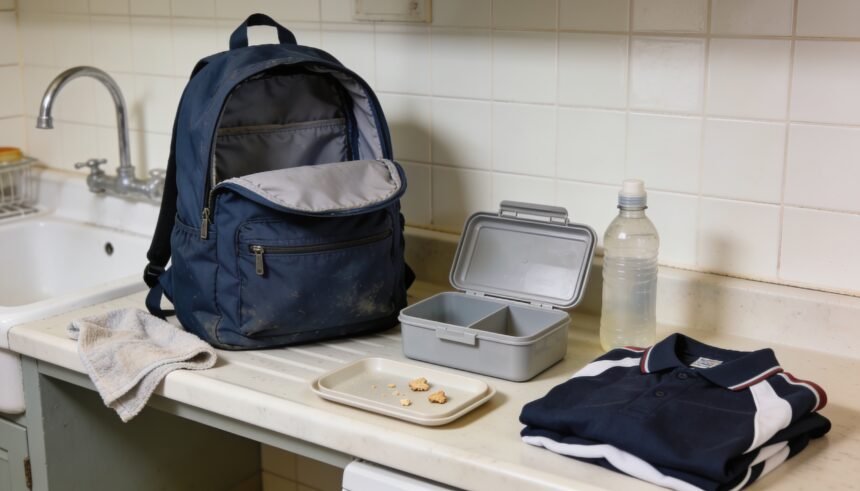
Take out the lunchbox, drink bottle, pencil case, library bag, spare clothes and every loose wrapper. Open the small front pocket, internal sleeve and any zipped section usually left alone. Put the removed items separately on a washable surface rather than back inside one another.
Check the empty backpack and the individual items separately. You are trying to narrow the job: a lunchbox needing attention is different from a spill on the backpack lining. Do not wash the bag merely because the smell was noticeable when everything was packed together.
Look for visible clues as well: a sticky corner, crumbs caught along a seam, a damp garment or an old snack in a small pocket. Avoid identifying the cause from a smell description alone. A sour or musty smell is a reason to inspect, not a reliable diagnosis.
Match what you find to the next step
Use these as starting checks, not guaranteed explanations:
| What you notice | Where to check | What to do next |
|---|---|---|
| Food odour or a sticky patch | Lunch compartment, base and seams | Remove loose waste, then clean the affected fabric as its instructions allow. |
| A damp or musty interior | Bottle pocket, folded lining and clothes left inside | Remove wet contents, inspect for a spill and leave the permitted clean area open to dry. |
| Smell concentrated on straps or the back panel | Padding and surfaces touching the child | Check the maker’s directions for these parts rather than only wiping the main compartment. |
| Empty bag seems fine, but smell returns when packed | Lunchbox, bottle, clothes and smaller bags | Deal with the identified item separately before returning it to the backpack. |
| Smell remains after permitted cleaning and complete drying | The original problem area and inaccessible lining | Ask the maker about further care or repair options. |
For food debris, shake out loose crumbs over a bin. JanSport also suggests a vacuum attachment for particles left behind. Remove the dry debris before working on a sticky patch so the cleaning job is focused on the remaining residue.
Clean the affected area without guessing the wash method
Read the care label and look up the bag model if the directions are incomplete. REI explicitly notes that some manufacturers permit submersion and others do not. A fabric-looking backpack is not enough information to choose a washing-machine cycle.
JanSport describes a cool damp cloth and a little mild, unscented soap for spots on its backpacks, while avoiding scrubbing leather or suede. Deuter supplies a hand-washing method for its own packs. Use the method approved for yours, including any different instructions for trim, padding or removable parts.
If the label says spot clean only, work on the affected spot without turning the job into a whole-bag soak. Do not dismantle a sewn-in back panel to reach an awkward smell. Osprey’s guidance includes a no-immersion exception for particular wheeled packs, another reason to check construction-specific instructions.
Remove cleaning residue as directed. Osprey stresses rinsing away all soap from inside and outside its packs. Adding more cleaner because the first attempt was disappointing is not a substitute for checking whether the original spill has actually been reached.
Skip perfume as a troubleshooting step. You need to assess the original odour after cleaning, and adding another scent makes that comparison less useful. This guide does not prescribe vinegar, bicarbonate of soda, essential oils or disinfectant treatments for unknown bag materials.
Wait until the pockets and padding are dry
Leave compartments open while drying. Deuter advises opening all zips and keeping the bag away from direct sunlight and heat sources. Osprey likewise recommends ventilation and drying out of direct sun.
In a flat or home without outdoor drying space, choose an airy indoor position where the backpack can remain open. Check the base, pocket corners and padded areas before repacking. Do not set a fixed deadline based only on the outer fabric feeling dry.
If this is the only school bag, plan the clean while another suitable bag can cover any school days needed. The first weekend of the holidays gives you more flexibility than the evening before school resumes, but even then complete drying matters more than a date on the calendar.
What if it still smells after cleaning?
Reassess the bag while it is empty and dry. If the odour has gone, return clean, dry belongings individually. If it comes back with a particular item, keep that item out while you address it separately.
If the empty bag still smells, revisit the original location. Is there another pocket you missed, visible residue behind a loose lining, or a section you could not clean within the care instructions? Contact the manufacturer with the model and the method already used before trying a stronger treatment. Visible mould treatment falls outside this routine-care guide.
Persistent odour alone does not establish that the whole bag needs replacing. If the maker cannot offer a suitable cleaning or repair option, then consider whether the bag remains usable for school rather than repeating washes without a clear plan.
Give the next term a simple unpacking routine
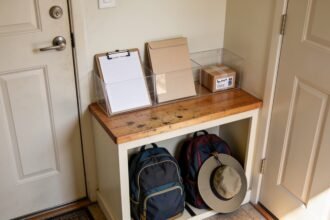
Make arrival home the point when the lunchbox, bottle and damp clothing leave the backpack. Open affected compartments after rain or a spill rather than leaving the full bag packed until morning. Check small snack pockets as part of the same job.
Keep books in their own organised space. The guide to packing a school library bag covers separating loans from food and drink. For children taking more responsibility, getting kids to pack their own bag can be paired with an equally specific unpacking job: lunchbox to the bench, clothes to the laundry, rubbish to the bin.
Add that check to your evening preparation before a school day. Today, empty every pocket and identify the affected item or area before committing the whole backpack to a wash.
How we checked this
Checked on 10 October 2026 against JanSport, REI, Deuter and Osprey backpack-care guidance. Manufacturer directions apply to their own products. The location checks and household routine are editorial recommendations; no bag, cleaner or odour-removal method was tested.
The one-page family week
One printable page that holds the whole week: meals, school, activities and who is doing the pickup. Free, and we send one useful email a week.
One email a week. No spam, unsubscribe in a click.