What is in this guide
For one sauce base and three dinners, cook a mild tomato sauce, divide it before adding strong seasonings, then finish each share differently. Use one for lentil pasta, one for smoky bean bowls and one for chickpea curry, keeping the extra ingredients and cooking jobs on a short dinner plan.
The shared job is chopping and cooking the sauce ingredients. You will still cook pasta or rice and finish each dish on the evening you eat it. This suits a household that wants some preparation done ahead but would rather choose a different meal than repeat a complete batch-cooked dinner.
Choose the three finishes before starting the saucepan
Write down the three dinners first. That stops the whole batch becoming an Italian-style sauce before you remember the curry plan.
Keep oregano, cumin, curry powder, chilli and coconut milk out of the shared base. Add them only to the portion assigned to that meal. Onion, carrot, garlic and tomato are the starting ingredients in this example; leave out anything your household does not want in all three dinners.
Check what is already available using a meal plan built around your pantry ingredients. If you have chickpeas and pasta but no rice, decide whether to buy rice or choose another accompaniment. There is little benefit in preparing a useful sauce and leaving the rest of each dinner undecided.
Cook a mild tomato base
The following is an editorial recipe suggestion, not a tested recipe with a guaranteed yield. Start with:
- 2 tablespoons olive oil.
- 2 medium onions, finely chopped.
- 2 medium carrots, grated or finely chopped.
- 3 garlic cloves, finely chopped, optional.
- Four 400 g tins of chopped tomatoes.
- A little water as needed to loosen the sauce.
Use a saucepan with enough room to stir without spilling. Warm the oil, add the onion and carrot, and cook gently, stirring, until softened. Add the garlic towards the end of this stage and stir until fragrant without letting it burn.
Add the tomatoes and stir well. Use a small splash of water to rinse tomato remaining in the tins into the saucepan. Bring the mixture to a gentle simmer and cook uncovered, stirring periodically, until the vegetables are tender and the sauce is thick enough to coat a spoon. Add water in small amounts if it starts catching on the bottom before the vegetables soften.
Taste before deciding whether it needs seasoning. Leave the final salt adjustment until the separate dinners, particularly where cheese or a prepared spice blend will be added. If your household prefers a smooth sauce, blend it according to your blender’s instructions for hot liquids.
Divide the finished sauce into three roughly equal meal allocations before adding any dinner-specific ingredients. The eventual amount depends on vegetable size and how much the sauce reduces. Treat each allocation as a starting component, then check it against the number of people eating and the amount of pasta, beans or chickpeas planned.
Give each sauce portion a complete dinner plan
Use this table to organise the finishing ingredients. The tin quantities are suggested starting amounts, not a promise that each meal feeds a particular family size.
| Dinner | Add to one share of the base | Prepare separately | Flavour and serving style |
|---|---|---|---|
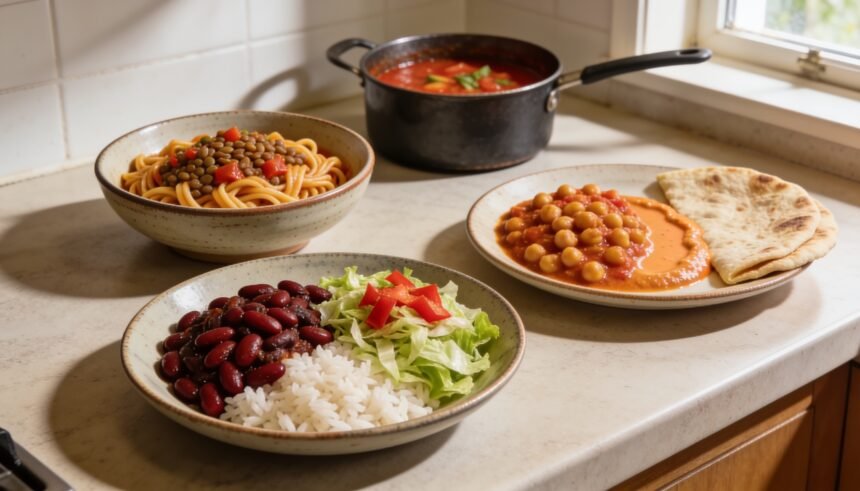
| Lentil tomato pasta | One 400 g tin of lentils, drained and rinsed; oregano if wanted | Your household’s usual quantity of pasta | Thick sauce tossed through pasta, with cheese optional |
| Smoky bean bowls | One 400 g tin of red kidney beans, drained and rinsed; cumin and smoked paprika to taste | Rice; shredded lettuce and chopped capsicum | Spoonable beans over rice, with fresh toppings |
| Chickpea curry | One 400 g tin of chickpeas, drained and rinsed; curry powder to taste; coconut milk added gradually | Rice or flatbread; a vegetable side if wanted | A looser curry with a different spice blend |
Check the total quantities before shopping. Two dinners use rice, so count both allocations. A coconut milk tin may contain more than you want in one curry; choose the amount and any other planned use before opening it. For ingredients worth keeping regularly, the pantry staples guide covers the broader cupboard decision.
Finish dinner one as lentil tomato pasta
Cook the pasta using its packet instructions. In a separate saucepan, combine one share of the base with the drained lentils and a little oregano if wanted. Finish heating it as part of your usual meal preparation, following official guidance for any stored sauce.
Aim for a sauce that clings to the pasta. If it looks watery, let it reduce gently before combining. If it is too thick, loosen it with a small amount of pasta cooking water. Add a little at a time rather than turning the whole pan into soup.
Toss the sauce through the pasta, or serve it alongside for anyone who prefers separate components. Put grated cheese on the table if using it. Leave enough plain pasta aside before mixing if that is part of your household’s dinner arrangement.
Finish dinner two as smoky bean bowls
Combine the second sauce allocation with the drained kidney beans. Start with a small amount of cumin and smoked paprika, stir, then taste before adding more. Leave chilli as an optional table addition if everyone wants a different level of heat.
Cook rice separately and prepare the lettuce and capsicum while the bean mixture is being finished. Spoon rice into bowls, add the beans and offer the fresh toppings separately. This changes both the flavour and the way dinner is assembled, even though the tomato base is shared.
Keep the bean mixture thick enough to sit on the rice rather than flood the bowl. If there is too little sauce for the beans, add some water and reassess the consistency before serving. For families managing different preferences, building dinners around a fussy eater provides a separate planning approach.
Finish dinner three as chickpea curry
Use the last sauce share with the drained chickpeas and your preferred curry powder. Follow the spice packet’s cooking directions where given. Add coconut milk gradually, stirring and tasting as you go, until the flavour and consistency suit the meal. You do not have to use a whole tin.
Serve with rice or flatbread. The coconut milk and curry seasoning give this portion a different finish from the pasta sauce and bean bowls. It remains a simple tomato-based curry suggestion; it is not presented as a traditional recipe from a particular cuisine.
If coconut milk is unavailable or unwanted, choose a familiar tomato-based chickpea curry recipe and use its finishing ingredients. Avoid swapping in yoghurt or cream by guesswork if you are unsure how the recipe handles them.
Match the batch to your household and storage plan
A large household may need more base or extra tins of lentils and beans. A smaller household may prefer half the suggested batch. Scale the whole ingredient list consistently, then divide the finished sauce according to the actual meals planned rather than assuming three equal shares always fit.
Decide when each dinner will be eaten and how its sauce will be stored before cooking. Use Food Standards Australia New Zealand’s consumer food safety guidance for cooling, storage, thawing and reheating. This plan does not assign a fridge life or imply that three consecutive dinners are automatically covered by one storage rule.
If you lack suitable fridge or freezer space, make a smaller batch. You can also cook the shared base for two dinners and prepare the third separately. Fit the meals into your weekly family meal plan, allowing for the pasta, rice and finishing work that still needs doing.
Before starting, name the three dinners and put each one’s finishing ingredients on the shopping list. The sauce then has three assigned uses instead of becoming another container that needs a decision later.
The one-page family week
One printable page that holds the whole week: meals, school, activities and who is doing the pickup. Free, and we send one useful email a week.
One email a week. No spam, unsubscribe in a click.