What is in this guide
- Count the whole dinner before you start
- 1. Toss tuna and peas through pesto pasta
- 2. Fold beans, corn and cheese into quesadillas
- 3. Build lemony chickpea couscous bowls
- 4. Coat gnocchi in tomato, spinach and mozzarella
- 5. Finish freshly cooked rice with egg and peas
- Choose the dinner that fits tonight’s kitchen
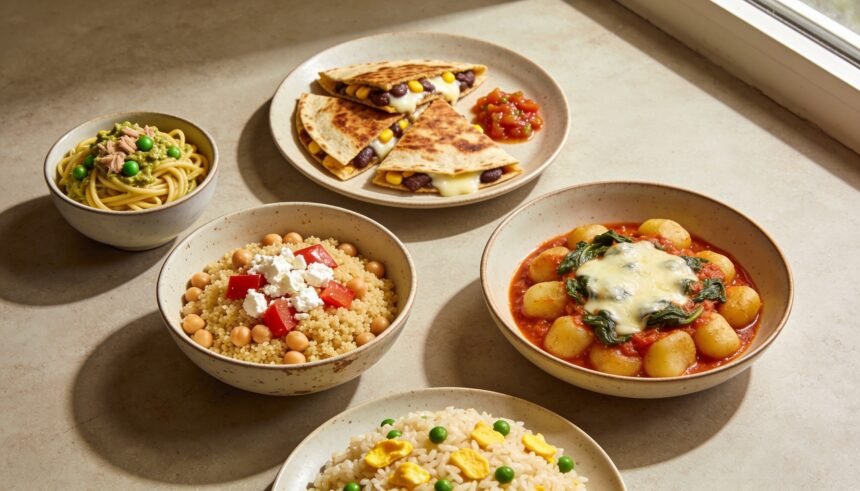
Make tuna and pea pasta, bean quesadillas, chickpea couscous, tomato gnocchi or egg and pea rice with five ingredients each. These dinners keep chopping and shopping manageable, with sauces and cooking oil counted rather than hidden in a long list of assumed pantry extras.
Each list gives starting quantities for roughly four portions. Adjust them to what your household normally eats, especially for teenagers or larger appetites. These are recipe suggestions rather than timed, kitchen-tested results, so use the cooking cues and packet instructions instead of planning around an exact finish time.
Count the whole dinner before you start
Only tap water sits outside the five-ingredient count. Salt, pepper, oil, stock and garnishes are not silently assumed. Where oil is needed, it takes one of the five places. You can season your own serving, but that adds another ingredient.
A jar of pesto or salsa counts as one shopping ingredient even though it contains several components. Five ingredients does not mean five allergens or a particular nutritional balance. Check the actual product labels against your household’s dietary requirements, including sauces and filled or prepared foods.
None of these dinners requires a separate side to follow the method. Add one if wanted, and count its ingredients separately. For a broader cupboard plan, use the pantry staples guide; for tonight, check the exact amounts below before deciding you have everything.
1. Toss tuna and peas through pesto pasta
Five ingredients: 400 g dried short pasta; 425 g tin tuna in springwater, drained; 300 g frozen peas; 100 g basil pesto; one lemon.
Put a large saucepan of water on to boil, then cook the pasta according to its packet. Prepare the peas following their pack directions. If cooking them in the pasta water, coordinate their cooking time with the pasta rather than adding them at the start.
While the saucepan is working, drain the tuna and finely grate a little lemon zest, avoiding the white pith. Before draining the pasta, scoop out a mug of its cooking water. Return the drained pasta and cooked peas to the saucepan, away from direct heat.
Stir in the pesto with a small splash of the reserved water. Fold through the tuna gently so it stays in flakes. Add lemon zest and a squeeze of juice, then taste before adding more juice. Use another splash of water if the pasta looks dry rather than adding unlisted oil.
Choose a pesto the household already likes: it carries most of this dinner’s seasoning. Keep some tuna and peas separate before mixing if that makes serving easier. The pasta still needs cooking even though the sauce needs no separate simmer.
2. Fold beans, corn and cheese into quesadillas
Five ingredients: eight medium flour tortillas; two 400 g tins ready-to-eat black beans, drained and rinsed; 300 g tinned corn kernels, drained; 180 g grated tasty cheese; 150 g mild tomato salsa.
Roughly mash the beans with a fork, leaving some whole for texture. Stir through the corn and enough salsa to moisten the mixture without making it runny. Reserve the rest of the salsa for serving.
Spread the filling over half of each tortilla, scatter cheese over it and fold the other half across. Keep the filling in a fairly thin layer so you can turn the tortilla without losing it into the pan.
Warm a non-stick frying pan over medium heat. Cook the folded tortillas in batches, turning carefully, until both sides have browned and the cheese has melted. Reduce the heat if the outside colours before the middle is hot. This version uses a dry non-stick pan, so oil is not an uncounted requirement.
Cut into wedges and serve with the remaining salsa. Pan size is the trade-off here: a small pan means more batches. Start with fewer filled tortillas if you would rather assemble the next batch while the first cooks.
3. Build lemony chickpea couscous bowls
Five ingredients: 300 g plain couscous; two 400 g tins ready-to-eat chickpeas, drained and rinsed; two red capsicums; 150 g feta; one lemon.
Prepare the couscous with water according to its packet instructions, choosing a product whose water-only preparation suits this method. While it stands, dice the capsicums, crumble the feta and drain the chickpeas thoroughly.
Fluff the couscous with a fork. Fold through the chickpeas and capsicum, then add the feta and a little lemon juice. Taste and increase the juice gradually. Finely grated lemon zest can add more lemon flavour without making the bowl wetter.
Serve as a warm-couscous bowl with the other components at their usual serving temperature. This method does not require frying the capsicum or adding oil. The capsicum stays crunchy, so choose another dinner if your household wants soft vegetables tonight.
For someone who dislikes mixed food, put the components on the plate separately before dressing the remaining couscous. You can find more ways to organise that arrangement in dinners for a household with one fussy eater.
4. Coat gnocchi in tomato, spinach and mozzarella
Five ingredients: 1 kg plain potato gnocchi; 700 g passata; 250 g baby spinach; 200 g grated mozzarella; 20 mL olive oil.
Bring a saucepan of water to the boil for the gnocchi. In a separate wide saucepan, warm the olive oil, add the passata and bring it to a gentle simmer. Stir in the spinach a handful at a time until it wilts into the sauce.
Cook the gnocchi according to its pack directions. Lift it into the tomato sauce with a slotted spoon, or drain it first. Add a splash of water if the sauce becomes too thick to coat the gnocchi evenly.
Scatter the mozzarella over the top, cover briefly and let it soften and melt over gentle heat. There is no oven preheat or baking stage. Serve from the saucepan once the cheese has melted to your liking.
Plain passata gives a simple tomato flavour because garlic and herbs are not included. If you prefer a seasoned pasta sauce, substitute it for the passata as the same single ingredient slot. Check the replacement’s label and cooking directions rather than adding extra seasonings by habit.
5. Finish freshly cooked rice with egg and peas
Five ingredients: 300 g dry long-grain rice; six eggs; 400 g frozen peas; 30 mL reduced-salt soy sauce; 20 mL cooking oil.
Cook the rice according to its packet directions and prepare the peas as directed on their pack. Crack the eggs into a bowl and beat them while those jobs are underway. This version starts with dry rice, so there is no requirement to have cooked rice waiting in the fridge.
Heat the oil in a large non-stick frying pan. Add the eggs and stir gently until set, breaking them into pieces. Add the cooked peas, followed by the freshly cooked rice and soy sauce. Fold everything together over the heat until evenly mixed and hot.
Use a large pan rather than cramming the rice into a small saucepan. Fresh rice gives a softer finish than the separate, firm grains associated with takeaway fried rice. Fold instead of repeatedly pressing or stirring it if you want to preserve more grain texture.
Start with less soy sauce if preferred, then add the rest to taste. No sesame oil, spring onion or extra seasoning is required. Rice cooking is the main waiting stage, so begin it before getting out the eggs and pan.
Choose the dinner that fits tonight’s kitchen
Choose pasta or couscous when you want little frying-pan work. Pick quesadillas when you can stay at the stove through several batches. Gnocchi uses two saucepans, while the rice dinner needs space for rice cooking and a broad frying pan.
For several nights’ shopping at once, ten dinners from one supermarket shop offers a separate allocation plan. These five recipes stand alone: there is no shared batch that must be cooked first.
Choose one dinner now, check its five quantities against your cupboard and fridge, and put only the missing amounts on the shopping list.
The one-page family week
One printable page that holds the whole week: meals, school, activities and who is doing the pickup. Free, and we send one useful email a week.
One email a week. No spam, unsubscribe in a click.