What is in this guide
Build dinner by choosing one meal shape, sorting the vegetables into a cooking order, then adding a pantry base such as pasta, couscous or tinned beans. Use vegetables you already know are suitable to eat; these ideas are for tired-looking produce, not for deciding whether questionable food is safe.
You do not need every vegetable to go into the same pot. A carrot and half a capsicum can become pasta sauce while a handful of greens goes in at the end. Leave an awkward ingredient out if using it would make dinner harder to cook or less appealing.
Take stock before choosing a recipe
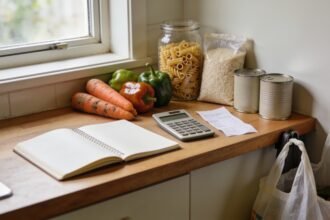
Put the vegetables you intend to use together on the bench. Count usable amounts: two carrots, half a zucchini, a handful of spinach. That gives you a better starting point than thinking of the fridge as full or empty.
Next, check for something to build the meal around. Look for dry pasta, couscous, noodles, bread or potatoes, plus tinned chickpeas, lentils or beans. You are choosing from what is available, so there is no need to open a recipe that demands cream, fresh herbs and a special cheese.
Make the portion decision now. A handful of vegetables might flavour a pot of pasta, but it will not fill a tray for everyone. Use the pasta or grain quantity your household normally eats, then decide how much of the vegetable mixture to put alongside it. For a broader cupboard inventory, follow the pantry-first family meal planning method.
Pick the meal that suits the vegetables
Choose one of these routes rather than trying to combine several dinner ideas.
| What you have | A useful dinner shape | What to look for in the cupboard |
|---|---|---|
| Carrot, onion, capsicum or zucchini in small amounts | Vegetable pasta | Pasta, tinned tomatoes, lentils or beans |
| A larger collection of carrots, pumpkin, cauliflower or broccoli | Chunky vegetable soup | Stock, tinned pulses, bread or small pasta |
| Vegetables you want to keep in separate pieces | Warm vegetable bowls | Couscous, chickpeas, oil and a seasoning |
| Only a handful of leaves and one small vegetable | A topping for a substantial base | Pasta, noodles, beans or toast |
Pasta gives small amounts a clear job as sauce ingredients. Soup is a useful choice when you want everything spoonable. A bowl lets people choose their own balance of grain and vegetables, but it needs several components prepared rather than one pot.
These are starting combinations, not a requirement to use every item listed. If shopping would be necessary to complete one route, choose another.
Sort the vegetables into a cooking order
Before heating a pan, make three groups: dense pieces, softer pieces and leaves. For these meal outlines, put sliced carrot and small pumpkin pieces in the first group, capsicum and zucchini in the second, and spinach or silverbeet leaves in the third. Keep chopped onion separately for the start of the sauce or soup.
Cut dense vegetables into smaller pieces so you can check them easily as they cook. Slice a carrot thinly rather than putting thick chunks beside delicate leaves. Separate silverbeet stalks from the leaves and chop the stalks finely for an earlier addition.
Cook by checking texture rather than following a promised countdown. Test a dense piece with a fork before adding ingredients you only want briefly cooked. Keep leaves aside until the rest is nearly ready. This gives you a way to adjust for the particular vegetables and pan in front of you.
Make vegetable pasta with what you have
Start the pasta according to its packet instructions. In another pan, soften chopped onion in a little oil if you have it, then add thinly sliced carrot with a splash of water. Stir and check the carrot before adding chopped capsicum or zucchini.
Add tinned tomatoes for a sauce, followed by drained ready-to-use lentils or beans if available. Simmer until the vegetable pieces have the texture you want. Fold through spinach near the end, then combine with the cooked pasta. Add a little pasta cooking water if the sauce needs loosening.
Without tomatoes, use an oil-based version: cook the vegetables, toss with pasta and add cooking water gradually to help bring the mixture together. Finish with one available flavouring, such as garlic, dried herbs or grated cheese. Cheese is optional, so its absence need not send you to the shops.
If you prefer a fully specified menu next time, ten dinners from one supermarket shop provides ingredient quantities and allocations.
Turn a bigger collection into chunky soup
Use a saucepan large enough to stir comfortably. Soften onion in oil if available, add chopped dense vegetables, then pour in prepared stock. Use enough liquid to cover the vegetables initially, with room to add more if needed.
Simmer and check the densest pieces before adding softer vegetables. Add drained ready-to-use chickpeas, beans or lentils for a more substantial soup, and finish with the leaves. Keep it chunky rather than assuming you need a blender.
Serve with bread, or stir in separately cooked small pasta. Cooking pasta separately lets you judge the balance in the bowl before committing the whole batch. Taste the soup before adding extra seasoning, especially when the stock already has a strong flavour.
Assemble warm bowls when you want separate components
Prepare couscous according to its packet directions. Cook thinly cut dense vegetables in a pan with oil and a splash of water, then add the softer pieces. Check for tenderness and let excess liquid cook away before serving.
Warm drained ready-to-use chickpeas separately or fold them through the vegetables. Spoon everything over couscous, or set out the components so each person can assemble a bowl. Add lemon juice, dried herbs or a small amount of a familiar sauce if already available.
Keep strong condiments on the table rather than dressing the whole batch. That makes the same ingredients easier to serve to people who prefer different flavours, without cooking separate dinners.
Fix the balance before serving
If the pan looks watery, pause before adding more liquid. Let the vegetables finish cooking, then decide whether the liquid belongs in a sauce or should cook away. If the mixture looks dry, add water a little at a time rather than pouring in a large amount at once.
If there are too few vegetables, make a smaller topping and increase the base to your usual serving amount. Add an available tin of pulses rather than pretending three spoonfuls of vegetables are a whole dinner. If there are too many, you can choose a different meal shape or leave some out; using everything is not the measure of a successful meal.
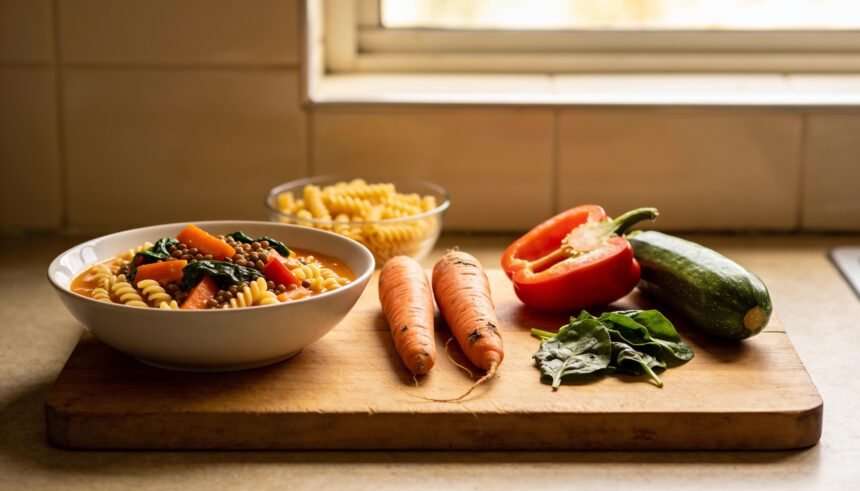
For example, two carrots, half a capsicum and a handful of spinach suggest pasta. Thinly slice the carrots, chop the capsicum, keep the spinach aside, and check for pasta, tomatoes and lentils. That is enough information to begin without searching for a recipe containing precisely those three vegetables.
After dinner, deal with cooked extras through the guide to getting leftovers eaten. To make this approach easier to remember, give a vegetable-led dinner a place in your weekly meal plan, while leaving the actual dish open until you check the fridge.
Next step: choose the vegetables you will use tonight, pick one dinner shape and put its pantry ingredients beside them before heating the pan.
The one-page family week
One printable page that holds the whole week: meals, school, activities and who is doing the pickup. Free, and we send one useful email a week.
One email a week. No spam, unsubscribe in a click.