What is in this guide
A use-by date concerns food safety; a best-before date concerns quality. Food Standards Australia New Zealand says food should not be eaten after its use-by date, while passing a best-before date does not automatically mean food must be discarded. Read the storage and opening instructions alongside either date.
Start with the words beside the date
Find the wording that identifies the date before deciding what the numbers mean. Look for the full phrase, rather than treating every printed date as an expiry date. If the label sends you elsewhere on the packet, turn it over and find the mark it refers to.
Use this comparison to identify the question each label answers:
| Label | What it tells you | What to do with it |
|---|---|---|
| Use-by | A safety limit set by the supplier | Follow FSANZ guidance not to eat food after this date. |
| Best-before | A point relating to the food’s quality | Read it with the storage instructions and the food’s condition; it is not an automatic discard date. |
Do not choose a rule from the type of food you think it is. Read the actual packet. The supplier sets its date mark, so use the wording supplied for that particular product.
For an unclear or rubbed-off mark, ask the manufacturer to explain it. Have the packet or a photograph ready, including the surrounding wording. Guessing from a string of numbers gives you less information than the original label.
Read the storage instructions as part of the date
The NSW Food Authority describes a use-by date in relation to an intact, unopened package stored under its specified conditions. A date cannot be read separately from those conditions. Look for instructions about refrigeration, storage after opening and directions for use.
Read the whole instruction panel before putting the shopping away. If you are sharing the job with someone else, leave the packet where they can read it rather than passing on only the date. A note saying “October” loses the distinction between the date type and the conditions attached to it.
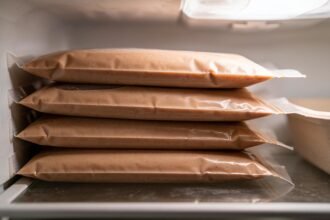
For a crowded fridge, the practical step is to keep the original label accessible. Put the packet where you can take it out and read it without unpacking half a shelf. The broader layout belongs in organising a full family fridge; here, the aim is simply to keep the information with the food.
Keep an opening date beside the printed date
Opening instructions answer another question: what the manufacturer wants you to do once the pack is opened. FSANZ’s storage guidance says to preserve the date marking when opening packaged food and follow the manufacturer’s instructions.
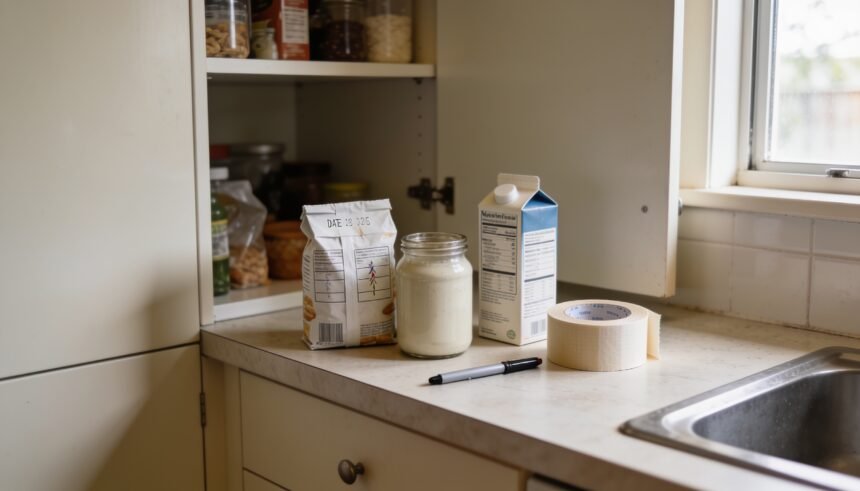
If a packet specifies a period after opening, record when you opened it. Write “opened” and the calendar date on a piece of tape, leaving the original date and directions visible. An opening note adds information; it does not replace the manufacturer’s label.
Consider a hypothetical jar with a best-before date several months away and a separate instruction to use it within a stated period after opening. Once opened, you need both pieces of information. Copying only the distant best-before date onto a container leaves out the instruction that now matters to your planning.
If nobody remembers when it was opened, do not invent a date to complete the label. Check the manufacturer’s advice for the product rather than borrowing an opening period from another jar in the cupboard.
Preserve the label when changing containers
Decanting can make a shelf easier to use, but decide how you will retain the packet information before discarding it. A photograph of the date and instruction panel is one option. Keeping the relevant packaging with the container is another, where that suits the storage setup.
Include the product name in a saved photograph or note so you can match it to the right container. If you have two similar products, give each record enough detail to distinguish them. A folder of unidentified date photographs creates another guessing job.
Keep personal organisation notes clearly separate from supplier date marks. “Bought Monday”, “opened Tuesday” and a printed best-before date describe different things. If you move food to the freezer, a simple freezer labelling system can help with identification, but the storage and preparation directions still need to come from the product’s label or its manufacturer.
Use the dates before writing the shopping list
Try checking packets while planning meals, when you can still change what you intend to buy. Read the date type, the date itself and any opening note. Then choose which ingredients fit the meals you are actually going to prepare within the relevant instructions.
Bring suitable packets you intend to use towards the front, while keeping them in the storage conditions their labels require. You do not need matching containers or a separate spreadsheet. A short note on the meal plan can be enough to remind the next person cooking what was chosen.
For a reduced item in a shop, apply the same reading order before deciding whether it fits your plans. A lower price does not answer when you will use it. Check what is already at home as well, so the purchase does not duplicate something you intended to finish. Building a shopping list from the meal plan takes that inventory check into the next shop.
Check why a date may be missing or different
FSANZ says foods with a shelf life of two years or longer do not need a best-before label. It also allows bread with a shelf life shorter than seven days to carry a baked-on or baked-for date. Those bread marks describe baking, rather than carrying the same meaning as use-by.
Do not create a replacement expiry date from the purchase receipt. Keep whatever storage and use instructions are supplied, and ask the manufacturer if you cannot interpret the packaging. Nor does the absence of a best-before mark tell you how long an opened product will keep.
Next time you put groceries away, start with one packet: find its date wording, read the accompanying instructions and leave that information visible. If you open it, add an opening note without covering the original label.
How we checked this
Checked on 6 October 2026 against FSANZ and NSW Food Authority guidance. This guide explains package wording and proposes organisation habits. It does not assess individual foods or assign storage times after opening or freezing.
The one-page family week
One printable page that holds the whole week: meals, school, activities and who is doing the pickup. Free, and we send one useful email a week.
One email a week. No spam, unsubscribe in a click.