What is in this guide
Freezing works by turning the water in food into ice crystals. Big crystals rupture cell walls, which is why some things come out watery, grainy or mushy and others come out fine.
That single mechanism explains almost everything about what survives.
Wet, robust, already-broken-down dishes freeze well. A braise has already done to itself what freezing does.
Crisp, delicate, high-water and emulsified things do not. They rely on a structure that ice destroys.
What freezes well
Braises, stews and casseroles. Frequently better after freezing, because the flavours continue to develop.
Bolognese and pasta sauces. The most useful thing in an Australian family freezer.
Curries, particularly tomato-based ones.
Soups, other than those finished with cream or dairy, which can be added on reheating.
Chilli and bean dishes.
Cooked mince, plain and portioned, ready for several dishes.
Pies, sausage rolls and pastries, frozen raw or cooked.
Lasagne, uncooked or cooked.
Cooked rice, frozen flat and promptly, and reheated thoroughly.
Stock.
Bread, wraps and pizza bases.
Muffins, slices and scones, which is the lunchbox half covered in freezer-friendly muffins and slices.
What does not freeze well
Potato in a wet dish. It goes grainy and mealy. Leave potato out of a casserole destined for the freezer and add it fresh on the day, which is the single most useful substitution in this article. Mashed potato freezes acceptably; diced potato in liquid does not.
Cream, sour cream, yoghurt and most dairy-finished sauces, which split. Add on reheating instead.
Egg-based sauces and emulsions, which separate.
Anything crisp. Roast vegetables, crumbed items and pastry toppings lose their texture, though pastry frozen raw and baked from frozen is fine.
High-water vegetables: lettuce, cucumber, raw tomato, celery. They collapse.
Pasta cooked and frozen in sauce, which goes soft. Freeze the sauce and cook the pasta fresh, which takes eleven minutes anyway.
Fried food.
Soft herbs as a finish. Add fresh.
The two techniques that matter most
1. Cool it properly and freeze it promptly.
Cool quickly and refrigerate or freeze without leaving it out, which matters more in Australian conditions than in most places this advice is written for. Decant into shallow containers, because a deep pot cools slowly in the middle.
Follow Food Standards Australia New Zealand guidance on cooling, freezing and reheating. This article does not state times or temperatures, because FSANZ is the authority and the guidance is specific.
2. Freeze flat, in the portion you will use.
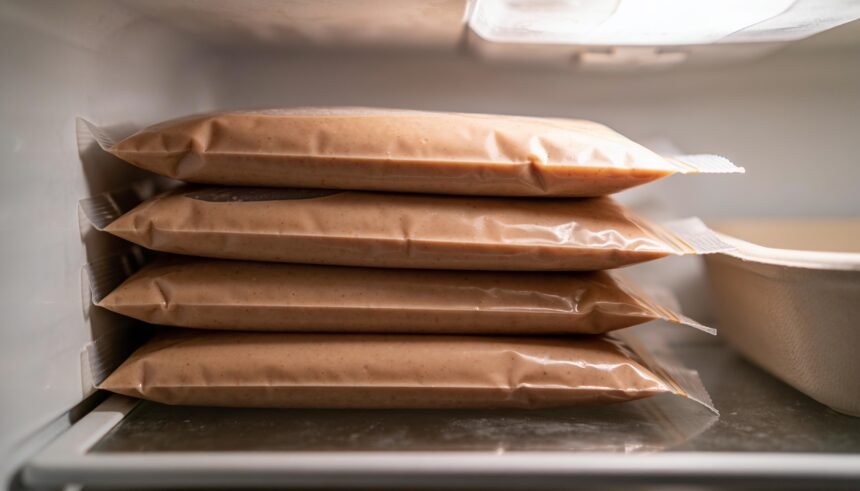
Flat bags stack, take a fraction of the space, and defrost in a fraction of the time. A block frozen in a round container is a two-day defrost; the same food frozen flat in a bag is ready in hours.
Portion by meal, not by batch. A frozen kilogram is not a Tuesday. Two-serve or four-serve portions depending on your household.
Label everything with what it is and the date. Masking tape and a marker. Unlabelled containers are the reason freezers fill with things nobody will eat.
Reheating so it tastes like food
Defrost in the fridge overnight rather than on the bench.
Reheat thoroughly, following FSANZ guidance, and take particular care with rice, which has specific handling requirements that FSANZ sets out.
Add the missing element on reheating. This is what separates a good reheated meal from a dull one: the dairy that was left out, fresh herbs, a squeeze of lemon, something crunchy on top, freshly cooked pasta or rice underneath.
Reheat wet dishes on the stove rather than the microwave where you have time, since it reduces better and the texture is closer to freshly cooked.
If it is watery, simmer with the lid off for a few minutes.
Building a useful freezer rather than a full one
Double what you already cook. The effort difference between one batch and two is a few minutes, and this is the whole strategy. Every time you make a wet dish, half goes in the freezer.
Aim for three or four meals in there, not fifteen. A freezer with fifteen unlabelled containers is a storage problem rather than a resource.
Keep one emergency meal permanently, replaced whenever it is used.
Use it deliberately. Put a freezer meal into the week’s plan rather than treating it as a last resort. It is the answer to the hardest night, as in beating the 5pm what-is-for-dinner panic.
Rotate. Oldest first, which is what the labels are for.
The slow cooker and the freezer work together: a slow cooker batch is usually large enough to produce a meal and a freezer portion in one go, as in slow cooker meals you can prep the night before.
Practical freezer points
Do not overfill or block the airflow, which reduces efficiency.
An Australian garage freezer works harder in summer than one inside, which affects running cost and performance.
Do not refreeze food that has been thawed and then cooked from raw, and follow FSANZ guidance on refreezing generally.
Check what is in there monthly, or the back of the freezer becomes archaeology in exactly the way the back of the fridge does, as covered in fridge organisation for a full family fridge.
Next: beating the 5pm what-is-for-dinner panic covers using it, slow cooker meals you can prep the night before covers producing it, and freezer and pantry staples worth always having covers the rest of what should be in there.
The one-page family week
One printable page that holds the whole week: meals, school, activities and who is doing the pickup. Free, and we send one useful email a week.
One email a week. No spam, unsubscribe in a click.