
What is in this guide
A fridge is not a uniform cold box. It has zones, and they exist whether or not you use them, which is why the same fridge can keep one thing for a week and spoil another in two days.
Use the zones and stop losing food at the back, and most of the problem disappears without buying a single container.
The zones
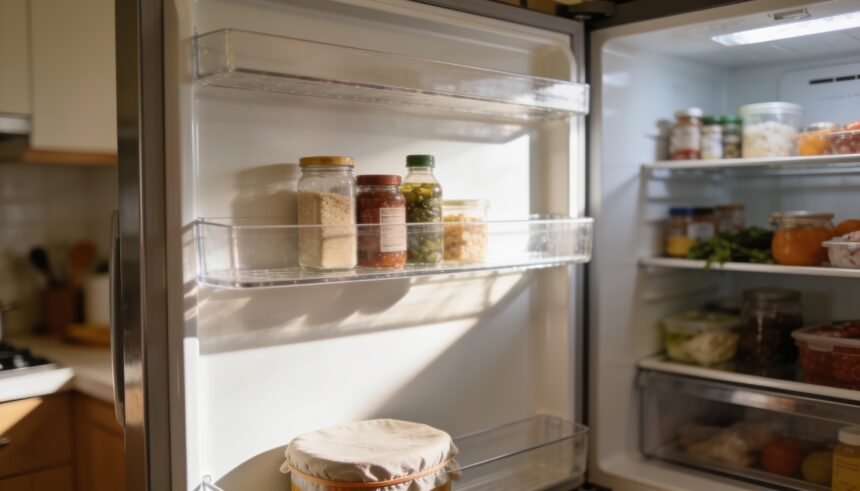
The door is the warmest part, because it is exposed to room air every time it opens.
The bottom shelf is usually the coldest part of the main cabinet.
The upper shelves are the most stable.
The crisper drawers control humidity, not temperature, and they are where most household food waste happens because nobody can see into them.
Check your own fridge rather than assuming, since designs differ and some models put the cold spot elsewhere. A fridge thermometer is the way to know, and Food Standards Australia New Zealand publishes Australian guidance on refrigeration temperature and is the authority on what a fridge should be running at.
What belongs where
Door: condiments, sauces, jams, pickles, things with vinegar or high sugar. Items that are stable and do not mind the temperature swing.
Not the door: milk and eggs, despite the moulded holders many fridges still have. Milk in the door is exposed to the biggest temperature swings in the fridge and does not last as well. Move the milk to a shelf, which is the single easiest change on this list.
Bottom shelf: raw meat, poultry and fish, always in a container or on a tray so nothing can drip. This is a food safety point rather than a tidiness one, and it is the reason the bottom shelf matters more than any other rule here.
Upper shelves: leftovers, prepared food, anything ready to eat, dairy.
Crisper drawers: vegetables in one, fruit in the other where possible, because some fruit releases ethylene that ripens vegetables faster.
The one change that cuts waste
Clear one eye-level shelf and make it the eat-first shelf.
Everything that needs using in the next two days goes there: the half packet of spinach, the leftovers, the fruit that is turning, the opened jar.
It works for one reason: food that cannot be seen is not eaten. The crisper and the back of the bottom shelf are where things go to be discovered a fortnight later, and no container system fixes an invisibility problem.
This is the largest single lever on a household food bill, as covered in feeding a family of four on a weekly grocery budget, and it costs nothing.
Making a full fridge workable
Do not overfill it. Air has to circulate, and a packed fridge runs less efficiently and cools unevenly. This is also a running cost point.
Decant nothing for appearance. Decanting into matching containers looks good and adds a washing-up job and a step between shopping and storing. Decant where it genuinely helps: leftovers into shallow containers so they cool quickly, and cut fruit into something the children can reach.
Use clear containers if you use any, because opaque containers recreate the invisibility problem.
Label leftovers with the date. Masking tape and a pen. Unlabelled leftovers become archaeology, and the date is what makes the decision easy.
Shallow beats deep for leftovers, because shallow cools faster, which matters for food safety and matters more in an Australian summer.
Group by meal, not by type, if that suits your household. All the lunchbox items together, all the breakfast things together, so one person can get one job done from one spot.
Give children a reachable shelf with things they are allowed to take. It stops the fridge being opened and surveyed at length, and it makes them more independent, as covered in kitchen setup so kids can help themselves.
The weekly reset
Ten minutes, before the shop.
Pull everything forward. Anything at the back comes to the front.
Move what needs using to the eat-first shelf.
Bin what has gone, honestly and quickly, and if that is happening every week what food waste actually costs a household is worth reading alongside this.
Wipe the shelf you cleared.
Then write the shopping list, which is now based on what is actually in the fridge rather than what you assume. Shopping the fridge first is the habit that makes the whole thing work, and it is in the 30-minute weekly meal plan method as a planning step.
The Australian heat load
Australian fridges work harder than most, and placement matters more here.
A fridge beside an oven or against a hot west wall works considerably harder, runs longer and costs more. It is not always movable, and where it is, it is worth doing.
Leave clearance around it, particularly at the back and top, which the manual will specify. A fridge pushed hard against a wall in a cabinet with no ventilation gap runs hot. The other thing worth knowing before you need it is what happens to fridge and freezer food in a power outage, because the decisions are made in the first four hours.
Clean the condenser coils where the model has accessible ones, following the manual. Dust on the coils reduces efficiency.
In summer, shop with a cooler bag and get chilled food home quickly, because a fridge full of warm groceries has to work hard to recover. This matters more in February than any organisation system.
The door seal matters. A perished seal leaks cold continuously. The usual test is closing the door on a sheet of paper and seeing whether it pulls out easily.
Food safety, briefly
Raw meat on the bottom, contained.
Cool leftovers quickly and refrigerate promptly rather than leaving them out, which matters more in the heat.
Follow the storage guidance on the label and FSANZ guidance on refrigeration, storage times and reheating. This article deliberately does not specify temperatures or storage durations, because FSANZ is the authority and the guidance is specific.
When in doubt, throw it out. No organisation system makes questionable food safe.
Next: freezer and pantry staples worth always having covers the cupboard and the freezer, feeding a family of four on a weekly grocery budget covers why waste is the biggest cost, and beating the 5pm what-is-for-dinner panic covers using what is in there.
The one-page family week
One printable page that holds the whole week: meals, school, activities and who is doing the pickup. Free, and we send one useful email a week.
One email a week. No spam, unsubscribe in a click.