What is in this guide
The instinct is to open the fridge and see how things are going. That is the single most expensive thing you can do in the first few hours.
A closed fridge and a closed freezer are the two best pieces of equipment you own during an outage. Every time a door opens, the clock speeds up.
The timeline
Australian health authority guidance is consistent on the windows, assuming the doors stay shut:
| How long it holds | |
|---|---|
| Refrigerator, closed | About 4 to 6 hours |
| Freezer, full, closed | About 48 hours |
| Freezer, half full, closed | About 24 hours |
The rule that matters most: perishable food held above 5 degrees for more than about two hours should be treated as suspect, and food that has been above that for more than four hours should be discarded.
Heat shortens all of it. These figures assume a normal indoor temperature. A February outage in a house that is already 30 degrees inside is not the same as a winter one, and you should treat the windows as shorter.
Hour by hour
Hour 0 to 1
- Do not open either door. Decide now that you will not
- Note the time the power went out. Everything below is measured from it
- Check whether it is your house or the street. If it is only your house, check the safety switch in the meter box before assuming an outage
- Report it to your electricity distributor and check their outage map for a restoration estimate. That estimate is what your decisions hang on
- If you have a fridge thermometer, you will be glad of it. If not, note it for later
Hour 1 to 4
- Still closed. If you must get something, know exactly what you are taking, take it in one movement, and close the door
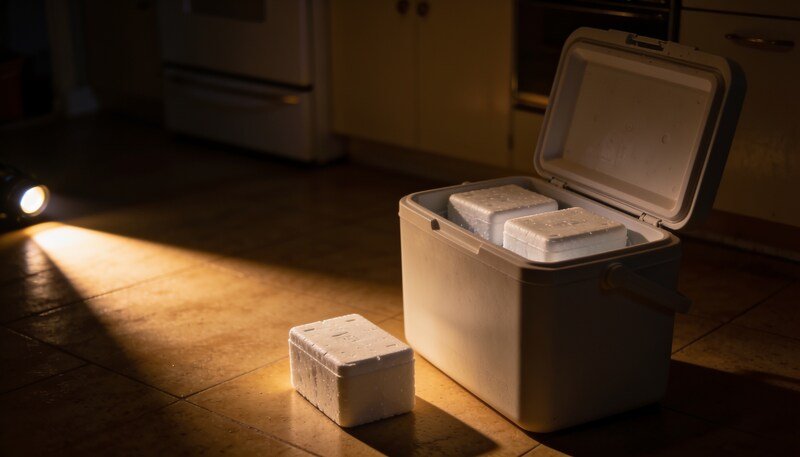
- Move anything already out of the fridge into an esky with ice if you have it
- If the estimate is long and you have an esky and ice or frozen bricks, now is the time to move the most valuable perishables into it. One deliberate opening beats six casual ones
- Fill the sink or containers with water if you are on tank water with an electric pump, because no power means no pump
Hour 4 to 6
This is the decision point for the fridge.
- Meat, poultry, seafood, dairy, cooked rice and pasta, cut fruit, soft cheese, eggs out of shell, anything with a use-by date are the items at risk
- If the power is about to come back, keep the doors shut and reassess
- If restoration is hours away and it is warm, accept that the fridge contents are going
Beyond 6 hours
- Treat the fridge as lost for anything perishable
- The freezer is still working for you. A full freezer is a large block of ice and it will hold for a day or more
- Do not transfer freezer food to the fridge to “save” it. You will open the freezer and lose the far larger asset
What to throw out, and what is fine
Throw out if it has been above 5 degrees for more than four hours:
- Raw and cooked meat, poultry and seafood
- Milk, cream, soft cheese, yoghurt
- Cooked rice, pasta and other cooked leftovers
- Cut fruit and salads, anything with mayonnaise
- Eggs out of the shell, custards, anything with a use-by rather than best-before date
- Opened baby formula
Usually fine:
- Hard cheeses
- Butter and margarine
- Whole uncut fruit and vegetables
- Unopened condiments, jams, sauces, vinegar-based dressings
- Bread, cakes, most pantry items that happened to be in the fridge
The rule: if in doubt, throw it out. Do not taste it to check. Food can be unsafe without smelling, looking or tasting wrong.
The freezer, and the refreezing rule
This is the part people most want a straight answer on.
If the food still has ice crystals in it, or is at 0 degrees or below, it can be refrozen or cooked. If it is above 0 degrees, discard it.
- Check with a thermometer if you have one rather than by feel
- Refrozen food is safe but the quality drops, particularly texture in meat and anything with high water content. Plan to eat it soon rather than storing it for months
- Partially thawed food that is still cold can be cooked immediately and then refrigerated or refrozen as a cooked meal, which is often the better use of it
- Do not refreeze anything that has fully thawed and warmed
If you know a long outage is coming and have warning, turn the freezer to its coldest setting beforehand, fill empty space with containers of water, and do not open it.
After the power returns
- Check temperatures before you trust anything. Fridge at or below 5 degrees, freezer at or below minus 15
- Throw out what is on the discard list, without opening and sniffing everything
- Clean up the melt water in the bottom of the freezer before it refreezes into a sheet
- Keep a list of what you threw out. Home and contents insurance sometimes covers food spoilage from an extended outage, and a photograph and a list are what a claim needs
- Wash the fridge out while it is empty, since it will never be easier
The kit that makes the next one boring
An outage is stressful in proportion to how little you prepared. None of this is expensive.
Water and food
- Drinking water for at least three days, at around 3 litres per person per day
- Food that needs no power and no cooking: tinned food, long-life milk, crackers, muesli bars, spreads, tinned fruit
- A manual can opener, which is the single most-forgotten item
- Freezer and pantry staples worth always having covers the everyday version of this
Light and information
- A torch per person, and a head torch for anyone who needs both hands
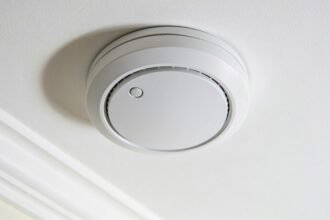
- Not candles. Open flame in a dark house with children and pets is how an outage becomes a fire. Smoke alarms matter most on exactly these nights, and they need to work without mains power
- A battery radio, because a phone network can be down with the power
- Charged power banks, kept charged
Cold
- An esky and frozen bricks kept in the freezer permanently. They cost almost nothing and they double as freezer thermal mass
- A fridge thermometer and a freezer thermometer
Practical
- Cash, because card terminals need power
- A printed list of key numbers, including your electricity distributor
- Knowing where your meter box, safety switch and water shut-off are
- Medication that requires refrigeration: talk to your pharmacist in advance about what to do, because that is a health question rather than a food one
Generators, and the warning that has to be here
Never run a generator, barbecue, camping stove or any fuel-burning appliance indoors, in a garage, on a balcony or near an open window. Carbon monoxide from fuel appliances in enclosed spaces is lethal and it gives very little warning.
The same applies to fuel heaters. If it burns fuel, it belongs outside and well away from the house.
Common questions
How do I know if my freezer stayed cold while I was out? Freeze a cup of water solid, put a coin on top, and leave it in the freezer. If you come home and the coin is at the bottom, the freezer thawed and refroze while you were away.
Does a chest freezer hold longer than an upright? Generally yes. Cold air falls, so a chest freezer loses less when opened and is better insulated by design.
What about the food in an outdoor fridge in the garage? Worse, not better, in summer. Ambient temperature drives everything.
Is it worth a generator? For most suburban households, no. The cost, the fuel, the noise and the carbon monoxide risk outweigh an outage that usually lasts hours. An esky, torches and a power bank cover the realistic case.
Can I claim spoiled food on insurance? Some home and contents policies include food spoilage cover, often with a limit and often only after a minimum outage duration. Check your policy and document what you disposed of.
The short version
Keep the doors shut. Four to six hours for the fridge, a day or two for the freezer, less in the heat. After four hours above 5 degrees, perishables go.
Ice crystals still in it means you can refreeze or cook it. Above 0 degrees, it goes.
Buy an esky, a couple of freezer bricks, a torch each and a manual can opener. Do not light candles and never run a generator indoors.
The one-page family week
One printable page that holds the whole week: meals, school, activities and who is doing the pickup. Free, and we send one useful email a week.
One email a week. No spam, unsubscribe in a click.