
What is in this guide
Five o’clock is the worst hour of the day to make a decision. Everyone is tired, several people are hungry, at least one person needs to be somewhere, and the person asking themselves what is for dinner has the least capacity they have had all day.
The problem is not that you cannot cook. It is that you are deciding at five. Every workable fix moves the decision earlier or removes it entirely.
Four structural fixes
1. Decide at breakfast. Not a plan for the week. Just tonight. Thirty seconds while the kettle boils, and the difference in the evening is disproportionate. Anything that needs defrosting comes out of the freezer at the same moment, which is the other half of the problem.
2. Have a fixed shape for the week. Not a menu, a shape. Monday is pasta. Tuesday is fast. Wednesday is the slow cooker. The decision is narrowed to a handful of options before you start. A four-week rotating family dinner plan is the full version and the shape alone does most of the work.
3. Have a short list on the fridge. Ten to fifteen dinners your household actually eats, written down once. The panic is largely the mind going blank, and a list solves that instantly. This is genuinely the highest value twenty minutes you can spend on the problem.
4. Cook twice as much, once a week. One doubled meal puts a second dinner in the freezer and removes one bad evening completely.
If you want the fuller version, the 30-minute weekly meal plan method covers planning the week properly.
Eight dinners in under twenty minutes
For tonight, from a working pantry as described in freezer and pantry staples worth always having.
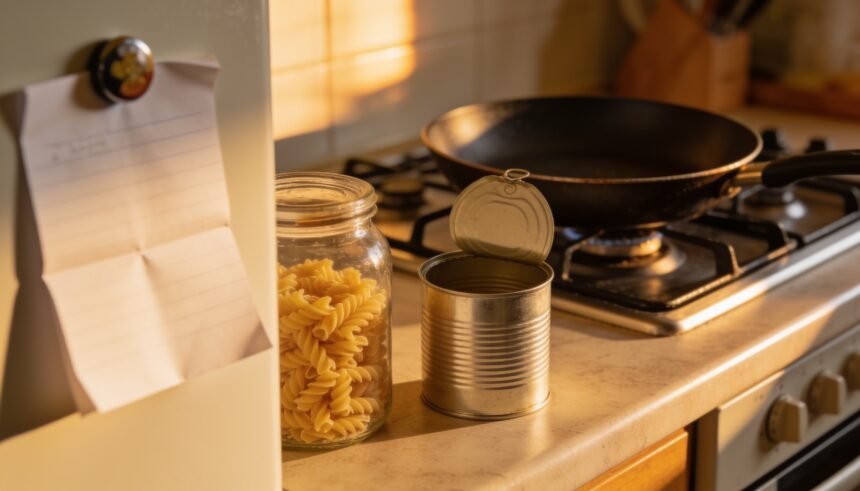
Pasta with a tin. Tinned tomatoes, garlic, whatever protein is in the freezer, pasta. Twenty minutes, and the most reliable dinner in an Australian kitchen.
Fried rice. Frozen cooked rice, frozen peas and corn, egg, soy sauce, any leftover meat or vegetable. Ten minutes, and it clears the fridge.
Tuna pasta. Tinned tuna, pasta, frozen peas, oil and lemon or vinegar. Twelve minutes, no defrosting.
Toasted sandwiches with soup. A tin or a carton and a sandwich each is a completely legitimate dinner and nobody is harmed by it.
Eggs, properly. Omelette, frittata, scrambled with toast. Fast, cheap and the frittata takes whatever is in the crisper.
Wraps or tacos. Mince or tinned legumes, whatever salad exists, wraps from the freezer. Assembly at the table, which children like and which means nobody is served something they will refuse.
Stir fry. Whatever protein, whatever vegetables, rice or noodles. Fifteen minutes and it is different every time.
Jacket potatoes. Microwave first, then a few minutes in the oven or air fryer if you want the skin. Filled with tinned beans, cheese, tuna or leftovers.
Notice that all eight are assembly rather than recipes. That is deliberate: at five o’clock you want a pattern, not a method.
The Australian complications
Summer removes the oven. For weeks at a time, anything requiring forty minutes at 200 degrees is not happening. Stir fries, salads with a protein, wraps, cold meats and the barbecue are the summer versions of this list.
Sport nights split the meal. Two children training at different times means two dinner sittings. Meals that hold and reheat well matter more than fast ones on those nights, and dinners that reheat well for split dinner times covers it.
The slow cooker solves the 5pm problem entirely on the nights you use it, because the decision and the work both happened at eight in the morning. For a household with several late afternoons a week, it is the single most useful appliance in the kitchen.
Get ahead without meal prepping
Full Sunday meal prep does not suit most households and is not necessary.
Fifteen minutes on a weekend gets you most of the benefit: cook a batch of rice and freeze it flat, brown a large quantity of mince and freeze it in portions, chop onion and freeze it, grate a block of cheese.
Freeze in the portion you will use, not in a single block. A kilogram of frozen mince is not a Tuesday.
Keep one emergency meal in the freezer permanently, replaced whenever it is used.
The other half of the problem
Feed the children earlier. A substantial afternoon snack at half past three removes most of the pressure, because hungry children are what turns a slow dinner into a crisis. The snack does not spoil dinner if it is at half past three and dinner is at six.
Accept the toast nights. A household that eats toast, eggs or a bowl of cereal for dinner occasionally is not failing. Planning for one of those a fortnight is more honest than pretending it will not happen.
Order takeaway deliberately rather than desperately. A takeaway written into the week costs less and feels different to one ordered at 6.15 in defeat.
Food safety, briefly
Defrost in the fridge rather than on the bench, which is the single most common shortcut in a rushed kitchen.
Cool leftovers quickly and refrigerate promptly, which matters more in Australian heat than most guidance written elsewhere assumes.
Reheat thoroughly, particularly rice, and follow the guidance on the label. Food Standards Australia New Zealand publishes Australian food safety guidance and is the reference.
Next: the 30-minute weekly meal plan method removes the decision at the source, a four-week rotating family dinner plan removes it entirely, and freezer and pantry staples worth always having covers what makes all eight of these possible.
The one-page family week
One printable page that holds the whole week: meals, school, activities and who is doing the pickup. Free, and we send one useful email a week.
One email a week. No spam, unsubscribe in a click.