What is in this guide
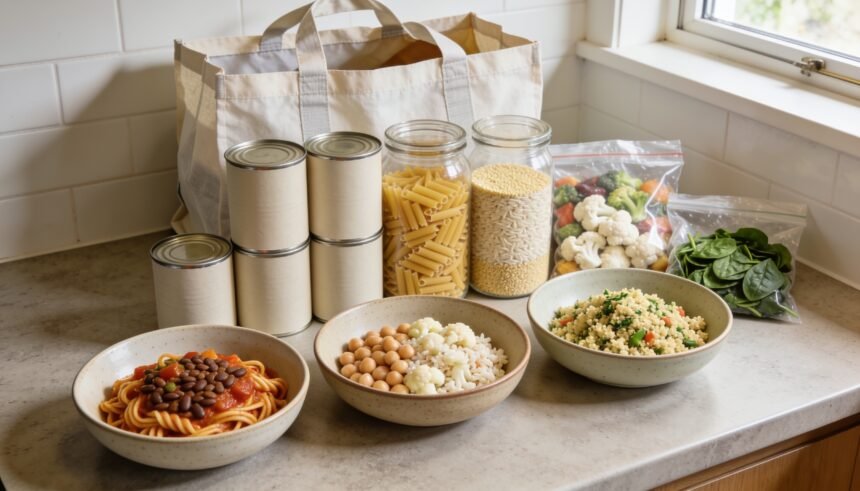
Build ten dinners from one shop by assigning each ingredient to a meal before buying it. This meat-free plan uses pasta, rice, couscous, tinned pulses and frozen vegetables, with a complete list for four starting portions per dinner and no reliance on leftovers carrying the next night.
The trade-off is repetition: chickpeas, lentils and tomato appear several times. The meals change through their base, seasoning and texture. If your household dislikes pulses, choose a different menu before shopping rather than buying twenty tins and hoping tastes will change.
Set the portions and check the space
The quantities below are a planning example, not a promise that every family of four will eat the same amount. Compare one pasta dinner and one rice dinner with what your household normally cooks. Increase the relevant quantities before copying the list if you feed hungry teenagers or want lunch portions too.
These are ten dinner occasions, not a requirement to cook on ten consecutive nights. The basket deliberately avoids fresh salad, fresh meat and opened dairy. Check product dates and storage directions when buying, and allow freezer space for four kilograms of vegetables. Cook each meal’s ingredients when needed, following the packs’ cooking instructions.
This list covers dinner only. Breakfasts, lunches, fruit, drinks and household supplies need their own section. For help fitting the dinners around work and sport, use the weekly meal plan method.
Copy this shopping list
Cross off ingredients already available, counting the amount left rather than simply recognising the packet. All pasta, rice and couscous weights are dry. Pulse tins are nominal 400 g tins before draining; choose cooked, ready-to-use tinned pulses, not dried beans or lentils.
| Buy or have available | Allocation across the ten dinners |
|---|---|
| 1.2 kg short pasta | 400 g each for dinners 1, 4 and 7 |
| 1.2 kg rice | 300 g each for dinners 2, 5, 8 and 10 |
| 900 g plain couscous | 300 g each for dinners 3, 6 and 9 |
| 10 x 400 g tins chickpeas | Two each for dinners 2, 3, 6, 9 and 10 |
| 6 x 400 g tins lentils | Two each for dinners 1, 4 and 7 |
| 4 x 400 g tins kidney beans | Two each for dinners 5 and 8 |
| 7 x 400 g tins chopped tomatoes | One each for dinners 1, 2, 4, 5, 7, 8 and 10 |
| 2 kg frozen mixed vegetables | 400 g each for dinners 1, 3, 5, 8 and 9 |
| 1 kg frozen cauliflower | 400 g each for dinners 2 and 6; 200 g for dinner 10 |
| 1 kg frozen spinach | 400 g each for dinners 4 and 7; 200 g for dinner 10 |
| 200 mL cooking oil | Up to one Australian tablespoon, 20 mL, per dinner |
| 10 teaspoons garlic powder | One teaspoon per dinner |
| 10 teaspoons dried mixed herbs | Two teaspoons each for dinners 1, 3, 4, 7 and 9 |
| 10 teaspoons ground cumin | Two teaspoons each for dinners 2, 5, 6, 8 and 10 |
| 4 teaspoons sweet paprika | Two teaspoons each for dinners 5 and 8 |
Buy pack combinations that meet or exceed these totals. For example, three 500 g pasta packets cover the pasta allocation and leave 300 g unassigned. That surplus is pantry stock, not an eleventh dinner already accounted for. Check seasoning quantities against what is in the cupboard; a nearly empty jar does not cover five meals.
Water from the kitchen is the only unlisted ingredient required. Cheese, stock, sauces, onion and fresh herbs are not hidden requirements. Add optional toppings to the shopping list if you want them.
Cook these ten dinners
For each dinner, use its oil and garlic allocation plus the herbs or spices listed above. Drain and rinse the pulses. Cook frozen vegetables according to their pack instructions, and prepare the pasta, rice or couscous as directed. The steps below describe how to assemble each meal; they are not measured cooking-time promises.
1. Make lentil and vegetable tomato pasta
Use 400 g pasta, two tins lentils, one tin tomatoes and 400 g mixed vegetables. Warm the tomatoes with garlic, mixed herbs and oil, then add the lentils and cooked vegetables. Loosen with a little water if needed and toss through the cooked pasta. Keep some pasta separate if someone prefers the sauce alongside.
2. Spoon cumin chickpeas over rice
Use 300 g rice, two tins chickpeas, one tin tomatoes and 400 g cauliflower. Simmer the tomatoes with cumin, garlic and oil, adding water for a spoonable sauce. Fold in the chickpeas and cooked cauliflower and heat through. Serve over freshly cooked rice, leaving the cauliflower in distinct pieces rather than mashing it.
3. Toss a herby chickpea couscous bowl
Use 300 g couscous, two tins chickpeas and 400 g mixed vegetables. Prepare the couscous with garlic and mixed herbs added to its water. Fluff it, then fold through the oil, heated chickpeas and cooked vegetables. Serve the components separately if mixed bowls are unpopular at your table.
4. Stir spinach and lentils through pasta
Use 400 g pasta, two tins lentils, one tin tomatoes and 400 g spinach. Combine tomatoes, garlic, mixed herbs and oil in a saucepan. Add the lentils and cooked spinach, stirring to distribute the spinach. Toss with pasta, adding a little pasta cooking water if the mixture is too thick.
5. Build mild bean rice bowls
Use 300 g rice, two tins kidney beans, one tin tomatoes and 400 g mixed vegetables. Heat the beans and tomatoes with cumin, sweet paprika, garlic and oil. Serve over rice with the cooked vegetables alongside. This version keeps the plate’s components separate and does not require wraps, salsa or sour cream.
6. Pan-finish cauliflower and chickpea couscous
Use 300 g couscous, two tins chickpeas and 400 g cauliflower. After cooking the cauliflower, drain it well and turn it in a wide pan with oil, cumin and garlic. Add the chickpeas and heat through. Spoon over fluffed couscous, keeping this dinner free of tomato sauce for a change of texture.
7. Make a chunky lentil pasta soup
Use 400 g pasta, two tins lentils, one tin tomatoes and 400 g spinach. Start with tomatoes, garlic, mixed herbs and oil, adding water to make a soup base. Add lentils and cooked spinach, then stir in separately cooked pasta. Adjust the water gradually: the full pasta allocation makes this a substantial, chunky soup rather than a thin broth.
8. Mash beans into a thick rice topping
Use 300 g rice, two tins kidney beans, one tin tomatoes and 400 g mixed vegetables. Heat the beans with tomatoes, cumin, sweet paprika, garlic and oil. Mash about half the beans against the pan to thicken the mixture. Fold in the cooked vegetables and spoon over rice. It uses dinner 5’s ingredients but changes the texture and brings everything together.
9. Make vegetable couscous with crushed chickpeas
Use 300 g couscous, two tins chickpeas and 400 g mixed vegetables. Heat the chickpeas with oil, garlic, mixed herbs and a splash of water, then roughly crush them with a fork. Spoon them over prepared couscous and cooked vegetables. Leave some chickpeas whole if you prefer more bite.
10. Finish with chickpea, spinach and cauliflower rice
Use 300 g rice, two tins chickpeas, one tin tomatoes, 200 g cauliflower and 200 g spinach. Simmer the tomatoes with cumin, garlic and oil. Add chickpeas and the cooked vegetables, loosening with water as needed. Serve over rice. The two smaller vegetable allocations finish the quantities assigned in the list.
Change the menu before changing the trolley
If three couscous dinners are too many, replace one 300 g couscous allocation with the dry amount of rice your household normally uses for four portions. Write the extra rice and reduced couscous on the list immediately. Make the same adjustment when removing a meal: cross out its two pulse tins and other allocations so you do not buy ingredients for a dinner you have cancelled.
Ten meals’ worth of tins is a substantial load to carry. Check how you will get the shop home before committing, particularly if you walk or use public transport. If freezer space is the limiting factor, revise the vegetable choices and quantities against the replacement products before shopping.
After cooking, note which dinners need larger portions and which repeated flavours became tiring. Keep the combinations your household wants again; a four-week rotating family dinner plan explains how to build those favourites into a reusable schedule.
Next step: choose your portion sizes, check the freezer, then copy the list with existing supplies crossed off.
The one-page family week
One printable page that holds the whole week: meals, school, activities and who is doing the pickup. Free, and we send one useful email a week.
One email a week. No spam, unsubscribe in a click.