What is in this guide
Use gentle heat, wash away food and grease after each use, and protect the cooking surface when storing non-stick pans. Follow your pan’s own care instructions for utensils and dishwasher use: these small habits support the coating, but they do not promise a particular number of extra years.
1. Check the pan’s instructions once
Find the model name on the base, packaging or purchase record, then locate its care guide. Keep it somewhere the person doing the washing-up can find it too.
Check three things: permitted utensils, dishwasher suitability and any special first-use instructions. Do not borrow directions from a different pan simply because the coating looks similar. Tefal’s guidance, for example, distinguishes between cookware ranges and materials.
You can use the same label-checking habit with freezer and meal-prep containers, while keeping their care instructions separate from the pan’s.
2. Keep the heat gentle
Circulon recommends low to medium heat for its non-stick cookware. It says excessive heat can discolour the surface or reduce its effectiveness. Avoid treating a higher setting as the default way to get dinner moving.
Have the ingredients and utensil ready before switching on the cooktop. This is a suggested kitchen routine, not a prescribed preheating time; use the sequence in your pan’s manual.
Check the oil instructions too. Circulon advises against aerosol cooking sprays because they can burn onto the surface and leave a sticky film. It recommends a small amount of ordinary cooking oil or butter instead. Follow any different directions supplied with your model.
3. Choose utensils that suit the surface
Tefal recommends plastic or wooden utensils to extend pan life, even though some ranges permit certain metal utensils. Avoid cutting food inside the pan or gouging the coating with a sharp edge.
As a practical setup, put the approved utensil beside the cooktop before starting. Serve onto a plate or board before cutting anything. That makes the care rule easy to follow when several people share the kitchen.
4. Cool, wash and check for residue
Let the pan cool before washing. Tefal warns that cold water poured into a hot pan can cause warping.
Once cool, clean with washing-up liquid, water and a non-abrasive sponge, following the maker’s directions. Tefal advises against scouring powders and scouring pads on non-stick surfaces.
Circulon explains that grease left behind can burn during the next use and reduce non-stick performance. A quick wipe is not a substitute for washing. Check the cooking surface before putting the pan away rather than assuming an empty pan is clean.
For a workable evening routine, leave the pan to cool while clearing the table. Keep other reusable items on their own care routine, including cleaning lunchboxes and bottles properly.
Can it go in the dishwasher?
Check the exact model. Circulon says some ranges are dishwasher-suitable but recommends handwashing to prolong cookware life. Permission to use a dishwasher and the maker’s preferred care method are different things.
If handwashing another item is the sticking point in your evening, decide who will wash the pan when planning the clean-up. You do not need a separate deep-cleaning session for every ordinary use.
5. Protect it in the cupboard
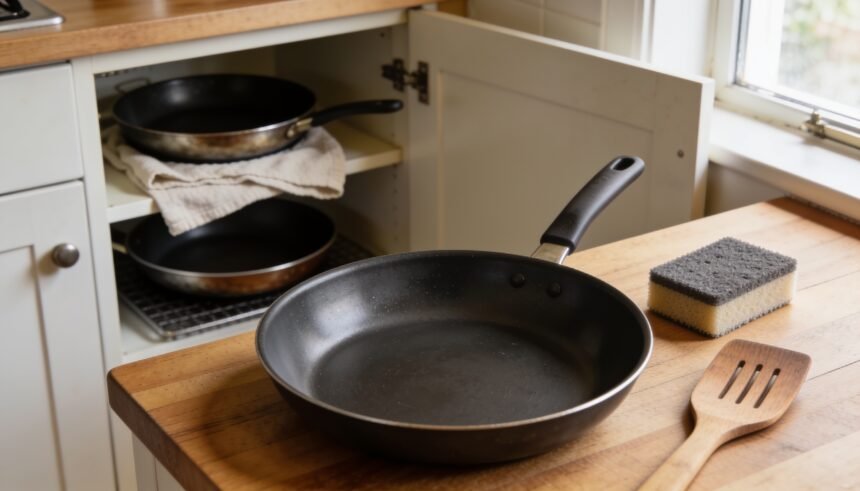
Avoid stacking another pan’s bare base directly against the non-stick interior. Circulon’s storage guidance recommends a protective layer between pans; a soft cloth or folded paper towel is an option if you do not have pan protectors.
Choose a storage position you can use consistently. If reaching the pan means unpacking several containers, consider reorganising that shelf. Our guide to pantry and fridge containers that actually get used covers the container side of that cupboard decision.
What if food still sticks or the coating looks damaged?
Start by checking whether you have followed the model’s cleaning instructions. For persistent sticking, peeling, a misshapen base or uncertain surface damage, photograph the pan and ask the manufacturer whether it needs replacement.
Treat this as a condition question, not a calendar deadline. This guide cannot assess a coating from a description, and it does not recommend sanding, recoating or an improvised restoration treatment.
Next step: Find your pan’s care guide and give it a protected storage spot before the next meal.
How we checked this
Checked on 23 September 2026 against Tefal Australia and Circulon care guidance. This is an editorial comparison of published instructions, with no hands-on testing. The instructions for your exact pan take priority.
The one-page family week
One printable page that holds the whole week: meals, school, activities and who is doing the pickup. Free, and we send one useful email a week.
One email a week. No spam, unsubscribe in a click.