
What is in this guide
A decanted pantry looks like an organisation problem solved with containers. It is usually a habit problem, and the habit that breaks it is refilling.
If putting the flour away means opening a cupboard, lifting a container down, unclipping a lid, pouring carefully and washing a funnel, the bag goes on the shelf next to the container. Six weeks later there are both.
So the buying question is not which containers look best. It is which ones your household will refill.
This guide compares published specifications and Australian retailer listings rather than any hands-on testing.
What is worth decanting, and what is not
Worth it
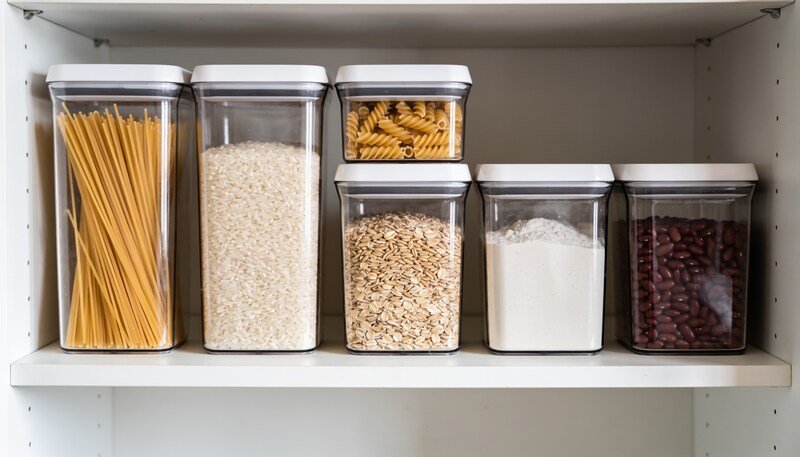
- Flour, sugar, rice, pasta, oats. Bought in bags that do not reseal, used often, and genuinely better in a sealed container
- Cereal, for the same reason and because the box is the worst shape in the pantry
- Biscuits and crackers, which go soft in a humid kitchen
- Anything decanted from a bag that has already split once
Not worth it
- Tins. They are already sealed and stackable. Decanting a tin is a photograph, not a system
- Anything used twice a year. The container costs more than the ingredient
- Sauces and jars. Already airtight, already labelled
- Snacks in individual packets, which are their own container
- Anything with a use-by date you need to keep, unless you transfer the date
The honest rule: decant what you buy in bags and use weekly. Everything else is decoration with a running cost.
Choosing for refill, not for looks
Order the decision this way:
1. Opening. One hand, no thinking. Flip-top and push-button lids get refilled. Four-clip lids look better and get refilled less. A screw lid on a daily container is a small tax paid every day.
2. Mouth width. Wide enough to pour a bag in without a funnel, and wide enough to get a measuring cup in. A narrow neck means decanting becomes a two-step job and the container quietly stops being used.
3. Shape. Square and rectangular use shelf space properly. Round containers waste the gaps. Matched heights matter more than matched volumes, because the shelf spacing is fixed.
4. Height against your actual shelf. Measure between the shelves and subtract the lid height. The single most common return.
5. Capacity against the pack you buy. A 1 kg bag of flour does not fit in a 1 L container. Flour is roughly 600 g per litre, so a kilo needs about 1.7 L. Buy the container for the pack size you actually buy.
Airtight, and what the word means
Airtight on an Australian listing generally means a gasket in the lid and a clamp or screw that compresses it. It is worth having for flour, cereal, biscuits and anything in a humid kitchen.
It is not worth paying for on things that do not care: pasta, rice and tinned goods keep just as well behind a plain lid.
A practical point about lids. Gaskets perish and clips break. Before committing to a full set, check whether the range sells replacement lids. Decor’s Australian range lists replacement lids individually across several of its lines at $2.00 to $3.00 each on 13 September 2026, which changes the long-run cost of a set considerably compared with a range where a broken lid retires the container.
Materials
- Clear plastic. Light, cheap, lets you see the level, which is the main reason decanting works at all. Scratches over time
- Glass. Heavier, does not stain or hold smell, and a full glass canister on a high shelf is a genuine consideration. Decor’s glass canister range uses a bamboo lid the listing states is FSC and BSCI certified and BPA free
- Opaque plastic or ceramic. Looks the tidiest and defeats the purpose, because you cannot see what is left
- Stainless. Durable, expensive, opaque
Where a plastic listing does not say BPA free, that is an absence of a statement rather than a statement.
The fridge is a different problem
Fridge containers are solving visibility and waste rather than air exposure.
- Low, wide and clear beats tall, because the back of an Australian fridge shelf is where food goes to be forgotten
- A drawer or bin for a category (snacks, lunch components, leftovers) works better than one container per item
- Something for cut fruit and vegetables at child height is the single highest-value fridge container in a family house
- Leftovers want a date, not a container. A roll of tape and a marker solves more waste than any set
Fridge organisation for a full family fridge covers the layout side, and pantry organisation that survives a family covers the system this equipment is meant to serve.
An order of purchase
Rather than buying a matched set of twenty:
- Four large containers for flour, rice, pasta and cereal
- Live with it for a month. You will discover the sizes wrong in both directions
- Add smaller containers for what actually turned out to need them
- Add a fridge bin or two for categories rather than items
- Match the set later, if it still matters
That order costs less and ends with containers being used rather than stacked in a cupboard above the fridge.
What no listing tells you
- Gasket life is not published by anyone
- Seal performance is described in words and never measured
- Scratch and clouding resistance is never specified
- Stack load is not published
Nothing here is ranked on durability, because there is no published durability data to rank on.
Before you buy
- Measure the shelf height, then subtract the lid
- Check the pack size of what you actually buy, not the nominal weight
- Choose one-handed lids for anything used daily
- Check whether replacement lids exist
- Buy four, not twenty
If some of these are heading for the freezer instead, freezer and meal-prep containers is a different specification and worth reading first.
The one-page family week
One printable page that holds the whole week: meals, school, activities and who is doing the pickup. Free, and we send one useful email a week.
One email a week. No spam, unsubscribe in a click.