What is in this guide
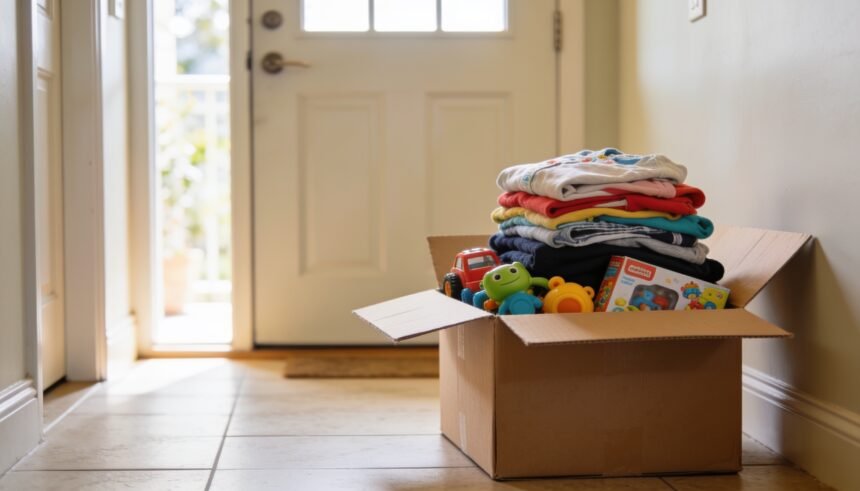
Clothing and toys in good condition have an easy home at the nearest op shop. Bigger baby equipment, cots, car seats, highchairs and prams, is a different question, because most general charity shops will not take it. Knowing the split before you load the car saves a wasted trip and a drive back home with the back seat still full.
Where clothes and toys can go
Vinnies, Salvos and Red Cross all take children’s clothing in good, clean condition, including shoes. Vinnies also lists toys among the items its shops accept. These are the simplest donations because the items need no safety check, only to be clean, undamaged and complete.
Complete sets matter more than volume. A puzzle with a piece missing or a game with no instructions is harder for a shop to resell than a single good item, and some shops will decline obviously unsaleable stock on the spot. Decluttering kids' toys without the tears covers sorting that out before you ever reach the counter, including which toys should go to the bin rather than the donation bag.
Phone ahead for anything beyond a standard clothing bag. Shops vary on soft toys, items with batteries and anything oversized, and a quick call avoids turning up with a full boot and nowhere to put it.
Why the bigger items get turned away
Cots, bassinets, car seats, capsules, highchairs and prams are commonly excluded from general donation, Vinnies states this directly for its shops. The reason is the mandatory Australian safety standards that apply to this category. Cots have been subject to a mandatory standard since 1998, covering things like gaps between bars that could trap a child’s head or limb. Prams must have specific safety features including a parking brake, a tether and a harness. A shop has no practical way to verify an item it is handed meets the current standard, so the safer and simpler policy is not to take it at all.
This is the donating side of the same problem covered on the selling side in selling secondhand kids gear as income: the item might be in perfect physical condition and still not be something anyone should respectfully pass on, because the standard it needs to meet is not visible by looking at it.
Where the bigger items can actually go
Specialist baby goods charities exist for exactly this gap. St Kilda Mums and its sister organisation Geelong Mums rehome new and pre-loved baby goods and nursery equipment directly to families who need them, rather than selling through a shopfront. Where a service like this operates in your area, it is usually the right destination for a cot, pram or highchair a general op shop has declined.
Domestic violence shelters and family support services often need this gear directly and some accept it without the resale requirement a shop has, because the item goes straight to a family rather than onto a shop floor. A phone call to a local service will tell you quickly whether they can use what you have.
Local Buy Nothing and community giveaway groups are a practical option too, particularly for an item too specific or too bulky for a shop. You hand it to a known local family rather than an organisation, and the item stays in use rather than being refused at a counter and brought home again.
What should never be donated at all
A recalled item should never be donated or passed on. Check Product Safety Australia before giving away anything you are not certain about, particularly older cots, highchairs and prams. Anything with a damaged button battery compartment is a hazard, not a donation, regardless of where you take it. What to actually throw out, and what to keep covers the rest of what belongs in the bin rather than the giveaway pile, including broken toys and incomplete sets.
Do not leave it outside
Leaving bags or items outside a closed shop or a full donation bin is illegal dumping, not a donation, and councils and charities both treat it that way. Charities spend real money cleaning up and disposing of goods left outside in the weather, and fines have been issued to individuals for it. If the shop is closed or the bin is full, take it home and try again, or find another drop-off point. Nothing left outside is guaranteed to be collected, let alone resold.
Is it worth selling instead
Some of what you are sorting is worth more as a sale than a donation. Large branded items in strong condition, complete sets and anything still boxed usually return more effort-for-dollar by selling than donating. Selling secondhand kids gear as income sets out what is actually worth listing, and buying kids gear at the right time of year covers the seasonal timing that applies to both sides of that decision. For STEM and construction toys specifically, passing on or reselling STEM toys kids have outgrown covers the resale groups that exist just for that category.
Next: sort what you have into three piles before you do anything else, clothing and toys for the nearest op shop, big baby equipment for a specialist charity or a direct family, and anything damaged, recalled or battery-affected for the bin.
The one-page family week
One printable page that holds the whole week: meals, school, activities and who is doing the pickup. Free, and we send one useful email a week.
One email a week. No spam, unsubscribe in a click.