Most recycling mistakes are made with complete confidence. People are not being careless; they are applying a rule that sounds right.
The rules are close to national. The parts that differ by council are narrower than people fear, and this article separates the two so you know which things to check locally and which you can simply learn once.
The near-universal yes list
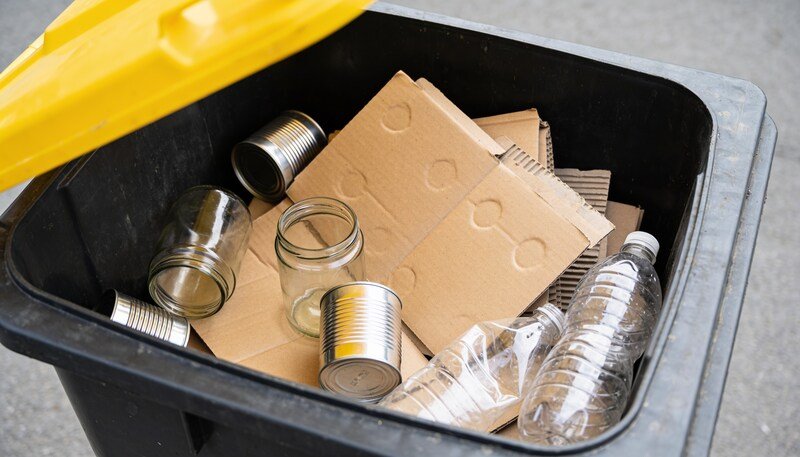
These are accepted in kerbside recycling almost everywhere in Australia:
- Paper and cardboard. Office paper, magazines, junk mail, envelopes including window envelopes, flattened boxes
- Rigid plastic bottles and containers. Milk bottles, drink bottles, shampoo bottles, yoghurt and ice cream tubs, meat trays if clean
- Glass bottles and jars
- Steel and aluminium cans. Drink cans, food tins, pet food tins
- Aluminium foil, if it is clean and scrunched into a ball at least the size of a golf ball so the sorters can catch it
The two preparation rules that apply to all of it:
- Empty and rinse. It does not need to be spotless, it needs to be free of food. A quick rinse in the last of the washing-up water is enough
- Loose, not bagged. Covered below, and it matters more than everything else on this page
The near-universal no list
- Soft plastics. Anything that scrunches. This is the single biggest contaminant in Australian kerbside recycling and it jams the sorting machinery. Soft plastics recycling is back covers where they go instead
- Foam. Polystyrene, meat tray foam, packing foam. Almost no council accepts it kerbside
- Coffee cups. Lined with plastic, so the cardboard cannot be separated. The lid is often recyclable and the cup is not
- Nappies, wipes and tissues
- Ceramics, crockery and drinking glasses. Different melting point from container glass, so they contaminate the glass stream
- Garden hose, cords, wire and rope. These are “tanglers” and they wrap around the machinery exactly as soft plastic does
- Batteries. Never. They start fires in trucks and facilities, and there is a free national scheme for them, covered in batteries and e-waste
- Gas canisters and aerosols that are not empty
- Anything that was in a bathroom bin
The six that cause most of the damage
If you change nothing else:
1. Bagging the recycling. This is the worst one, and it feels like the tidy thing to do. Bagged material is not opened at the facility. The bag and everything in it goes to landfill. Tip it in loose.
2. Soft plastics. Covered above. The single biggest volume problem.
3. Food contamination. A tub with sauce still in it can contaminate the paper it is pressed against, and heavily contaminated loads are rejected.
4. Greasy pizza boxes. The clean top usually goes in and the greasy base does not. Tear it in half, recycle the lid, put the base in the FOGO bin if you have one.
5. Small items. Anything smaller than a credit card falls through the sorting screens and ends up as residue. Bottle tops are the classic. Some councils want them left on the bottle, some want them off, and this is genuinely one to check locally.
6. Wishcycling. Putting something in because it feels like it should be recyclable. If you are not sure, the bin is the safer answer, because one confident wrong item scaled across a suburb is a real cost.
What actually happens to a contaminated load
Worth knowing, because it is the part that makes the rules make sense.
Kerbside recycling goes to a materials recovery facility, where it is separated by a combination of screens, magnets, air jets, optical sorters and people on a picking line. The machinery is fast and it is not clever. Everything on the no list above either jams it, damages it, or ends up in the wrong output stream.
Contamination has three consequences, in increasing order of cost: material is pulled out and landfilled, a batch is downgraded in value, or a load is rejected outright and sent to landfill. Councils pay for that, and it comes out of rates.
The “residual” rate in Australian kerbside recycling is meaningful, which is why councils run contamination inspections and why some now put stickers on bins.
The parts that genuinely differ by council
Check these locally rather than assuming:
- Bottle lids and caps. On or off, and whether plastic lids are accepted at all
- Soft plastics kerbside. A small number of councils now collect them; most do not
- Aerosols. Accepted in some areas if completely empty
- Pizza boxes. Some councils take the whole box, some only the clean part
- Cartons. Liquid paperboard such as long-life milk cartons is accepted in most places and not all
- Glass. A few areas have separate glass collection rather than mixed recycling
- Bin colours themselves. Yellow lid for recycling is near-universal, but red and green lid conventions vary, and some areas now run four bins
How to check: your council’s waste page, or the national Recycling Near You service, which is searchable by postcode and item.
The other streams a household needs
The yellow bin is one of six routes, and knowing the others removes most of the wishcycling:
| What | Where it goes |
|---|---|
| Soft plastics | Supermarket or council drop-off where available |
| Food scraps and garden waste | FOGO or green bin, where offered |
| Batteries, including button and rechargeable | Free drop-off points at major retailers |
| E-waste, phones, cables, small appliances | Council e-waste drop-off or retailer take-back |
| Large items, furniture, mattresses | Council hard rubbish collection |
| Containers with a refund mark | Container deposit scheme refund points in most states |
The FOGO green bin and a household system for four bins and two drop-offs cover how this works in practice without taking over the kitchen.
Common questions
Do I have to remove labels? No. Labels burn off or separate in processing.
Do I need to remove the pump from a soap bottle? Yes, where you can. The pump contains a metal spring and mixed materials. Bottle in the recycling, pump in the bin.
What about shredded paper? Usually not, because it is too small for the screens. Some councils accept it inside a paper bag. Check locally, and consider composting it instead.
Are receipts recyclable? Many thermal receipts are not, and the safest answer is the general waste bin.
What about the plastic window in an envelope? Leave it in. Envelopes go in the paper stream as they are.
Does rinsing waste water? Use the tail end of the washing-up water rather than running the tap. The water cost is small and the contamination cost is not.
Is it still worth doing if some of it ends up in landfill? Yes. Aluminium, steel, paper, cardboard and glass have real and well-established recycling markets in Australia. The parts of the system with problems are not the parts most of your bin is made of.
The short version
Paper, cardboard, rigid plastic, glass, steel and aluminium. Empty, rinsed, and loose in the bin rather than in a bag. No soft plastics, no foam, no coffee cups, no ceramics, no batteries, no cords.
Check three things with your own council: lids, cartons and pizza boxes. Everything else on this page holds almost everywhere.
The one-page family week
One printable page that holds the whole week: meals, school, activities and who is doing the pickup. Free, and we send one useful email a week.
One email a week. No spam, unsubscribe in a click.