What is in this guide
A modern Australian household is now sorting into as many as six streams:
- General waste, weekly or fortnightly
- Recycling, usually fortnightly
- FOGO or green waste, weekly where it exists
- Soft plastics, dropped off when you shop, where the scheme reaches you
- Batteries and e-waste, dropped off occasionally
- Containers for refund, where a container deposit scheme operates
Most Australian kitchens were designed around one bin under the sink. That mismatch is the whole problem, and it is why so many households end up with a tower of stacked containers on the laundry floor.
Size each stream by how often it leaves
This is the design principle, and almost nobody applies it.
The capacity you need is the volume that accumulates between collections, not an equal share of the space.
| Stream | Leaves | What it needs |
|---|---|---|
| General waste | Weekly or fortnightly | Small, if FOGO takes the food. This is the big surprise |
| Recycling | Fortnightly | Large. Two weeks of containers and cardboard is a lot of volume |
| FOGO caddy | Every 1–2 days | Tiny, but must be at the bench |
| Soft plastics | Every shop | Medium, squashable, must reach the car |
| Batteries | Every few months | Tiny, lidded, out of reach |
| Container refund | When it suits you | Large and lightweight, and does not belong in the kitchen |
The single most useful realisation: once FOGO takes the food scraps, the general waste bin gets much smaller and much less smelly, because food was most of the weight and all of the odour. Many households can shrink the general bin and give the space to recycling, which is the stream that actually overflows.
The three-zone layout
Rather than trying to fit six containers in one cupboard:
Zone 1: at the bench, within arm’s reach of the chopping board
- The FOGO caddy. It has to be here or it does not get used. Under the sink behind the cleaning products is where FOGO schemes go to die
- That is all. Nothing else earns bench-adjacent space
Zone 2: in the kitchen, under the sink or in a pull-out
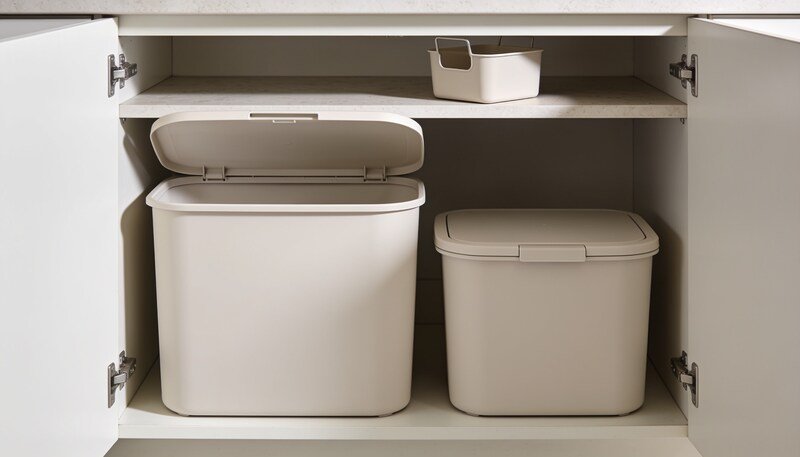
- General waste, smaller than you think
- Recycling, larger than you think
If you only have one under-sink cupboard, a twin pull-out bin is what it is for. If you are replacing a kitchen or a bin, this is the moment to get the proportions right rather than buying two equal halves.
Zone 3: out of the kitchen, in the laundry, garage or a cupboard by the back door
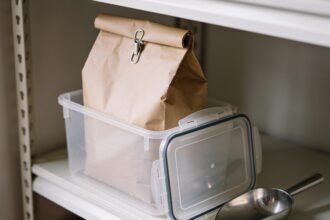
- Soft plastics, in a lidded tub or a hanging bag
- Container refund, in a large light bag or box
- Batteries, in a small lidded jar, high and out of reach. Never bin a battery covers why the lid and the tape matter
- E-waste, a box that accumulates slowly
Zone 3 is the part every guide misses. These streams do not need to be convenient; they need to exist somewhere that is not the kitchen bench and not the floor.
The car is part of the system
The single biggest reason drop-off streams fail is that the bag never makes the trip.
- Soft plastics live in the boot, not by the door. The bag by the door is the bag you walk past. The bag in the boot arrives at the supermarket automatically
- Container refund bags too, if your refund point is on a route you already drive
- Keep a folded reusable bag in the boot to restart the collection immediately after a drop-off, or the cycle breaks
Making it work with other people in the house
A sorting system that only one person understands is a sorting system that person maintains alone.
- Make the destination obvious without a label. Different shaped or coloured containers work better than printed signs that nobody reads after week two
- Put the recycling bin where the recyclables are generated, which is usually nearer the fridge and the pantry than the sink
- Open recycling, lidded general waste. A lid on the recycling is a barrier to a correct action; a lid on the general waste contains the smell. Most households have this exactly backwards
- One rule, taught once: if you are not sure, general waste. Wishcycling costs more than a missed item, because one confident wrong item can downgrade a load. What actually goes in the yellow bin is the reference to keep
- Do not run a sorting station for guests. Nobody at a barbecue will sort correctly and policing it is worse than re-sorting it later
Small kitchens and apartments
Where there is genuinely no cupboard:
- Go vertical. A stacking two-tier bin uses the same floor as one
- Use the back of the cupboard door for a small hanging caddy for soft plastics
- Balcony or hallway cupboard for the slow-moving drop-off streams
- Shrink the general waste bin hard and take it out more often, which small kitchens tolerate better than storing volume
- In a unit block, the bin room usually has recycling and general waste and rarely FOGO. Check what your building actually provides before designing around a stream you do not have
The smell problem, solved properly
The bin does not smell. The food in it does.
- Food scraps go to FOGO if you have it, which removes essentially all of the odour from the general waste bin
- If you do not have FOGO, freeze the wet scraps until bin night. Fish skins, prawn shells, chicken bones, meat trimmings. A container in the freezer costs nothing and solves the problem completely
- Rinse the recycling. Sauce residue is what makes a recycling bin smell, not the plastic
- Empty the FOGO caddy every second day in summer, and line it with newspaper
- Wash the bins occasionally, in the sun
A weekend to set it up
- Find out what your council actually collects, and on what days. This determines everything
- Measure the cupboard and decide the general-to-recycling split, weighted toward recycling
- Buy or repurpose containers. Any lidded tub works for soft plastics; the FOGO caddy is often supplied by the council
- Put the caddy at the bench, the two bins under the sink, and the drop-off streams in zone 3
- Put a bag in the boot
- Tell everyone once, and put the council’s bin night in the shared calendar rather than relying on someone remembering
Common questions
Do I need a special caddy? No. Most councils supply one, and a lidded container with newspaper in the bottom works identically.
What if I do not have FOGO yet? Then you have four streams rather than six, and a larger general waste bin. Freeze the wet scraps. The FOGO bin is worth reading before your council rolls it out, because the rules are not what people expect.
Is a pedal bin or a sensor bin better? Hands-free matters most on the general waste bin when hands are dirty. It matters least on the recycling, which should be open anyway.
How big should the recycling bin be? Larger than the general waste bin in most Australian households on fortnightly recycling collection. Measure a fortnight’s worth before assuming.
What about nappies? General waste, and they are the argument for keeping general waste collection frequency rather than shrinking to a tiny bin in a house with a baby.
The short version
Size each container by how long it sits, not by how important it feels. Caddy at the bench, general waste small, recycling large and open, and everything that gets dropped off somewhere out of the kitchen entirely.
Then put the soft plastics bag in the boot, because that is the difference between a system and a pile in the laundry.
The one-page family week
One printable page that holds the whole week: meals, school, activities and who is doing the pickup. Free, and we send one useful email a week.
One email a week. No spam, unsubscribe in a click.