The failure is nearly always the same, and it is not the plants. Someone digs a four metre bed in August, everybody helps for two weekends, and by the second hot week in November it is a rectangle of dead seedlings and nobody wants to talk about it.
A patch children keep helping with is much smaller than the one you are imagining, it produces something edible within a few weeks rather than a season, and it has exactly one job that has to happen every day.
Start smaller than feels worthwhile
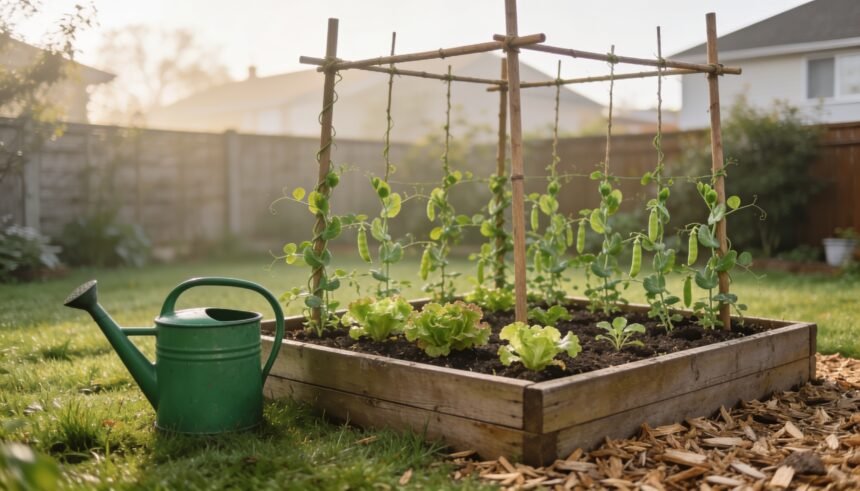
One square metre. Or two large pots.
That is not a beginner’s compromise, it is the right size. A small bed gets weeded, a large one gets abandoned, and a child’s attention is finite in a way that rewards a plot they can reach across without standing in it.
If you are using pots, bigger is easier. Small pots dry out in a single hot Australian afternoon and that is the most common way a first attempt dies. A half wine barrel or a large tub is far more forgiving than six small pots, and it is the same amount of work.
Put it where you walk past it. Not down the back. A patch you see on the way to the clothesline gets watered. A patch behind the shed does not.
Full sun for most vegetables, which means around six hours a day, and in the hotter parts of the country some afternoon shade is a benefit rather than a compromise.
Plant for a quick first win
Children lose interest in the gap between planting and eating, so make the first gap short. Roughly in order of how quickly something happens:
- Radishes. Ready in about four to six weeks, germinate in days, and grow visibly. Almost nobody eats them, which does not matter. They are the proof that this works
- Snow peas and beans. Big seeds, easy for small hands to plant, climb up something, and children eat them raw standing at the plant
- Lettuce and other loose-leaf greens. Pick outer leaves and it keeps producing for weeks
- Cherry tomatoes. Slower, but the highest payoff. A single plant produces for months and the fruit is snack-sized
- Strawberries. Technically not a vegetable and completely worth including
- Herbs, especially mint, parsley and basil. Mint in a pot of its own, or it takes the bed
- Carrots, only if you can be patient. Slow, and the harvest is invisible until it happens, which is either a lovely surprise or a long disappointment
Start with seedlings rather than seed for the slow things, and seed for the fast things. Seedlings skip the least interesting fortnight.
The Australian part: when to plant
There is no national planting calendar, because the country runs from tropical to cool temperate, and advice written for one zone is actively wrong in another.
The broad shape:
- Tropical and subtropical north: the dry season is the productive one. Many summer vegetables struggle through the wet
- Warm and temperate coastal: two main planting windows, early spring and again in autumn. Autumn plantings often do better because they miss the worst heat
- Cool temperate and highland: a shorter season centred on spring and summer, with frost as the limiting factor at both ends
Your local council, botanic garden or a nearby nursery will have a planting guide for your actual zone, and it is worth ten minutes to find one rather than following a generic chart.
The one rule that holds everywhere: do not start in the week before a heatwave. Seedlings have no root system yet and they will not survive their first hot day.
The one job that has to happen
Watering. Everything else on this page is optional and watering is not.
Give it to the children as their job, at a fixed time, attached to something that already happens. Before school or after dinner. Not “when it needs it”, which is an adult judgement and a child will not make it.
The technique matters as much as the frequency, and it is the same technique that saves water generally: water the soil rather than the leaves, water deeply rather than lightly, and mulch the surface. In much of Australia there are permanent rules about when and how you can use a hose at all, and watering a garden under water restrictions covers what those actually say. A watering can filled from a tap or a tank is usually permitted at any time, which happens to suit a child anyway.
Put a finger in the soil before watering. If it is damp at the second knuckle, skip it. Overwatering kills more container vegetables than drought does.
Jobs children genuinely keep doing
Some garden jobs hold attention and some do not. The ones that do:
- Watering, with a can they can lift when full
- Planting seeds, particularly large ones
- Checking every day whether anything has appeared, which is its own activity
- Picking, obviously
- Hunting for snails and caterpillars, which is both useful and popular
- Composting scraps, because putting things in a bin is satisfying, and if your council runs a green bin, what goes in the FOGO bin covers what can go straight out instead
The ones that do not: weeding, staking, thinning seedlings, and anything involving waiting quietly.
Keep it honest
Some things will die. Say so at the start, so the first failure is part of the plan rather than the end of it.
Do not buy an expensive setup for a first attempt. A cheap trowel, a watering can, a bag of potting mix and six seedlings is enough to find out whether your household is going to do this. Raised beds, irrigation and a compost system are rewards for a second year, not entry requirements.
Wash hands after gardening, every time, which is the one hygiene point worth being firm about with soil and compost.
If it works, it becomes one of the better things on the free things to do with kids list, because the only ongoing cost is seed. And if the patch brings mosquitoes with it, standing water in saucers and containers is the usual reason, which is worth dealing with directly.
The one-page family week
One printable page that holds the whole week: meals, school, activities and who is doing the pickup. Free, and we send one useful email a week.
One email a week. No spam, unsubscribe in a click.