What is in this guide
There are two different things people mean by water restrictions in Australia, and confusing them is why so much advice sounds wrong.
Permanent water saving rules apply all the time, in a normal year, with full dams. They are not an emergency measure. Most Australian capitals have had them for well over a decade.
Drought restrictions are the staged ones, brought in when storage levels fall, and they get progressively tighter.
If you have never looked this up, you are almost certainly under the permanent rules right now, and there is a reasonable chance you are breaking one without knowing.
The rules are set by your water authority, not by your state government or your council, and they differ between authorities. What follows describes the shape of them using the two largest as examples. Yours is the one that applies.
What the permanent rules typically say
In Sydney, Sydney Water’s water wise guidelines allow drinking water to be used on gardens and lawns before 10am and after 4pm. Three watering methods are permitted: a hand-held hose with an instant on-off mechanism such as a trigger nozzle, sprinklers, or watering systems. Run-off or overspray onto hard surfaces such as pathways is not permitted.
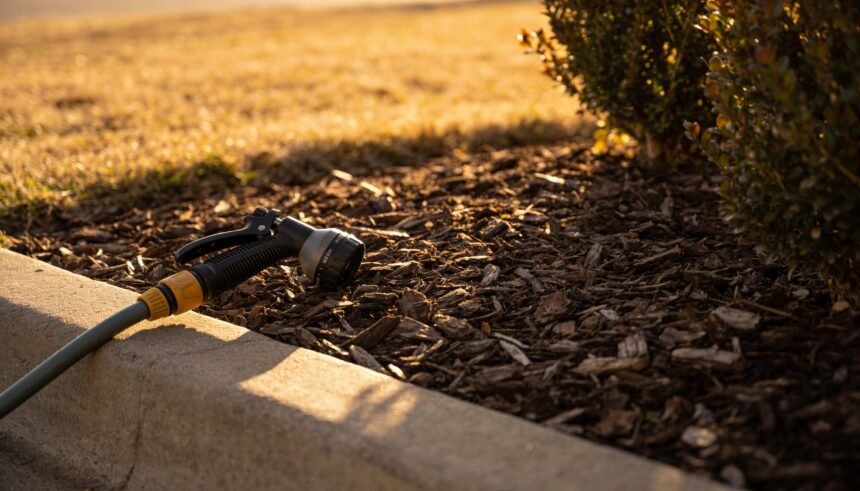
In Melbourne, permanent water saving rules have been in place since 2011, alongside a personal target of no more than 150 litres per person per day. Hoses must be leak free and fitted with a trigger nozzle for all uses, including washing the car and watering the garden. Watering systems may run only between 6pm and 10am. A hand-held hose, a watering can or a bucket may be used at any time.
Three things are worth pulling out of that.
- The time windows exist because of evaporation, not rationing. Watering in the middle of a hot day loses a large part of it before it reaches the root zone
- The trigger nozzle requirement is close to universal. A hose running unattended into a garden bed is the single most commonly broken rule in the country
- Overspray onto paths and driveways is specifically prohibited in some jurisdictions, which is worth knowing before you aim a sprinkler
Check your own authority. In most of Australia it takes one search, the rules are short, and they are written for households rather than for lawyers.
Watering less, and better
The rules are a floor. The bigger saving comes from changing how you water rather than when.
Water deeply and infrequently. A long soak once or twice a week drives roots down. A light sprinkle every evening keeps roots at the surface, where they dry out first and where the plant becomes permanently dependent on you. This single change does more for a garden in a dry summer than anything else.
Water the soil, not the plant. Water on leaves evaporates and, on some plants, encourages fungal problems. Aim at the base.
Check before you water. Push a finger into the soil to the second knuckle. Damp at that depth means it does not need water today, whatever the surface looks like. Dry mulch on top of damp soil is normal and is not a reason to water.
Mulch, properly. A layer around 50 to 75 millimetres of coarse mulch cuts evaporation from the soil surface substantially. Keep it off the stems and trunks, which rot if they stay damp. Coarse mulch lets water through; fine mulch can form a mat that sheds it.
Fix the leak first. A dripping tap or a perished hose washer wastes more than careful watering saves, and most authorities require hoses to be leak free anyway.
Group plants by thirst. The single most useful piece of garden design for a dry climate. Thirsty things together near the tap, tough things together further away, so you are not watering the whole garden at the pace of its neediest member.
The order of priority when it is genuinely dry
Not everything is equally worth saving, and pretending otherwise is how people lose the expensive plants.
- Trees, especially young ones. A tree represents years and is the hardest thing to replace. Deep, slow watering at the drip line, not at the trunk
- Productive plants you are actually eating from
- Shrubs and perennials, which will often survive a hard summer looking terrible and recover
- Lawn, last. Lawn is the thing everyone waters first and the thing that recovers on its own. Most warm-season Australian lawns brown off and come back after rain. Let it
Greywater, carefully
Reusing water from the shower, bath or washing machine is legal in much of Australia in its simplest form, and heavily regulated past that point.
- Bucketed water carried from a shower or bath and tipped onto the garden is generally permitted and needs no approval
- Plumbed greywater systems are a different matter and are regulated by state health and plumbing rules. That is a licensed plumber conversation, not a weekend project
- Use it the same day. Greywater goes off quickly and should not be stored
- Keep it off anything you eat, particularly leafy vegetables and root crops
- Watch your detergent. Many laundry products are high in salt and phosphorus and will damage soil over time. If you are reusing laundry water regularly, that is a reason to change the detergent
Rainwater
A tank is the one change that takes the garden off the restricted supply entirely, because in most jurisdictions restrictions apply to the drinking water supply rather than to rainwater you have caught yourself.
Worth knowing before you install one: tanks need a first-flush diverter and a mosquito-proof inlet screen, both of which are usually required rather than optional. Standing water in an unscreened tank is a mosquito breeding site, which is a summer problem worth avoiding on its own terms.
The short version
Find your water authority’s permanent rules once. Put a trigger nozzle on the hose. Water deeply, twice a week, early or late, into the soil. Mulch. Let the lawn go brown, and save the trees.
If you would like the garden to earn its water, a vegetable patch kids will actually help with is the version that produces something. And if you are in a wet season rather than a dry one, the problem reverses and drying washing in wet weather is the article you actually want.
The one-page family week
One printable page that holds the whole week: meals, school, activities and who is doing the pickup. Free, and we send one useful email a week.
One email a week. No spam, unsubscribe in a click.