What is in this guide
The mosquitoes biting you on your own back step at seven in the evening did not usually come far. Many common backyard species travel only a short distance from where they hatched, which means the water they hatched in is very likely inside your fence.
That is good news, because it means the problem is largely solvable and it does not require spraying anything.
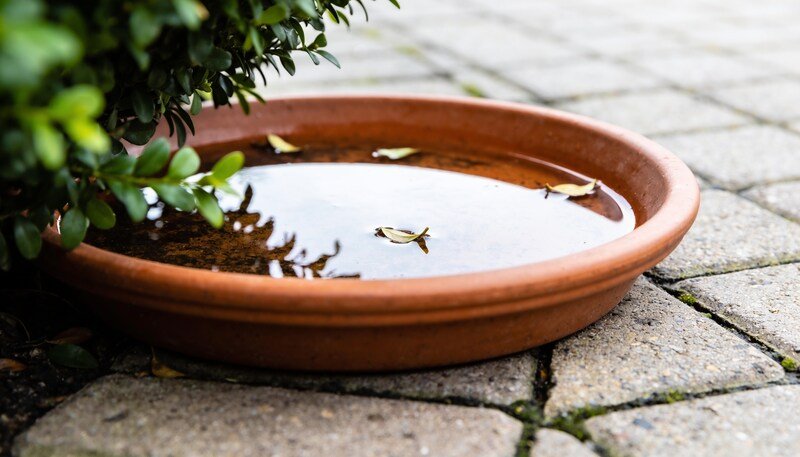
A mosquito needs standing water for about a week to complete its life cycle. Not a pond. A few millimetres. A pot plant saucer, the fold in a tarp, a blocked gutter, the lid of a bin left upside down.
Empty it once a week and the cycle never completes. That is the entire strategy.
The weekly walk
Ten minutes, once a week through the warm months, ideally the day after rain. Walk the whole yard and tip out anything holding water.
The list below is ordered by how often each thing turns out to be the culprit.
1. Pot plant saucers. The single most common breeding site in Australian backyards, and the most invisible because they are under the plants. Tip them, or better, take them away entirely and let the pots drain onto gravel.
2. Blocked gutters. A gutter full of leaves is a long shallow pond above your head. This is also the reason a yard can be spotless and still swarming. Clearing them helps with storms too, and storm season: getting the house ready covers that job properly.
3. Buckets, wheelbarrows, buckets under downpipes. Turn them upside down rather than emptying them, because they refill.
4. Children’s toys. Sandpit lids, swing seats, upturned frisbees, the base of a slide, an old paddling pool. Anything moulded holds water in a corner.
5. Rainwater tanks. A tank without a proper mesh screen on the inlet, the overflow and the outlet is a serious breeding site because it is large and permanent. Screens are the requirement, they are cheap, and they are often missing or torn. Check yours.
6. Boats, trailers, tarpaulins and covers. A folded tarp holds water in every crease. A boat cover holds litres.
7. Roof and pool areas. An unused pool, a spa that is off for winter, a pool cover with a puddle on top.
8. Drains and sumps. Blocked drainage pits and the sump around an air conditioner condenser unit.
9. Bromeliads and plants that hold water in their leaf bases. These are a genuine breeding site in subtropical gardens and they need flushing weekly.
10. Pet bowls and bird baths. Change the water every day or two rather than topping it up.
The things that have to stay wet
You do not have to choose between a wildlife-friendly garden and a bite-free evening.
- Bird baths and wildlife water: change the water every two days. That is shorter than the life cycle and it keeps the water available
- Ponds: add movement with a small pump or fountain, or stock with native fish that eat larvae. Still water breeds, moving water largely does not
- Rainwater tanks: screen every opening with fine mesh and keep it intact. This is the correct answer rather than emptying the tank
- Water restrictions mean some of this competes with using water sensibly, and watering a garden under water restrictions covers that side
Making the yard less pleasant for them
Once the breeding sites are gone, the rest is about the adults that arrive anyway.
- Mosquitoes rest in cool, damp, shaded vegetation during the day. Trimming dense low shrubs and long grass near where you sit reduces the harbourage
- They are weak fliers. A fan on a deck or a patio is genuinely effective and is the most underrated tool here
- Screens. Intact flyscreens on windows and doors, and a door that closes. A torn screen undoes the rest
- Timing. Dawn and dusk are peak activity for many species. Moving the evening meal fifteen minutes earlier does more than it sounds
- Outdoor lighting draws insects. Moving a light away from a seating area helps
What works and what does not
Works
- Removing standing water, by a very large margin
- Screens
- A fan where you sit
- Personal repellent used according to its label
- Covering up at dusk with loose long sleeves
Does not work, or barely
- Bug zappers. Well-studied and poor at mosquitoes. They kill large numbers of harmless and beneficial insects and very few biting mosquitoes
- Ultrasonic repellers, apps and wristbands. No credible evidence
- Citronella candles and torches in open air. A very small effect, easily beaten by a breeze
- Fogging the yard. Short-lived, kills non-target insects, and does nothing to the water still breeding more
- Plants that supposedly repel mosquitoes. Crushed leaves of some plants have a mild effect; a plant sitting in a pot does not
Bites, repellent and disease
This is the part that belongs to health authorities rather than to a gardening list.
Australia has mosquito-borne diseases, including Ross River virus and, in some regions and seasons, more serious ones. State health departments issue seasonal warnings and are the correct source on risk in your area.
Practically:
- Use a repellent registered for the purpose and follow the label, including for how it is applied to children
- Cover up at dusk with loose, light-coloured long clothing
- Follow state health alerts in your region, particularly after flooding, which produces very large mosquito numbers
- See a doctor if you develop fever, joint pain or a rash after bites. That is a medical matter and not something this article can assess
The seasonal rhythm
- After every significant rain: do the ten minute walk. Rain both fills containers and triggers hatching
- Weekly through the warm months: the same walk
- Start of summer: check the tank screens, clear the gutters, deal with the pool or spa that has been sitting
- End of summer: tip and store anything that will sit outside over winter upside down
Getting the backyard ready for summer folds this into the wider seasonal job, and a vegetable patch kids will actually help with is worth checking for saucers while you are out there.
Common questions
Why me and not the person next to me? Individual attractiveness to mosquitoes varies and is not something you can change. It is a reason to control the yard rather than to accept the bites.
Do I need to treat the whole neighbourhood? No. Many common backyard species do not travel far, so your own yard is the highest-value thing you control. If a neighbouring property has an obvious large breeding site such as a neglected pool, your council environmental health team is the right contact.
What about the wetland down the road? Wetland species can travel further and are usually a council or state health matter. Your yard is still worth doing.
Is rain good or bad? Both. It fills containers and it also flushes some sites out. The reliable response is to walk the yard afterwards.
Do mosquito coils work? They have some effect in still air close to the source and the smoke is an irritant for many people. A fan is generally a better option on a deck.
The short version
The mosquitoes biting you tonight almost certainly hatched inside your fence. Walk the yard once a week and after rain, tip out everything holding water, screen the tank, clear the gutters, and change the bird bath every second day.
Then put a fan where you sit, fix the flyscreen, and take the rest up with your state health department rather than with a zapper.
The one-page family week
One printable page that holds the whole week: meals, school, activities and who is doing the pickup. Free, and we send one useful email a week.
One email a week. No spam, unsubscribe in a click.