What is in this guide
Almost all storm damage to an ordinary suburban house comes from three things:
- Water that could not drain and went somewhere else
- Something that was not tied down and became a projectile
- A branch that should have come down on a calm day and came down on a windy one
Everything below is about those three, plus the insurance check that takes ten minutes and is the one most people skip.
The annual pass
Best done in spring, before the season rather than during it. A weekend, most of which is the trees.
Water
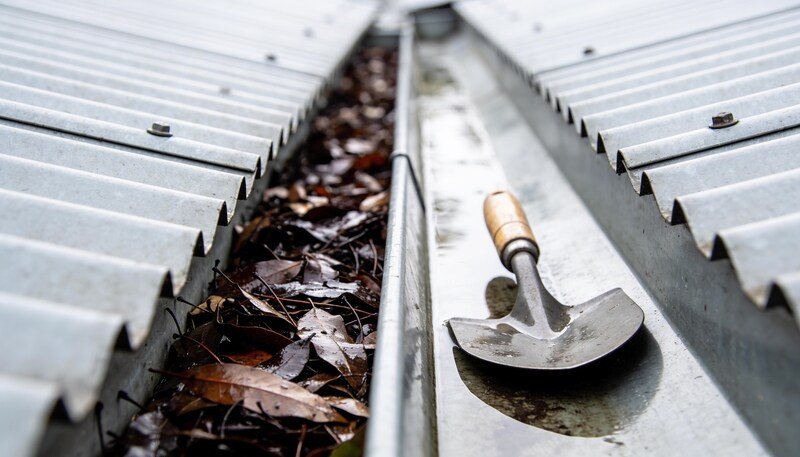
- Clear the gutters. The single highest-value job here. A full gutter overflows into the eaves and down inside the wall, and that is how a storm becomes a ceiling repair. If gutters need a ladder, and they do, read the safety section below first
- Check the downpipes run clear. Pour a bucket of water in and watch where it goes
- Check where the downpipes discharge. Into a stormwater connection, a tank, or onto the ground next to your footings. The last one is a slow problem that a storm accelerates
- Clear the stormwater grates and drainage pits in the yard, which is where leaves collect invisibly
- Check the roof from the ground with binoculars for lifted, slipped or cracked tiles and loose flashing. From the ground
- Check that the ground slopes away from the house, not toward it
Wind
- Deal with the trees. Dead limbs, branches overhanging the roof or the powerlines, and anything leaning. Branches near powerlines are never a homeowner job; that is your electricity distributor
- Look at the fence. A fence panel already loose is tomorrow’s loose panel
- Check the roof of the shed and the carport, especially any sheeting that has worked loose
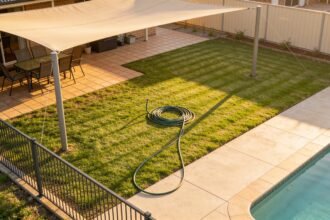
- Trampolines, umbrellas, shade sails. A trampoline is the classic Australian storm projectile. Know in advance how you will secure or dismantle yours, because doing it for the first time in rising wind is too late
- Solar panels and antennas, checked visually for loose mounting
Everything else
- Know where your water shut-off, meter box and safety switch are, and make sure everyone in the house does
- Check the smoke alarms, because storm season and outage season are the same season. Smoke alarms covers the ten-year rule
- Photograph the house and yard, inside and out. This is your before, and it takes ten minutes
- Check the emergency kit. The power is out: what to do about the fridge has the kit list and the food safety timeline
The insurance check nobody does
Ten minutes, once a year, before the season.
- Check what you are actually covered for. Storm, flood and actions of the sea are frequently separate things in a policy, and flood in particular is often a specific inclusion or exclusion rather than part of storm cover
- Check the sum insured is still realistic. Building costs have moved substantially in recent years and underinsurance is common
- Check the excess
- Check for waiting periods. Many policies apply a waiting period of a number of days for flood cover from the start or variation of a policy, which is exactly why buying cover when a system is already forecast does not work
- Know what is not covered. Damage from lack of maintenance, including blocked gutters, is a common exclusion. That is the practical argument for doing the gutters
- Photograph everything, and keep the photos somewhere that is not only on the phone in your pocket
This article cannot tell you what your policy covers. Read the product disclosure statement or call your insurer, because these terms differ materially between products.
In the hours before a storm
When there is a warning rather than a season:
- Bring in or tie down outdoor furniture, umbrellas, bins, toys, pot plants, the trampoline
- Park the car away from trees, and under cover if you have it
- Close windows and doors, and pull curtains and blinds across, which contains glass if a window breaks
- Charge everything: phones, power banks, laptops
- Fill water containers if you are on tank water with an electric pump
- Put the phone numbers somewhere physical: State Emergency Service on 132 500 for storm and flood assistance, 000 for life-threatening emergencies, and your electricity distributor’s outage line
- Clear the sink and bench, and start the dishwasher and the washing, so an outage does not leave you with both
- Move valuables and documents off the floor if flooding is a possibility in your area
- Charge a torch per person and put them where they can be found in the dark
During, and immediately after
- Stay inside and away from windows
- Never drive, ride or walk through floodwater. It is the leading cause of death in Australian flood events, and the depth and what is under it cannot be judged from a car
- Treat every fallen powerline as live. Stay at least eight metres away, keep others away, and call your electricity distributor or 000. Never approach one, and never touch anything in contact with one
- Do not go on the roof during or after, including to look
- Call 132 500 for SES assistance with storm damage such as a damaged roof or fallen tree on a house
- Photograph damage before you move anything, for the claim
- Make it safe, not perfect. Temporary tarping to stop further water ingress is usually required by the policy and is reasonable; permanent repairs before an assessment often are not. Ask your insurer
- Keep receipts for anything you spend on making it safe
The ladder and roof problem
This is the part that injures people every year, and the honest advice is inconvenient.
- Most gutter cleaning falls happen from a domestic ladder, and falls from a height around one to two metres are enough to cause serious injury
- Never work on a roof alone, and preferably not at all
- Do not use a ladder in wind, on soft ground, or leaning against a gutter that may give way
- Single storey with a stable setup and somebody footing the ladder is the realistic household limit
- Two storey, a steep pitch, wet tiles, or anywhere near a powerline is a contractor, and the cost of a gutter clean is very small against the cost of a fall
If you rent, the gutters, roof, trees and structure are the owner’s responsibility. Report anything you can see from the ground in writing, and do not climb anything. Rental repairs covers how that request works.
Common questions
When is storm season? It varies by region. Broadly, spring through summer for severe thunderstorms in the east and south, and the wet season from around November to April in the north. Your Bureau of Meteorology state page and your SES are the sources for local timing.
Should I tape my windows? No. Taping glass does not prevent breakage and can produce larger fragments. Closing curtains and blinds is the useful step.
What about the trampoline, really? Either anchor it properly with ground anchors rated for the job, or take the mat and net off before a forecast storm so the frame catches less wind. A trampoline in a storm can travel a surprising distance.
Is a generator worth it? For most suburban households, no. The power is out covers why, and the carbon monoxide warning that goes with it.
Who do I call for a tree on the powerline? Your electricity distributor, not the SES and not a tree service. Never attempt to clear it.
The short version
Gutters, downpipes and drains clear. Trees and loose limbs dealt with on a calm day. Everything in the yard either heavy, anchored or able to be brought in quickly. Insurance read once a year rather than once a claim.
Then in the hours before: tie it down, charge everything, park away from trees, and put 132 500 somewhere you can find it in the dark.
And if the job needs a ladder against a two-storey gutter, that is a contractor, not a Saturday.
The one-page family week
One printable page that holds the whole week: meals, school, activities and who is doing the pickup. Free, and we send one useful email a week.
One email a week. No spam, unsubscribe in a click.