What is in this guide
The instinct is to spray the trail. It is the wrong move, and understanding why is most of the solution.
What you can see is a supply line, not a population. Ants you kill on the bench are a tiny fraction of a colony that is somewhere else entirely, and the queen is still producing more. Spraying the visible line kills foragers and leaves the nest intact, which is why the trail is back the next morning along a slightly different route.
Worse, some surface sprays cause certain species to fragment, splitting a single colony into several. The problem then gets bigger rather than smaller.
Why they turned up this week
Two opposite triggers, both very Australian:
Dry heat. In a hot dry spell, ants come inside looking for water before food. This is why they appear around the sink, the dishwasher, the pet bowl and the bathroom rather than the pantry, and why an otherwise spotless kitchen still gets them.
Heavy rain. A downpour floods nests and pushes colonies up and into the nearest dry structure, which is the house. A trail appearing the day after a storm is usually this.
The third trigger is a food source that has changed. A new pet bowl left down, a bin without a lid, a sticky ring under the honey, a bag of birdseed in the garage.
Knowing which trigger you have tells you what to fix. Water-seeking ants are not solved by cleaning the pantry.
The method that works, in order
1. Follow the trail before you destroy it.
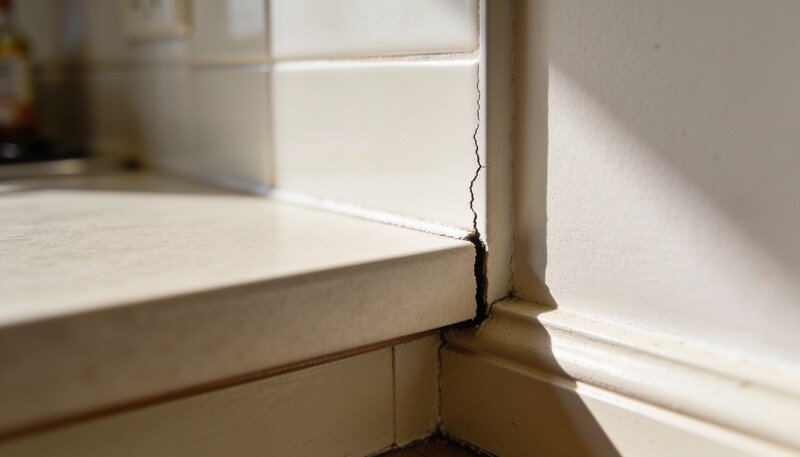
This is the step everyone skips. Spend two minutes finding where the line goes in and where it comes from. A trail is a chemical path and it will lead you to the entry point: a gap at a window frame, the weep hole under a door, a crack where the benchtop meets the wall, the gap around a pipe under the sink.
2. Remove the water and the food.
- Fix the dripping tap and dry the sink at night
- Wipe the sticky ring off the honey, the sauce bottle and the bin lid
- Pet food up overnight, and the bowl wiped. Storing pet food so it does not go off covers the storage side
- Crumbs out from under the toaster and behind the kettle
- Bin with a lid that closes, emptied
- Fruit bowl checked, because one soft nectarine will hold a trail on its own
3. Bait, do not spray.
A bait is designed to be carried back and shared. That is the entire point: the foragers take it to the nest and it reaches the queen. It works on the colony rather than on the line.
This is slow and it is meant to be. You will see more ants for a day or two as the bait is found and recruited to. That is the bait working. Killing them at that moment is the single most common way people defeat their own treatment.
- Place baits on the trail, not where you wish the ants were
- Do not clean the trail while the bait is out. The trail is the delivery route
- Give it a week to ten days before judging it
- If one bait type is ignored, try another. Some species want sugar, some want protein or grease, and the same colony can switch across the season
4. Then close the door.
Once the colony is gone, seal what you found in step one: gaps at skirting, around pipes, at window frames, worn door seals. This is what stops it recurring next summer.
5. Clean the trail last.
Once the bait has done its work, wash the path with hot soapy water or a vinegar solution to remove the chemical trail so the next scout does not simply re-find it.
The safety part, which most pages skip
Ant baits and sweet homemade preparations are attractive to exactly the household members who should not have them.
- Keep all baits out of reach of children and pets. A sweet bait is designed to be appealing, and that is not species-specific
- Use enclosed bait stations rather than open dishes in any house with a crawling child or a dog. An open lid of sweet liquid on the floor is a hazard
- Do not improvise a recipe from the internet if you have young children or pets. The ingredients commonly suggested are not harmless in a household context, and the concentration advice online is inconsistent
- Read the label and follow it. Do not use an outdoor product indoors
- Never mix cleaning products while chasing this, and particularly not a chlorine-based product with an acidic one
- Ventilate if you use any spray at all
- If you suspect a child or pet has ingested a bait or a spray, call the Poisons Information Centre on 13 11 26, or the Animal Poisons Helpline for a pet, or 000 in an emergency
When it is not a household job
Be honest about the point at which this stops being worth your Saturday:
- The trail is coming from inside a wall or ceiling rather than from outside
- Multiple separate trails appear in different rooms at once
- It comes back within days after a full bait cycle
- They are in an appliance. Ants in a dishwasher, oven or fridge insulation are a different job
- You have identified them as a problem species. Some introduced ants in Australia are subject to control programmes and are not a household matter at all
- Anyone in the house reacts badly to bites
For the last one in particular, and for any ant causing painful stings, that is a medical question rather than a cleaning one.
What does not work
Stated plainly because these come up constantly:
- Spraying the trail. Covered above
- Chalk lines, cinnamon, coffee grounds, peppermint. These may briefly disrupt a trail. None of them reach a nest, and the ants route around
- Vinegar as a treatment. Useful for erasing the trail after the fact, not for solving the problem
- Bleaching everything. Removes the trail and the food, does nothing to the colony, and if it is a water-seeking colony it changes nothing at all
- Boiling water down a nest hole in the lawn. Rarely reaches the queen, kills the grass and is dangerous to carry
Preventing next summer
- Seal the entry points you found while the memory is fresh
- Keep the sink dry overnight through hot weather
- Bin lid that actually closes, and rinse the recycling. A household system for four bins and two drop-offs covers keeping that manageable
- Pantry staples in sealed containers rather than opened packets. Pantry organisation that survives a family is the system
- Check the outside: mulch, timber and pot plants pressed hard against the house are a bridge, and trimming a gap removes it
- Fix the dripping outdoor tap too
Common questions
Why are they only in one room? Because that room has the water or the food, and because a trail is a single chemical path. One room is normal and it does not mean the nest is in that room.
Does a clean kitchen prevent them? It helps a great deal against food-seeking ants and not at all against water-seeking ones. In a dry spell a spotless kitchen still gets a trail to the sink.
Are the tiny ones and the big ones the same problem? Not necessarily. Different species nest differently and respond to different baits. If one bait does nothing, that is the most likely reason.
Should I just call someone? If the trail is coming from inside the structure, if it recurs after a full bait cycle, or if you would rather not manage bait safety around small children, that is a reasonable call rather than a failure.
The short version
Do not spray the line. Follow it to the entry point, take away the water and the food, put a bait on the trail and leave it alone for a week even though there will briefly be more ants. Then seal the gap and wash the trail away.
And keep the bait where the toddler and the dog cannot reach it, because it is designed to be appealing.
The one-page family week
One printable page that holds the whole week: meals, school, activities and who is doing the pickup. Free, and we send one useful email a week.
One email a week. No spam, unsubscribe in a click.