What is in this guide
Set up a hand-me-down swap by asking a small group of families what clothing sizes they have and need, then agreeing how clothes will change owners. Keep the first exchange to everyday clothes, make participation voluntary and decide who takes home unclaimed items before any bags arrive.
The aim is to fill actual wardrobe gaps. Nobody needs to contribute the same quantity or accept a bag simply because another family wants it gone. The arrangement below is an editorial starting point that you can adapt together.
1. Find families with useful size overlap
Start with two or three families you can contact directly. Ask each to list the labelled sizes available, the sizes wanted and the types of clothing needed. Include weather needs rather than assuming everyone wants winter clothes at the same time.
A brief reply could say: “Offering size 4 shorts and tops; looking for size 6 trousers and light jumpers.” This is an example, not a suggested wardrobe quantity. You do not need children’s names, birthdays or photos to match clothing.
Look for a useful handover before organising a gathering. If everyone is offering baby clothes and nobody needs them, adding a swap date does not solve the mismatch. Ask whether someone knows another interested family, with their permission, or postpone that size group.
Keep a short needs list for your own household. Check the cupboard first so the swap replaces a planned purchase rather than creating another reserve pile. If clothing spending sits inside a broader plan, use a family budget that works through a real month to record what you still need to buy afterwards.
2. Agree whether clothes are gifts or loans
For the shared pile, propose permanent handovers: once accepted, the new family can use the clothes and later pass them on. Ask everyone to agree explicitly. Do not assume “hand-me-down” means the same thing to each person.
Keep loans outside that pile. A special outfit someone wants returned needs a separate agreement covering the item, owner and return point. Record it in a message both families can find. If the arrangement feels too awkward, leave the outfit out.
Ask children before offering clothes they still use or care about. Set sentimental pieces aside rather than making the swap depend on persuading someone to give them up. An adult can also withdraw an item before the handover if it was packed by mistake.
For a small group, a shared pool without item credits is a straightforward option: families take suitable pieces, even if they have little to offer this time. It requires agreement that contributions need not balance. A counted exchange offers clearer limits but needs someone to track items and can exclude a family with nothing outgrown yet. Choose the rule before inviting contributions.
3. Set a condition rule people can follow
Agree to offer clean, dry clothing with working fastenings and no undisclosed damage. Check pockets, cuffs, knees and waistbands before packing. Keep anything awaiting washing or mending outside the ready-to-swap collection.
Use garment care instructions when preparing pieces. Woolmark advises checking care labels; for wool clothes going into storage, it recommends cleaning first and folding rather than hanging. [S1] This is garment-care guidance, not a special sanitising process for a swap.
Describe wear plainly. “Small mark on the knee, shown in photo” lets the receiving family choose; hiding the mark inside a folded bundle does not. If you want to offer play clothes with visible wear, make that a separate, clearly described group people can decline.
For the first exchange, leave underwear, socks, shoes and equipment out unless everyone has specifically agreed to include them. Limiting the scope keeps the invitation clear. School uniforms can be offered separately, with the school and garment details confirmed privately. For the wider shopping task, see planning back-to-school costs per child.
4. Choose a handover that fits the group
You can exchange bundles without hosting an event. Choose the method around transport, shifts and available space.
| Method | Useful when | Agreement needed |
|---|---|---|
| Direct bundle handover | One family’s available clothes match another’s needs | Contents, ownership and collection time |
| Small gathering | Several families want to inspect and choose pieces | Venue permission, selection rule and pack-up responsibility |
| Photos in a private message group | People cannot meet together | Who has claimed each item and the collection deadline |
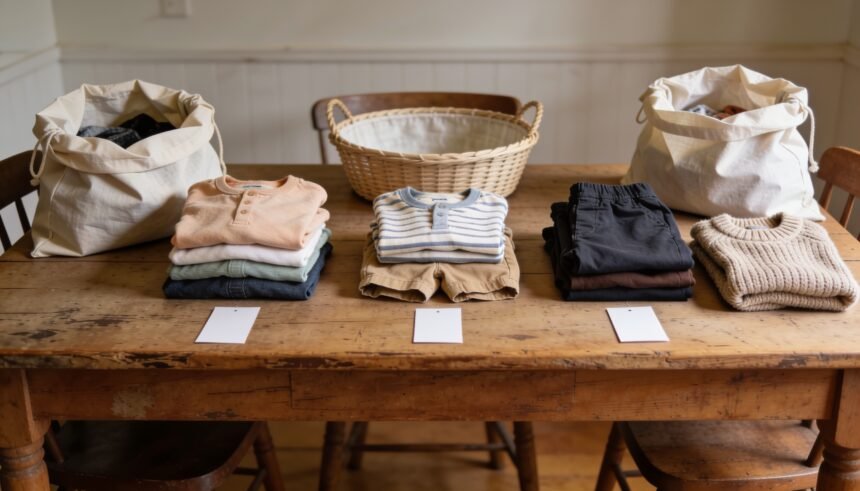
For a gathering, use existing tables or clear floor space and group garments by labelled size. Add known fit notes, such as “shorter than the other size 6 trousers”, without promising the piece will fit. Let people inspect clothing before taking it.
If several families need the same size, try a first round where each chooses one needed piece, then repeat before opening up the remaining pile. That is an optional selection rule, not a proven fairness formula. Give absent families the agreed opportunity to request items rather than quietly letting arrival time decide everything.
In a message group, mark claims and completed collections so two people are not promised the same jumper. Share collection details privately. Avoid leaving a bag indefinitely with the host while waiting for a reply.
5. Send one invitation with the rules attached
Use a short message that includes the offer, requested reply and boundaries. Adapt this example with the actual date and place before sending it:
Would you like to join a small kids clothes swap? Please reply with the sizes you can offer and the sizes you need. We are sharing clean, dry everyday clothes with working fastenings. Items in the shared pile are permanent gifts, and you can join without bringing clothes. We will agree a handover once we know what matches. Anything unclaimed goes home with the family that brought it. Please keep loans and sentimental pieces out.
If you prefer a counted exchange or an in-person selection round, replace the relevant sentence. State whether children will attend and whether someone else can collect a bundle. Keep organising jobs explicit: one person can coordinate replies while another provides the space, if both agree.
6. Finish the exchange without creating a storage job
Default to contributors taking back their own leftovers. Only arrange donation if the owners agree, someone volunteers to transport the clothes and the chosen organisation’s current acceptance requirements have been checked. Do not leave that decision to the host after everyone departs.
At home, try suitable pieces on before counting a wardrobe gap as filled. Follow the agreed ownership rule if something does not work: pass a gifted item on, or contact the owner about a loan. Nobody should need to keep unsuitable clothes out of politeness.
Put clothes that fit into use and give future-size pieces a defined home. The separate guide to storing seasonal and hand-me-down clothes covers that step. Update the shopping list only for gaps that remain, without assigning an invented saving to every item received.
Ask the group whether there are unmatched sizes worth another exchange. Repeat when there is a useful offer or need, rather than committing everyone to a standing event. Your first step is to ask two families which sizes they have and which they need.
How we checked this
Woolmark’s garment-care guidance was checked on 13 October 2026. [S1] The swap rules, selection options and invitation are editorial suggestions. No exchange was tested, and no savings, fit or participation outcomes are promised.
The one-page family week
One printable page that holds the whole week: meals, school, activities and who is doing the pickup. Free, and we send one useful email a week.
One email a week. No spam, unsubscribe in a click.