What is in this guide
A vacuum nozzle glides straight over hair that has worked into woven fabric. It needs friction first to break the hair loose, and suction second to pick it up. Doing it the other way round is why the job feels endless.
Hair sheds from an animal, lands on the seat weave, and works down between the fibres with every bump and every time someone sits on top of it. By the time it is noticed, a chunk of it is mechanically wedged in rather than sitting loose on the surface. A nozzle alone cannot grip it.
The sequence that actually works
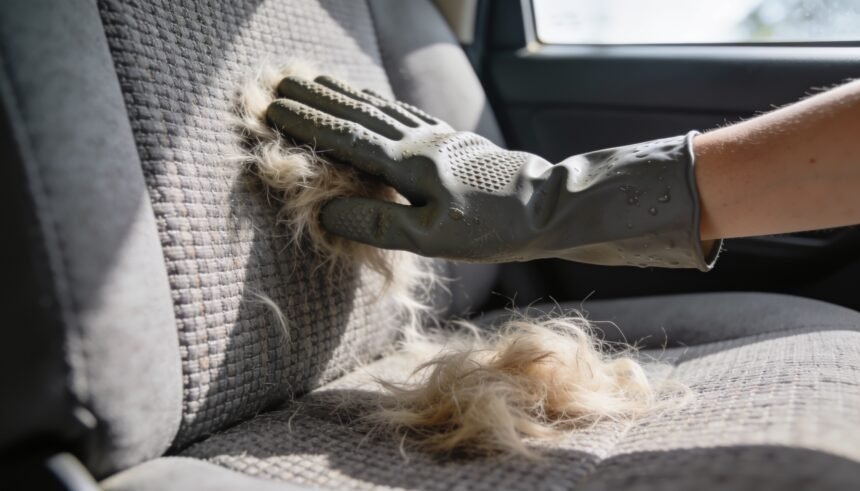
1. Dampen a rubber glove or a rubber-palmed gardening glove, lightly, not wet. Rubber against fabric creates exactly the friction a vacuum brush cannot.
2. Drag the glove across the seat in one direction, firm pressure, short strokes. The hair balls up and lifts to the surface in visible clumps rather than staying buried.
3. Vacuum straight after, using the upholstery attachment, not the floor head. The hair is now sitting loose on top of the weave and lifts easily.
4. Repeat on the boot carpet the same way. Boot carpet is usually a looser weave than seat fabric, so it grips hair harder and takes an extra pass.
A damp squeegee or a window squeegee pulled across the seat does the same job as the glove and covers a wider area per stroke, which is useful on a full bench seat or a boot that gets used for transporting an animal regularly.
Packing tape or a lint roller handles the last stray strands and the seams and corners the glove cannot reach properly, but neither is a substitute for the friction step on the main surface. Used as the only method, both run out fast on a genuinely hairy seat and cost more over time than a reusable glove.
Fabric seats versus vinyl or leather
Woven fabric is where hair actually bonds, because it has somewhere to wedge itself. The glove-then-vacuum sequence above is built for this surface.
Vinyl and leather do not grip hair the same way. Hair sits on top rather than working in, and a slightly damp microfibre cloth wiped across the surface, followed by a vacuum pass to pick up what collects at the seams, is usually enough. Static is the main issue on these surfaces, and a very light mist of water before wiping cuts static and stops hair scattering off the cloth as it is wiped.
Boot liners sold specifically for pets are typically a rubber or heavy-duty fabric that releases hair far more easily than factory carpet, which is the main reason they exist. Dog car seat covers and boot liners covers what to look for if the car is doing regular pet trips and the factory upholstery is taking the damage.
The vacuum still matters
The friction step prepares the hair. The vacuum still has to pick it up, and a machine that struggles with pet hair generally struggles worse in the tight angles of a car interior than it does on a floor.
The same mechanical issues apply in a car as anywhere else: a brush roll that winds up with hair, a filter that loads and quietly loses airflow, and an emptying step that puts hair back into the air. Vacuums for pet hair covers what actually copes with it, including the motorised upholstery attachment that matters most for seat fabric specifically.
A hand-held or cordless stick vacuum is the realistic choice for a car, since a barrel machine’s hose usually will not reach comfortably into the footwells and boot corners.
Preventing the buildup in the first place
- Brush the animal before it gets in the car. Loose undercoat removed at home never reaches the seat at all, and this single habit cuts the job more than any cleaning method
- A seat cover or hammock for the back seat, and a boot liner for the boot, both removable and washable, take the hair instead of the upholstery
- A blanket thrown over the seat works as a cheap version of the same idea if a proper cover is not in budget yet
- Clean soon after a trip rather than letting several trips compound, since freshly shed hair has not yet worked as deep into the weave
If smell comes with the hair
Hair and odour are related but separate problems. Removing the hair does not remove a smell that has soaked into fabric or carpet underlay, and a car boot in Australian heat makes any trapped odour worse. Getting pet smell out of carpet and cleaning up pet accidents on hard floors and rugs cover the odour side in the home, and the same principles, an enzyme-based cleaner on the affected patch rather than a scented cover-up, apply to a car boot liner or seat fabric.
Before you start
- Use the glove or squeegee before the vacuum, not instead of it
- Match the method to the surface: friction tools for fabric, a damp wipe for vinyl and leather
- Use the upholstery attachment, not the floor head, inside the car
- Brush the animal before the trip if shedding is heavy
- A cover or liner is cheaper over time than repeated deep cleans
Less hair reaching the seat in the first place is mostly a grooming habit. Dog fur, floors and a clean house covers the same prevention logic for the home, and it carries over directly to the car.
The one-page family week
One printable page that holds the whole week: meals, school, activities and who is doing the pickup. Free, and we send one useful email a week.
One email a week. No spam, unsubscribe in a click.