What is in this guide
The order you clean in matters more than what you clean with. The single most common mistake is treating a rug or carpet accident the same way as a hard floor: wiping, rubbing or scrubbing straight away, which pushes the liquid deeper into fibres and padding rather than removing it. The surface decides the first step, not the product.
Hard floors: lift, then clean, then dry
- Lift what you can with paper towel or a cloth, pressing rather than wiping, so liquid is absorbed rather than spread across a wider area.
- Clean the area with a cleaner suited to the floor type (tile, timber and laminate all tolerate different products; check what your specific floor allows before using anything acidic or abrasive on timber or stone).
- Dry the area fully. A hard floor that stays damp in a seam or grout line is where a lingering smell tends to come from, not the original accident itself.
Hard floors are the easier case, because nothing soaks below the surface. The main failure point is skipping the final dry, especially in grout lines and along skirting boards where a mop misses.
Rugs and carpet: blot first, never rub
- Blot immediately, do not rub. Press a clean cloth or paper towel straight down onto the spot repeatedly, lifting rather than dragging, until no more liquid transfers to the cloth. Rubbing spreads the accident sideways into surrounding fibres, which is exactly how a small spot becomes a large stain.
- Apply an enzyme cleaner rather than a generic surface spray. Enzyme cleaners work differently to ordinary cleaner: they break down the organic matter causing the odour rather than masking it, which matters on a soft surface where the source can sit below what a wipe reaches.
- Let the enzyme cleaner sit for the time stated on the product, rather than blotting it away immediately. Enzyme cleaners need contact time to work; rinsing or blotting too soon undoes the point of using one.
- Blot dry once the sitting time is done, again pressing rather than rubbing, and allow the area to air dry fully before walking on it or replacing furniture.
Do not do this on a rug
- Do not rub, scrub or use a hot iron or hair dryer on a fresh accident. Heat can set some stains and odours rather than lifting them.
- Do not clean with a generic all-purpose spray first and an enzyme cleaner second. Some general cleaners can interfere with how well an enzyme cleaner works afterwards; go straight to the enzyme product if odour removal is the goal.
- Do not assume a stain that looks gone is fully treated. A rug or carpet can look clean on the surface while liquid remains in the padding underneath, which is when a smell returns days later, particularly in humid weather.
If the same spot keeps happening
A single accident is a cleanup problem. A repeated accident in the same spot is usually a different problem: the smell from a previous incident, even one you cannot detect yourself, can draw an animal back to the same location. If a spot keeps being targeted despite thorough cleaning, getting pet smell fully out of carpet covers a deeper treatment pass for exactly that situation, and a pattern of repeated accidents is also worth raising with a vet, since it can have a medical cause rather than a cleaning one.
Keep this ready before it happens
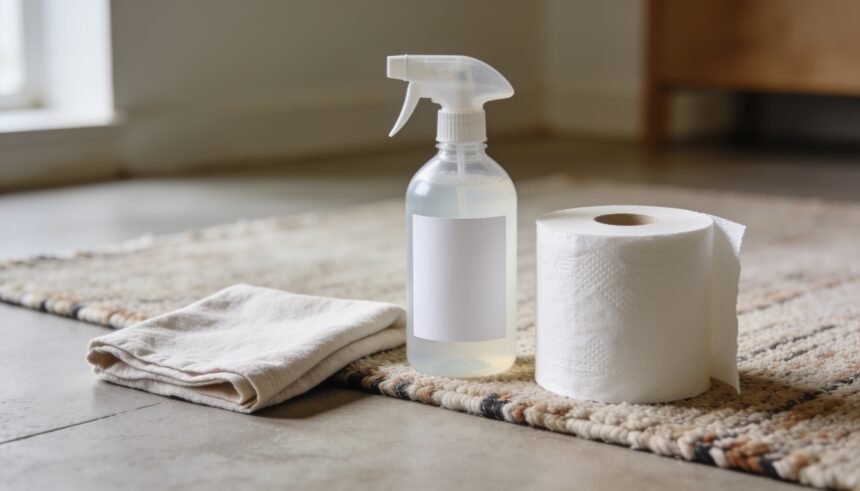
An enzyme cleaner, a stack of plain cloths or paper towel, and knowing which cleaning products your specific floor tolerates are worth sorting out before the next accident rather than during it. The single biggest driver of a lasting stain or smell is a slow start, not the wrong product.
How we checked this
Reviewed on 27 September 2026. This package is Dovelyne editorial cleaning method, not veterinary or behavioural advice. It makes no claim about why any individual animal has accidents and does not discuss house-training.
The one-page family week
One printable page that holds the whole week: meals, school, activities and who is doing the pickup. Free, and we send one useful email a week.
One email a week. No spam, unsubscribe in a click.